
Kashmir Impulse Desk
New Delhi, June 25
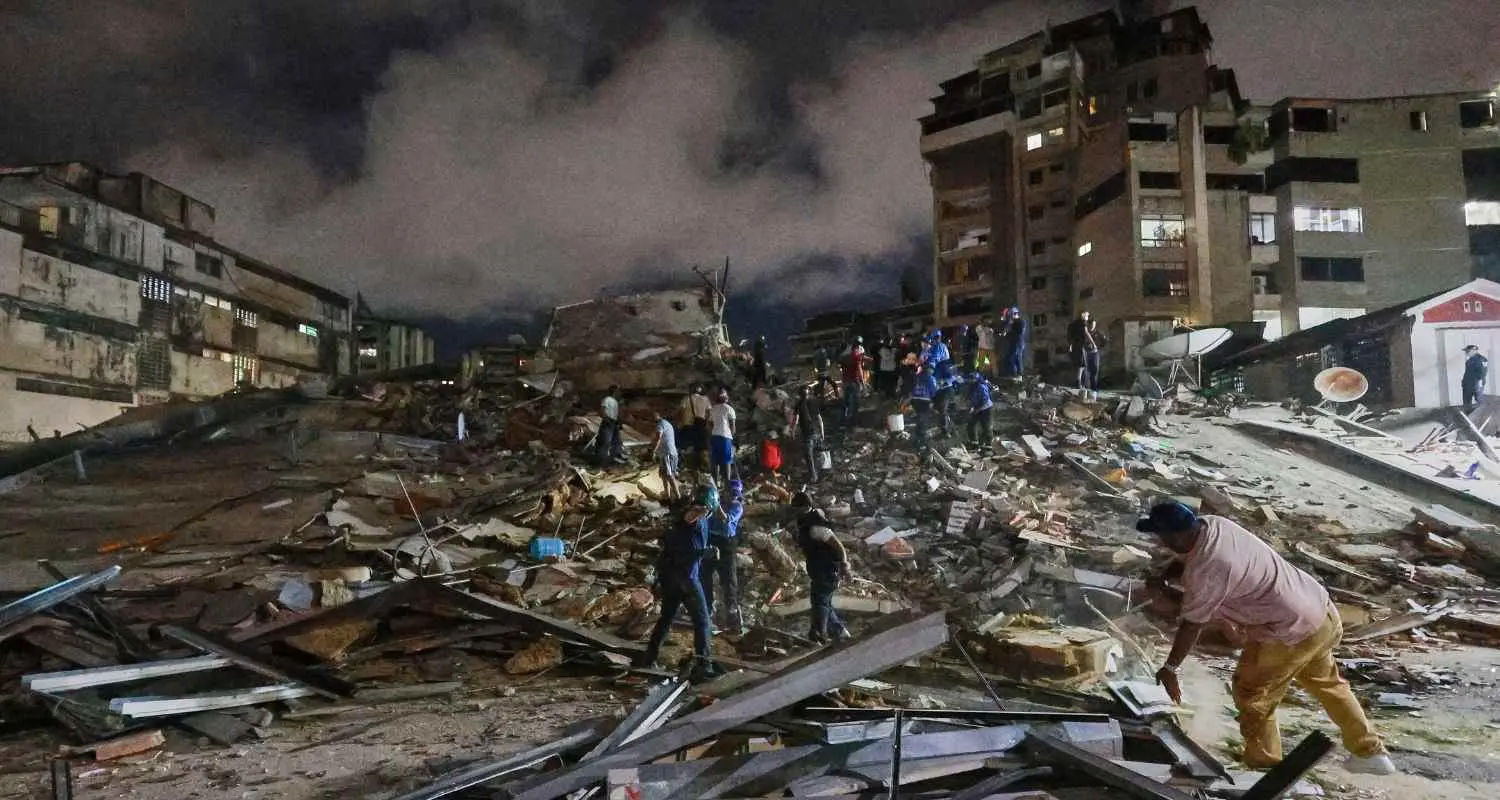
Rescuers raced on Thursday to pull survivors from collapsed buildings after two powerful earthquakes struck Venezuela’s Caribbean coast within minutes of each other, killing at least 164 people, injuring 971 and leaving widespread destruction across several states in one of the country’s deadliest natural disasters in decades.
Acting President Delcy Rodríguez said search-and-rescue teams had been deployed to the worst-hit areas, with emergency workers using heavy machinery and specialised equipment to reach people believed trapped beneath the rubble.
The twin earthquakes, measuring magnitude 7.2 and 7.5, struck on Wednesday evening and were among the strongest recorded in Venezuela in more than a century, shaking buildings across much of the country and sending residents fleeing into the streets in panic.
Authorities declared La Guaira state, north of the capital Caracas, a disaster zone after dozens of buildings collapsed. Television footage showed rescue workers pulling survivors from the debris, including three dust-covered children who were found alive beneath a destroyed structure.
“Dozens of buildings have collapsed there, and intensive rescue operations are underway to save lives,” Rodríguez said, adding that additional rescue personnel were being redeployed from other parts of the country to maximise efforts during daylight hours.
Emergency crews worked through the night amid fears that aftershocks could bring down already weakened buildings.
The earthquakes damaged roads, disrupted communications and forced the closure of Simón Bolívar International Airport, Venezuela’s main international gateway. Subway services in Caracas were suspended, natural gas supplies were shut off in several areas as a precaution, and authorities cancelled school classes for several days, with some educational institutions converted into temporary shelters and relief centres.
Large sections of Caracas also experienced electricity outages and interruptions to mobile phone services, complicating rescue operations and leaving thousands of families unable to contact relatives.
Residents described scenes of panic as buildings swayed violently.
“It started gently and then became stronger and stronger until everyone had to run outside,” Caracas resident Hector Ricci said.
Another resident, Roberto Gamas, said the building where he was staying “shook violently from side to side,” describing the experience as unlike anything he had previously witnessed.
Interior Minister Diosdado Cabello urged residents to remain outdoors because of continuing aftershocks, prompting many people to spend the night in parks, subway stations, parked vehicles and other open spaces.
The telecommunications disruptions compounded anxiety among Venezuelans living abroad. Millions of people who have left the country during years of economic and political turmoil struggled to reach family members, while social media platforms were filled with appeals seeking information about missing relatives.
According to the US Geological Survey (USGS), the first earthquake, measuring magnitude 7.2, struck off the Caribbean coast west of Morón at a depth of 22 km. Approximately one minute later, a second, stronger magnitude 7.5 quake struck nearby at a depth of 10 km, amplifying the destruction.
Although Venezuela lies near several tectonic boundaries, major earthquakes are relatively uncommon compared with countries along the Pacific “Ring of Fire,” making the scale of the disaster particularly significant.
The US Pacific Tsunami Warning Centre briefly issued tsunami alerts following the earthquakes before withdrawing them after further assessment.
The Venezuelan government declared a nationwide state of emergency late Wednesday and announced the creation of a USD 200 million reconstruction fund to rebuild damaged hospitals, homes and public infrastructure.
Rodríguez appealed to private companies to make heavy construction equipment available for rescue operations and said United Nations-certified urban search-and-rescue teams were travelling to Venezuela to assist local authorities.
International offers of assistance began arriving within hours.
U.S. Secretary of State Marco Rubio said Washington was deploying search-and-rescue teams, humanitarian assistance and medical supplies to Venezuela.
Rodríguez thanked U.S. President Donald Trump for the assistance and later confirmed she had spoken by telephone with Rubio. She also acknowledged offers of support from Qatar, Mexico, Ecuador and El Salvador, which dispatched rescue personnel and humanitarian aid.
El Salvador President Nayib Bukele expressed solidarity with Venezuela, saying his country stood with those affected by the disaster despite longstanding political differences between the two governments.
The tremors were felt across northern South America, prompting evacuations of buildings in Brazil’s Amazon region and parts of neighbouring Colombia.
In India, Prime Minister Narendra Modi expressed condolences over the loss of life and said New Delhi stood ready to assist if required.
“Deeply saddened by the devastation caused by the severe earthquakes in Venezuela,” Modi wrote on social media. “India stands ready to extend all possible assistance.”
With hundreds of people still believed to be missing, authorities warned that the death toll could continue to rise as rescue workers searched collapsed residential and commercial buildings across the affected regions.