
Kashmir Impulse Desk
Leh, Oct 15
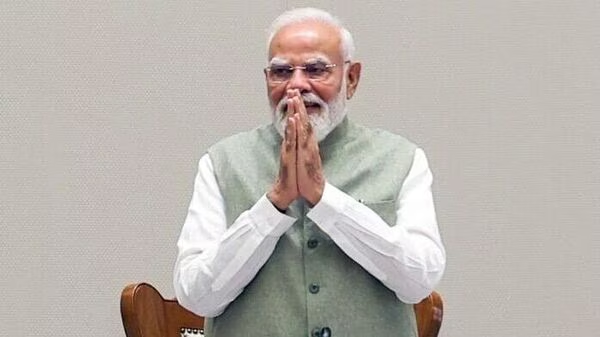
Prime Minister Narendra Modi said on Thursday that Ladakh had recorded significant infrastructure expansion since becoming a Union Territory in 2019, as he inaugurated or dedicated five development projects worth about Rs 3,350 crore.
Addressing the event virtually, Modi said the region’s road network had expanded from 1,800 km to more than 4000 km, while the number of major bridges had increased from 19 to nearly 75 and helipads from seven to more than 40.
Tap-water coverage had risen from 3.5 percent to nearly 99 percent of households, and hospital beds had doubled, he said, adding that the under-construction Zojila Tunnel would provide all-weather connectivity.
“The development of Ladakh is a priority for the central government,” Modi said, congratulating residents and acknowledging the work of engineers, labourers, local workers and Border Roads Organisation personnel.
Modi inaugurated the new terminal at Kushok Bakula Rinpoche Airport in Leh, a facility costing Rs 650 crore that he said would increase annual passenger-handling capacity from 1 million to 3.5 million.
The terminal uses geothermal heating alongside solar energy, according to Modi, who said the project was intended to support tourism while taking account of the region’s harsh climate and environmental needs.
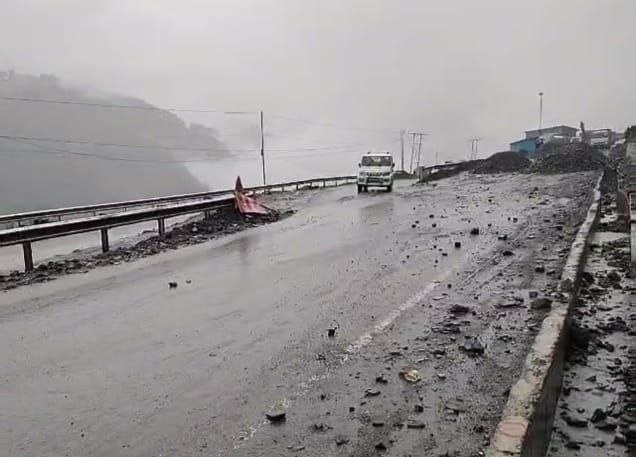
He also dedicated the Nimmu-Padum-Darcha road, built at a reported cost of Rs 2500 crore, saying it would reduce travel time from 12 hours to about three hours and improve trade and commerce.
The prime minister dedicated the Hanu hydroelectric project and its associated transmission network, while referring to further power-generation initiatives in Puga Valley.
Reliable electricity would support households, education, healthcare and small businesses, he said.
Modi also dedicated 40 reservoirs constructed under Project Amrit Him Sarovar, saying they would help farmers secure irrigation water during critical periods of the cultivation cycle.
The government was promoting winter and adventure tourism and upgrading more than 40 border settlements under the Vibrant Villages programme to generate economic activity and employment, Modi said.
The number of homestays in Ladakh had increased from about 150 to 3000, while the region had 11,000 operational greenhouses, he said, adding that protected cultivation could help improve farmers’ incomes.
Modi highlighted the commercial potential of sea buckthorn, handicrafts, geographically indicated apricots, high-altitude floriculture and Pashmina wool produced by the Changpa community.
He said the government was working to improve branding and expand markets for local products so that producers could benefit directly.
He also cited Ladakhi products he had presented to foreign leaders, including the German chancellor, the Swedish prime minister and the president of Kyrgyzstan.
Modi said the government had approved the establishment of a High Court bench for Ladakh in August, describing it as a step towards improving access to justice and administrative services.
He also cited the expansion of BharatNet and high-speed internet in remote areas, saying digital connectivity could improve access to e-governance and online education and help local businesses reach wider markets.
A Centre of Excellence was being developed in Leh, while proposals for satellite campuses of the Indian Institute of Technology Jammu and the Indian Institute of Management Jammu were advancing, he said.
The initiatives were intended to expand access to higher education, research and technical training for young people in the region.
Modi also welcomed Ladakh’s new sports policy and said the government would work to provide training facilities for athletes in ice hockey, winter sports and mountaineering.
The prime minister inaugurated what he described as India’s first Petroglyph Conservation Park in Leh, aimed at preserving the region’s ancient rock art.
He said Ladakh’s monasteries, Buddhist traditions and festivals associated with the revered Kushok Bakula Rinpoche formed an important part of its cultural heritage.
Preserving these sites would allow future generations and visitors to learn about the region’s history, Modi said.
He reiterated the government’s commitment to expanding infrastructure, economic opportunities and public services in Ladakh, saying collective efforts would help the territory achieve further development.