
The Srinagar-Jammu National Highway is not merely a road connecting two regions. For the people of Kashmir, it is a lifeline, an economic artery, a supply route, an emergency corridor and, for many, the only dependable link to the rest of the country. Every time the highway closes, the impact is felt far beyond traffic jams and stranded vehicles. It reaches homes, hospitals, markets, farms and businesses, reminding Kashmiris of how vulnerable their daily lives remain to the condition of a single road.
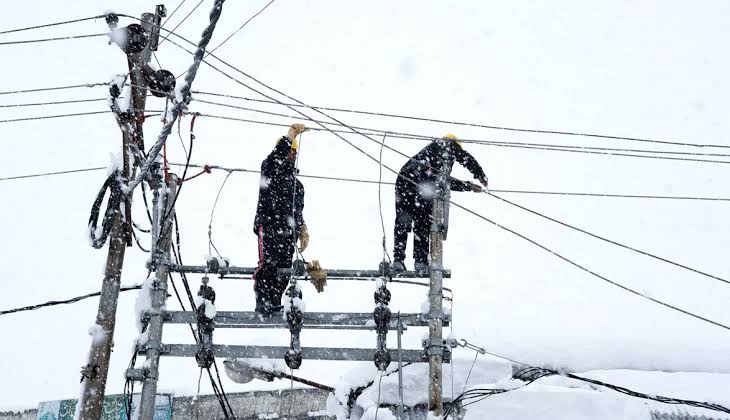
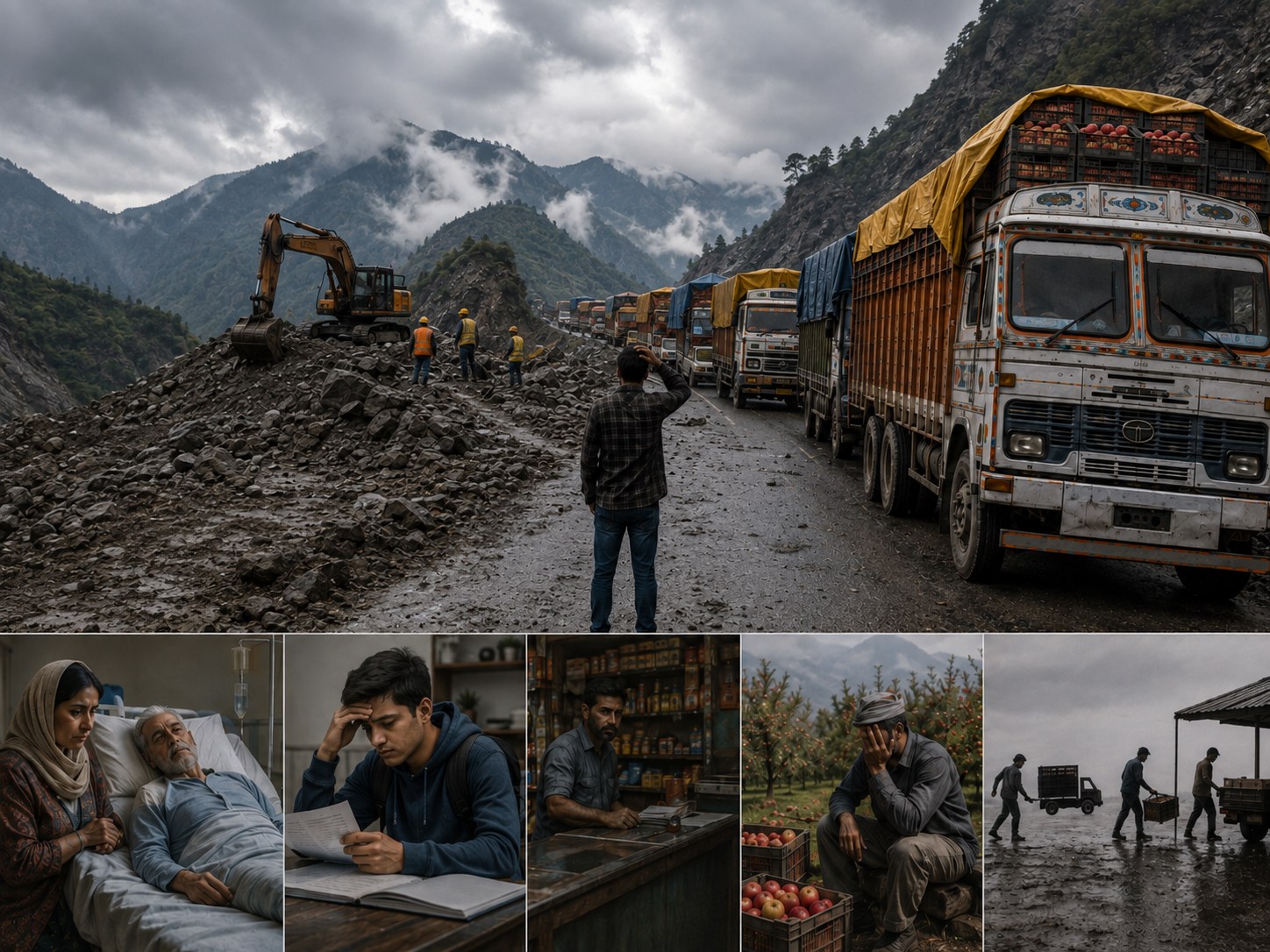
The latest closure, triggered by urgent repairs and slope-stabilisation work at landslide-prone stretches between Jakheni in Udhampur and Gangroo near Banihal, is understandable from the standpoint of public safety. No responsible authority can allow traffic on a road threatened by landslides, falling rocks and damaged surfaces. The work being undertaken by the National Highways Authority of India is essential, and the authorities deserve credit for responding to the damage caused by persistent rainfall.
But while the highway is being repaired, the question remains: who bears the cost of its closure?
The answer is the ordinary citizen.
A family travelling from Kashmir to Jammu for medical treatment may have to postpone an appointment. A student may miss an examination or an admission deadline. A trader may lose a day’s business. A passenger with an urgent engagement outside the Valley may find himself stranded. Even the movement of essential commodities becomes uncertain, with delays eventually reflected in prices paid by consumers.
For Kashmir’s horticulture sector, the stakes are even higher.
The early apple harvest has already begun, with varieties such as Gala apples and plums entering the market. These are perishable commodities, and time is money. Every hour spent waiting on a highway can reduce the value of a consignment. Every additional day can mean spoilage, lower prices and financial losses for growers who have spent an entire year nurturing their crop.
The figures involved are enormous. Kashmir’s horticulture industry supports hundreds of thousands of families and contributes substantially to the economy of Jammu and Kashmir. Around 100 to 120 fruit-laden trucks are reportedly leaving the Valley each day during the current harvesting period. If these vehicles are delayed repeatedly, the consequences will not be limited to individual traders. The entire supply chain – from growers and transporters to commission agents, labourers and wholesalers – is affected.
This is why the demand for priority passage for fruit trucks deserves serious consideration.
There is a clear difference between an ordinary commercial vehicle and a truck carrying produce that can perish within days. Authorities must explore a mechanism under which fruit-laden vehicles are given dedicated time windows to move whenever the highway is considered safe for controlled traffic. Such a system could be coordinated with ongoing repair operations, allowing engineers and traffic authorities to balance public safety with the urgent needs of the horticulture sector.
The suggestion to use the Mughal Road as an alternative is useful, but it cannot be treated as a complete solution. The route’s limitations, particularly for larger 12-tyre and 16-tyre trucks, make it difficult to divert the entire fruit trade through it. Alternative routes must be strengthened, widened and prepared to handle commercial traffic if they are expected to serve as genuine backup corridors.
The deeper problem, however, is that Kashmir’s connectivity remains excessively dependent on one vulnerable highway.
The repeated closures of the Srinagar-Jammu highway in recent weeks should prompt a serious policy discussion. Landslides, mudslides, flash floods and falling rocks are not new phenomena in the Himalayan region. Climate variability and increasingly unpredictable weather patterns are only adding to the challenge. A modern connectivity strategy for Kashmir cannot rely solely on repairing the highway after every disruption. It must focus equally on prevention, resilience and redundancy.
That means investing in slope protection, drainage systems, rockfall barriers, retaining structures, real-time monitoring and early-warning mechanisms at vulnerable stretches. It also means ensuring that alternative routes are developed to a standard that allows them to carry essential and commercial traffic when the main highway is blocked.
At the same time, the public deserves better information. Confusion and rumours about reopening often lead people to begin journeys prematurely, only to be stopped at Nagrota, Qazigund or elsewhere. A reliable, centralised and real-time information system—updated through official channels—should tell commuters exactly when the road is open, where restrictions apply and what alternative routes are available.
The authorities must also recognise that a highway closure is not simply a traffic-management issue. It is a social and economic emergency for a region whose geography leaves it particularly vulnerable to disruptions.
The immediate priority must, of course, remain safety. No economic interest should justify putting lives at risk on an unstable road. But safety and economic continuity need not be competing objectives. With better planning, coordinated traffic management and priority mechanisms for genuinely perishable goods, both can be protected.
For the people of Kashmir, the Srinagar-Jammu highway is much more than asphalt and concrete. It is the road through which medicines arrive, students travel, patients seek treatment, businesses operate and Kashmir’s famous apples reach consumers across India.
When that road closes, Kashmir does not simply experience a traffic disruption. It feels cut off.
The real measure of good governance, therefore, is not merely how quickly a damaged road is repaired. It is how well authorities prepare for the next disruption—and how effectively they ensure that the people, farmers and businesses of Kashmir do not pay the highest price every time nature forces the highway to shut.
About the Author
Bilquees Punjabi holds a Master’s in Computer Applications and explores the evolving relationship between technology, digital media, audiences, and journalism.