
A natural-gas pipeline can be almost complete and remain far from the kitchen stove, factory floor or vehicle that it is meant to serve. That is the infrastructure challenge now facing Jammu: the transmission line from Gurdaspur is nearing its revised completion date, while the government is trying to accelerate the network that will carry gas from the main pipeline to individual consumers.
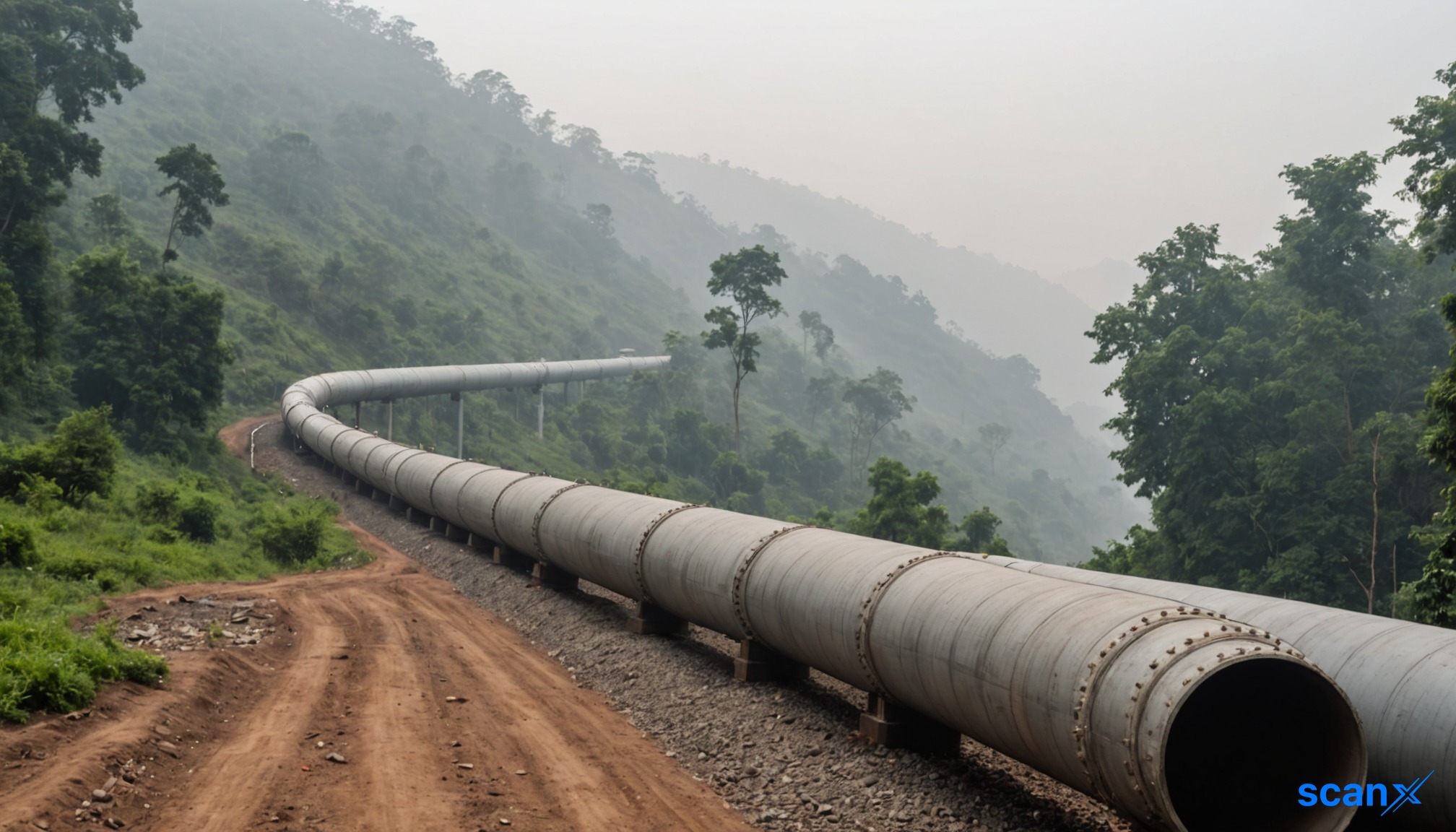
The Rs 521.90-crore Gurdaspur-Jammu Natural Gas Pipeline, being executed by GAIL (India) Limited, had recorded 92.70 percent progress by the end of September, according to the latest Government of India report cited in the source material. Initially scheduled for completion in July 2026, the project now has a revised deadline of December 2026.
At the same time, Indian Oil is implementing a Rs 538-crore City Gas Distribution project intended to extend natural-gas connectivity to households, commercial establishments and industries across five districts of Jammu division. The government has constituted district-level committees in Jammu, Samba and Kathua to coordinate the work and address the administrative and infrastructure delays that can hold up the laying of distribution pipelines.
The two projects are complementary but serve different purposes. The Gurdaspur-Jammu line is the transmission infrastructure that will bring natural gas into the region. The City Gas Distribution network is the downstream system that will take it to consumers. Without the second, the first risks becoming a completed trunk line without a functioning last-mile service.
Under the distribution framework, households may receive piped natural gas for cooking. Commercial establishments and industries may use it as a fuel, while the network can also support compressed natural gas infrastructure for vehicles. The potential uses are broad, but access will depend on the pace and reach of the distribution system, the permissions required to lay pipes and the ability of different agencies to coordinate their work.
The new committees are headed by the respective Deputy Commissioners. Their membership includes district development and industries officials, urban local bodies, representatives of oil marketing companies and the PNG network, food and civil supplies officials, legal metrology authorities and representatives of SICOP and SIDCO. The arrangement is intended to bring agencies responsible for roads, water supply, electricity, sewerage, industrial estates and local permissions into one forum.
That coordination is not a minor administrative detail. Laying underground pipelines through populated areas requires road-cutting approvals, the shifting of existing utilities and decisions about how construction will affect residents and businesses. A delay in one department can hold up work by another. If a road cannot be opened, a water or electricity line cannot be shifted, or a local approval remains pending, the distribution network can fall behind even when the main transmission pipeline is ready.
The committees have been asked to make the single-window clearance mechanism work more effectively, facilitate the planned shifting of utilities and monitor project progress. They are also expected to identify implementation problems and resolve them through interdepartmental coordination. Deputy Commissioners have been directed to convene periodic meetings and review progress.
Another part of their mandate is to facilitate master plans for housing colonies, commercial establishments and industrial areas in the districts concerned. The exercise is to include industrial estates under the Jammu and Kashmir Small Scale Industries Development Corporation and the Jammu and Kashmir State Industrial Development Corporation, wherever applicable. That planning is important if the network is to serve more than a limited number of residential pockets and is to incorporate commercial and industrial demand from the outset.
The government’s decision to create district committees recognises a familiar problem in infrastructure delivery: the main project may be managed by one agency, but the work required to make it useful is spread across many institutions. A pipeline route crosses roads, public land and utility corridors. Its implementation therefore depends on decisions that cannot be made by the transmission company alone.
The test of the committees will be measured not by the number of meetings they hold but by the clearances they secure, the delays they remove and the sections of network that are actually laid. The source material says that no significant headway has yet been made on the downstream distribution project, even as the transmission line approaches completion. That gap makes the next phase especially important.
A completed transmission line does not automatically mean that a household can switch to piped gas. Consumers need a local distribution network, a connection, safety checks and the infrastructure to deliver supply reliably. Commercial and industrial users need routes and capacity suited to their locations. CNG facilities require their own development and regulatory arrangements. The pace of these steps will determine how quickly the investment becomes visible in daily life.
The projects also need to be judged by their reach. The City Gas Distribution programme is intended to cover five districts of Jammu division, while the district committees identified in the material are for Jammu, Samba and Kathua. The supplied information does not specify a detailed district-wise rollout schedule, the number of household connections planned or the sequence in which colonies and industrial areas will be connected. Those details will be necessary for residents and businesses to understand when they might receive service.
Natural gas can diversify the region’s energy options, but the pipeline should not be presented as an immediate answer to every energy challenge. The project’s value will depend on reliable supply, safe distribution, affordability and the ability of consumers to connect. The source material does not provide tariff projections or a timetable for individual household connections, so those questions remain open.
The district-level committees offer a mechanism to align the agencies whose work must converge. Their mandate is practical: coordinate permissions, shift utilities, prepare local plans and monitor execution. The challenge is to turn that administrative structure into a network that reaches beyond the point where the main pipeline ends.
For the government, the approaching December deadline is only one milestone. The more consequential measure will be whether natural gas can move from a transmission corridor into the towns, homes, businesses and industrial estates it is meant to serve. In infrastructure, the final connection is often the part that determines whether the project works at all.
About the Author
Aasif Bashir is a visual journalist and postgraduate in Convergent Journalism, working at the intersection of imagery, narrative, and visual storytelling.