
In an influenza outbreak, the first line of defence is not always a hospital bed, ventilator or stockpile of medicines.
Sometimes, it is a laboratory.
A laboratory that can identify the virus circulating in a community, distinguish seasonal influenza from an unusual strain, and detect changes in respiratory disease before they become a wider public-health emergency.
In Kashmir, one such facility has been sitting idle.
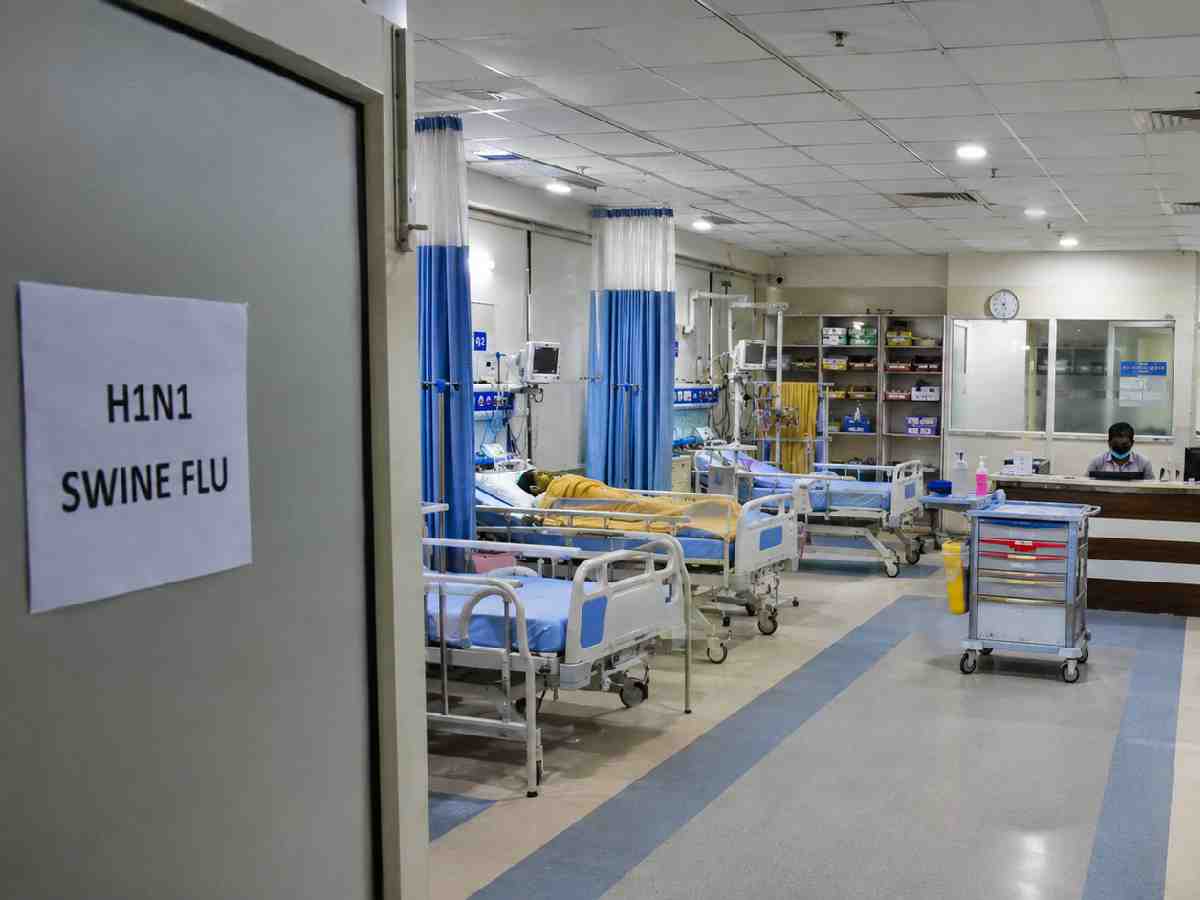
A specialised high-end laboratory at Chest Diseases Hospital in Srinagar, established to test dangerous respiratory viruses, has remained non-functional since 2022. It was created after successive H1N1 outbreaks exposed the need for stronger local diagnostic capacity.
Its prolonged closure raises uncomfortable questions about the durability of public-health infrastructure in Jammu and Kashmir: Who maintains specialised equipment? Who staffs the facility? And how quickly can it be restored when the next threat emerges?
The question of public money is equally important.
The government disclosed in 2018 that a full-fledged H1N1 testing laboratory had been constructed at the hospital at a cost of Rs 9.88 crore and made functional. The facility also included a separate ward for highly infectious respiratory viruses. The current cost cited for the laboratory infrastructure is Rs 5.63 crore.
Whatever the precise accounting, the central fact remains: a specialised facility costing crores has not operated since 2022.
That matters because time is part of diagnosis. Samples must be collected, transported, processed and analysed. Delays can slow clinical decisions and weaken outbreak surveillance. A functioning local laboratory can shorten that chain while building a continuous record of pathogens circulating in the population.
An official at the hospital said the facility was shut for repairs but that no human resources from the Department of Microbiology were subsequently allocated to operate it.
The problem, therefore, appears larger than a broken machine.
A specialised laboratory needs trained microbiologists and technicians, functioning equipment, reagents, quality-control systems and protocols for rapidly processing and reporting samples. Without these, expensive infrastructure can become operationally useless.
The hospital administration says the process of revival has begun. Medical Superintendent Dr Sameena Saba said detailed estimation and drawing formation had been completed and tendering would commence shortly.
That is welcome, but the laboratory has already been non-functional for four years.
Viruses do not wait for procurement cycles.
Influenza surveillance is about more than confirming H1N1 in individual patients. It helps identify circulating strains, detect unusual patterns, and determine whether respiratory illness is caused by influenza or another pathogen. That evidence can shape outbreak response and vaccination strategies.
Kashmir already has an example of the value of sustained surveillance. An influenza laboratory at SKIMS, established in 2010 through collaboration involving the US Centers for Disease Control and Prevention and the Indian Council of Medical Research, evolved into an important centre for influenza surveillance and outbreak investigations.
The lesson is simple: laboratories need continuity.
Surveillance becomes more valuable as data accumulate over time. One season’s samples can be compared with previous years, seasonal patterns identified and unusual increases investigated against an established baseline.
The Chest Diseases Hospital laboratory exposes a broader weakness in public-health planning: building infrastructure is easier than sustaining it.
Equipment requires maintenance, calibration and replacement. Staff need to be recruited and retained. Reagents must remain available. There must be a plan for what happens when a machine fails or trained personnel leave.
These are not administrative details. They determine whether public investment becomes a functioning health asset or a dormant one.
The administration’s decision to revive the facility should therefore be followed by a long-term operational plan covering dedicated staffing, assured maintenance funding, periodic equipment checks, regular testing, and integration with the wider disease-surveillance network.
The objective should not merely be to reopen the laboratory for the next emergency. It should remain operational between emergencies, when surveillance can establish baselines and detect early warning signs.
Public-health preparedness is measured before a crisis arrives.
By the time an outbreak begins, the equipment must already work, trained personnel must already be available, and surveillance systems must already be functioning.
Kashmir built this laboratory because a previous crisis demonstrated the need for it.
The next threat may be different.
The point of preparedness is not to predict its name.
It is to ensure that when the unknown arrives, the laboratory is ready.
About the Author
Bisma Rafiq is interested in human resources and its role in improving journalism and media organisations. She is also a passionate storyteller.