
Jammu and Kashmir has invested heavily in healthcare infrastructure. New medical colleges, AIIMS, specialised institutions, nursing colleges and critical-care facilities have expanded the region’s medical capacity.
But buildings do not treat patients. People do.
That is where the gap remains.
A Parliamentary Standing Committee on Home Affairs has flagged the shortage of doctors and specialists in remote, border and difficult areas as a critical challenge to equitable healthcare. It has urged the J&K administration to accelerate recruitment, expand postgraduate and specialist training, strengthen the District Residency Programme and offer financial and career incentives for doctors serving in difficult areas.
The government should treat these recommendations as a priority.
The problem is not simply how many doctors J&K has. It is where they are available.
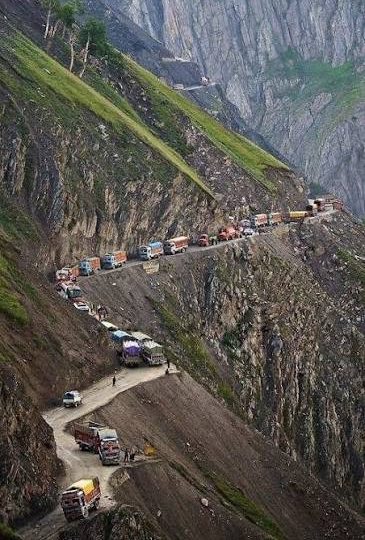
A district hospital may have a new building, modern equipment and adequate beds, but if it lacks a surgeon, anaesthetist, obstetrician, paediatrician, radiologist or trained nursing team, its capacity remains limited. Patients are then referred to Jammu, Srinagar or other major centres – sometimes after hours of difficult travel.
In a mountainous and geographically dispersed region, such delays can have serious consequences.
J&K’s expansion of physical infrastructure must therefore be matched by an equally determined expansion of human resources. The government should undertake a time-bound, district-wise assessment of vacancies and fill sanctioned posts, prioritising critical specialties and underserved areas.
The focus must include paramedical staff.
Doctors cannot run emergency departments alone. Intensive-care units require nurses and technicians; diagnostic services need laboratory personnel and radiographers; operation theatres require skilled teams. A hospital without adequate staff is infrastructure without capacity.
Recruitment, however, will not solve the problem unless difficult postings become sustainable.
Doctors in remote and border areas often face limited specialist support, difficult transport, inadequate accommodation and fewer opportunities for professional development. Hardship allowances, better housing, continuing education, career incentives and transparent transfer policies can make such postings more attractive.
Serving in a difficult district should not mean sacrificing a medical career.
J&K’s growing medical education network also offers an opportunity to address the specialist shortage. Postgraduate programmes should be aligned with district hospital needs. Producing more graduates is important; producing and retaining the right specialists is more important.
The District Residency Programme can help, provided district hospitals have the equipment, supervision and working conditions needed to make postings meaningful.
Technology can provide another layer of support. Telemedicine and tele-radiology can connect remote hospitals with specialists in larger centres and reduce unnecessary travel.
But technology is not a substitute for doctors.
A teleconsultation cannot perform surgery. A digital prescription cannot replace an anaesthetist during an emergency. An internet connection cannot run an intensive-care unit.
Investment in digital healthcare must therefore go hand in hand with investment in personnel.
The committee has also highlighted progress in maternal and child healthcare, institutional deliveries, family planning and financial protection through schemes such as AB-PMJAY SEHAT. ASHAs and ANMs have helped extend healthcare into communities.
Those gains will mean little if patients cannot access qualified medical professionals when they need them.
The government should therefore focus particularly on tribal, border, mountainous and other underserved areas, where averages can hide sharp inequalities. A patient near a major city may have several specialists within reach; someone in a remote village may have a district hospital but no specialist available that day.
Healthcare equity cannot be measured simply by the number of facilities constructed. It must be measured by whether those facilities function at the level patients need.
This requires more than recruitment drives. The government should set deadlines for filling vacancies, publish district-wise staffing requirements, monitor positions regularly, and create incentives for retention. Specialist shortages should be tracked separately rather than hidden within overall staffing figures.
The priority must shift from inaugurating facilities to making them fully operational.
J&K has built much of the physical architecture of a modern health system. The next phase must be about staffing it properly.
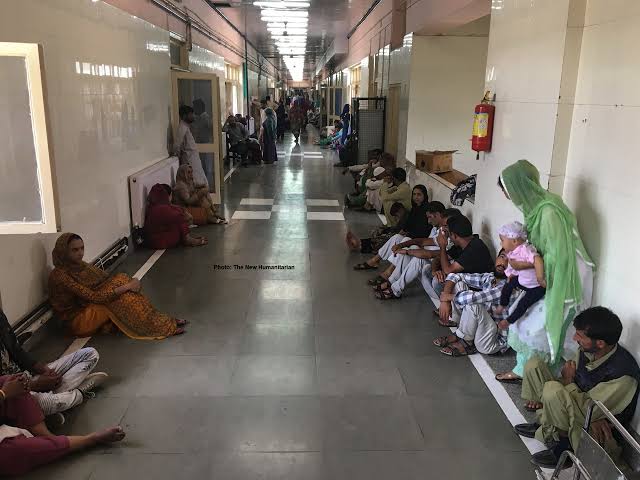
For a patient arriving at an emergency department, a vacant post is not an administrative statistic.
It can mean a specialist who is not there, a referral that should not have been necessary, and hours lost on the road.
The buildings are ready. The government must now make sure the doctors, nurses, technicians and other healthcare workers are there to make them work.