
Kashmir Impulse Desk
Srinagar, Sep 03
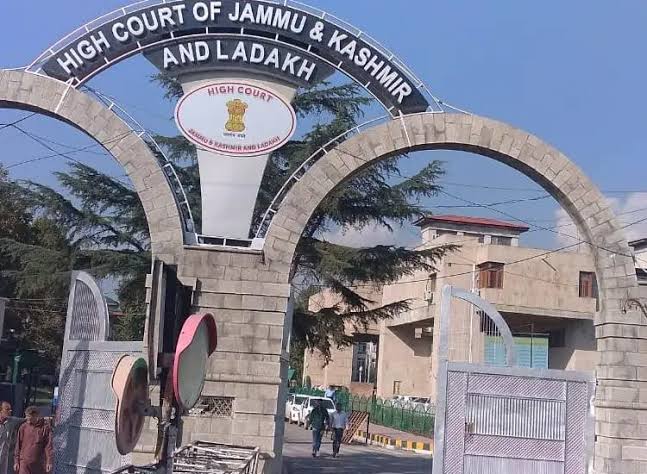
The High Court of Jammu and Kashmir and Ladakh has denied bail to a man accused of kidnapping and sexually assaulting a 15-year-old girl, saying that the victim’s decision to retract parts of her testimony did not by itself invalidate other evidence in the case.
Justice Sanjay Parihar dismissed the bail plea filed by Mahir Ahmad, who is facing trial in a case registered as FIR No 30/2025 at Parimpora police station under Sections 137(2), 64, and 65 of the Bharatiya Nyaya Sanhita and Sections 3 and 4 of the Protection of Children from Sexual Offences Act.
According to the prosecution, the girl went to a circus exhibition in Parimpora, Srinagar, on April 13, 2025, and did not return home.
Her father reported her missing after failing to trace her, the prosecution said.
The girl returned in the early hours of April 14 and subsequently alleged that she had been kidnapped near the circus venue, taken to an unknown location, and sexually assaulted, according to the prosecution case.
Investigators said she subsequently identified a house where she was allegedly taken and a restaurant where the accused allegedly bought two shawarmas for Rs 200 using a UPI transaction.
The prosecution alleged that the girl was taken to a vacant house in Bemina, where the assault occurred.
The prosecution also relied on medical and forensic evidence and the testimony of a medical expert, which it said supported its allegation of sexual intercourse.
Ahmad’s lawyers argued that the prosecution case had weakened substantially during the trial because the victim had not supported material parts of the allegations and had been declared hostile.
They also pointed to the testimony of the girl’s father, who, according to the defence, had not supported the prosecution version.
The High Court said a bail application was not the stage for a detailed assessment of evidence or a final determination of the credibility of witnesses.
Instead, the court said, it had to consider whether the material on record disclosed a prima facie case, along with the nature and gravity of the allegations, the accused’s role, the possible punishment and the stage of the trial.
The court noted that the girl was about 15 at the time of the alleged incident and therefore a child under the POCSO Act.
It said her decision to retract portions of the prosecution case could not be considered in isolation.
“Although she has recanted material portions of that version during trial, her deposition, read as a whole, does not amount to an unequivocal exoneration of the petitioner,” the court said.
The court noted that during cross-examination by the prosecution, the victim had been confronted with an earlier statement recorded before a magistrate.
It also referred to her account of the impact of the incident and subsequent proceedings on her life.
The prosecution further relied on the girl’s alleged initial account to another woman after she returned home.
That woman later informed the girl’s father, according to the prosecution.
The court said the testimony of a hostile witness was not automatically erased from the record and that portions that remained credible and were corroborated by other evidence could be considered.
It said the prosecution case was supported by material other than the victim’s testimony, including medical and forensic evidence, other witnesses, alleged identification proceedings, electronic evidence relating to the UPI transaction, and circumstantial evidence concerning the vehicle allegedly used.
“These circumstances, when considered cumulatively and only for the limited purpose of the present bail application, provide prima facie support to the prosecution version,” the court said.
The court said it could not infer intimidation, tutoring, or inducement merely because a child victim had changed her account unless such an inference was supported by evidence.
It said the reasons for the change in testimony were matters for adjudication during trial.
The court found no legal or material irregularity in the trial court’s order and declined to interfere with it, rejecting the bail application.
The allegations against Ahmad have not been finally adjudicated, and the trial is continuing.