
Kashmir Impulse Desk
Srinagar, May 7
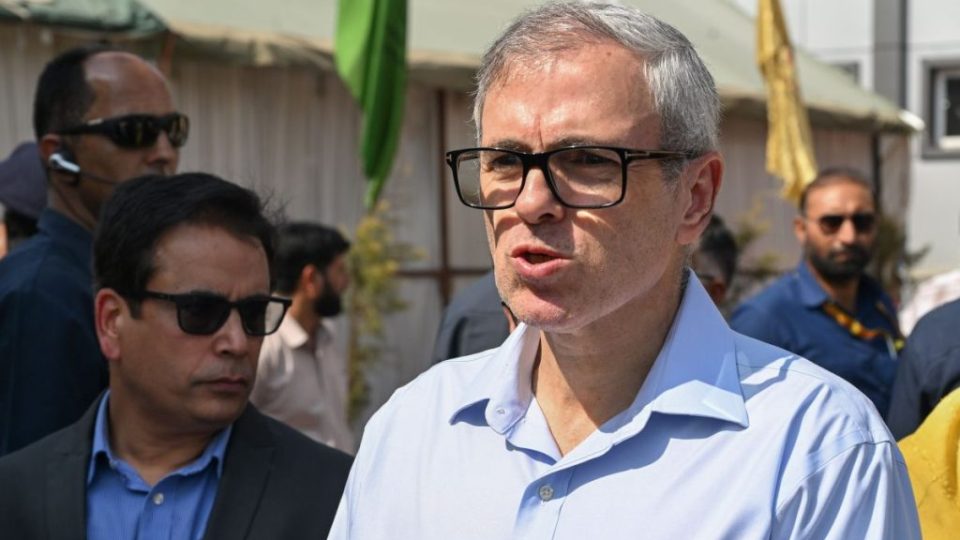
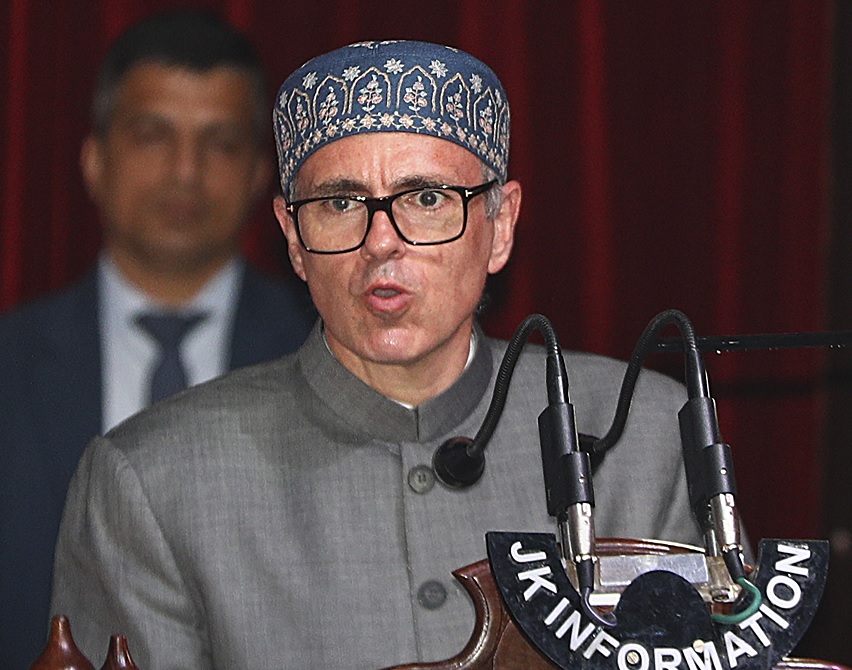
Chief Minister Omar Abdullah on Wednesday said keeping the elected government disconnected from the security and law-and-order machinery was hampering information-sharing and weakening efforts to counter militancy in the region.
Speaking to reporters in Srinagar, Abdullah warned against “working in silos” and said security challenges in Jammu and Kashmir could not be addressed solely through a military approach.
“The causes of terror and the effects of terror both have linkages to the wider community,” Abdullah said. “When the elected government and the elected representatives are kept totally disconnected from the security and the law-and-order apparatus, then you will end up with this situation.”
His remarks came in the context of the aftermath of last year’s Pahalgam attack, in which 26 people were killed, and recent operations by Srinagar police to dismantle militant modules.
Abdullah described what he called a widening disconnect between security agencies and elected representatives, saying even routine interactions between police officials and politicians had become strained.
“Today, a police officer thinks twice before saluting an MLA, a minister, or a chief minister,” he said. “If he gathers the courage to do so, he looks around and wonders if anyone saw him and whether his job will be in danger.”
The chief minister argued that counter-terrorism required broader public engagement and could not be treated purely as a law-and-order issue.
Drawing a comparison with anti-drug campaigns led by Jammu and Kashmir Lieutenant Governor Manoj Sinha, Abdullah said authorities recognised that drug trafficking was not only an enforcement issue but also a societal challenge requiring community participation.
“Same is true for terror,” he said. “It is a law-and-order problem, it is a security problem. But it is not exclusively a security problem.”
Abdullah also criticised the limited access of the elected government to intelligence inputs, remarking that he often received information through social media platform X.
“I get my intelligence from Twitter,” he said.
On tourism, a key sector in Kashmir’s economy, Abdullah said recovery after the Pahalgam attack had been gradual. While domestic tourist arrivals had improved, he said geopolitical tensions and regional instability continued to affect visitor confidence.
“Confidence takes time,” he said. “You can’t bring it back in a week or a month.”
He added that his government remained committed to restoring a sense of security and encouraging the return of tourists and trekkers to the Kashmir Valley.