
Kashmir Impulse Desk
Simari, May 7
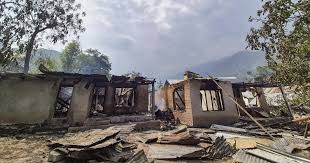
Nestled along the banks of the Krishan Ganga river in Kashmir’s Tangdhar sector, the village of Simari still carries memories of the artillery fire that marked the opening of “Operation Sindoor” one year ago.
News wire, Press Trust of India, reported that separated from Pakistani part of Kashmir only by the fast-flowing river and mountain terrain, Simari became one of the frontline points in India’s military response following the April 2025 attack in Pahalgam.
Residents say the sounds of shelling and military activity that night remain difficult to forget, even as the village gradually returns to normalcy.
“We didn’t just hear about the war… we felt it as shells lit the skies,” resident Ghulam Qadir said, recalling the night Indian forces launched strikes across the border. Villagers spent several days sheltering in community bunkers after the shelling began.
Operation Sindoor was launched on the night of May 6-7, 2025, with Indian forces targeting what New Delhi described as militant infrastructure in Pakistan and Pakistan-administered Kashmir in retaliation for the Pahalgam attack that killed 26 people.
Indian officials said around 100 militants were killed in coordinated strikes on nine sites.
Located about 180 km from Srinagar and close to the Line of Control, Simari has around 500 residents and roughly 80 homes, a mix of concrete structures and traditional mud-and-timber houses.
The village, surrounded by the Shamshabari mountains, remains physically isolated and heavily dependent on army deployments in the area. Many villagers work as labourers for the military.
Despite the calm that has returned, suspicion toward outsiders lingers. Some residents decline to speak, saying they understand only Pahari, the local language spoken in the region.
At the village middle school, designated as Polling Booth Number One during elections, a painted sign reads: “Democracy starts from here.”
Qadir said residents viewed themselves as guardians of India’s frontier democracy despite living at what many describe as the country’s edge.
“Now you should understand we are the first village in the country and the torch bearers of democracy,” he said.
For another villager, Iqbal, the greatest fear during the operation came not from shelling but from drones crossing the border. He said Indian forces repeatedly opened fire to stop suspected aerial intrusions.
“Some of the intruding objects fell in our area. These were successfully removed by the Army,” he said, praising the military for providing relief during the conflict.
Road access to Simari remains difficult, with landslides and mountain streams often disrupting travel to the remote village near Teetwal in north Kashmir.
While commemorations marking the anniversary of Operation Sindoor continue across India, residents in Simari say daily life now unfolds between routine village existence and the lingering awareness that their remote settlement could once again become a frontline in any future conflict.