
The debate over forest rights in Jammu and Kashmir has acquired a familiar political shape: one side invokes conservation and the rule of law, while the other invokes the rights and historical presence of communities that have depended on forests for generations. But the remarks of former forest minister and Member of Parliament Mian Altaf Ahmad introduce an important element into that debate – history.
Altaf’s central contention is straightforward. The Forest Rights Act, 2006, did not apply to Jammu and Kashmir before the constitutional changes of 2019. He has said that when he served as forest minister from 2009 to 2014, the central legislation governing recognition of forest rights was not in force in the erstwhile state.
That point matters because contemporary arguments about forest rights in J&K can become detached from the legal framework that existed at the time.
But history should not become an excuse for complacency either.
The real question today is not whether the Forest Rights Act existed in J&K before 2019. It did not. The more consequential question is what the administration should do now that the law applies – and how it can implement it without either dispossessing genuine forest dwellers or allowing forest land to be systematically encroached upon.
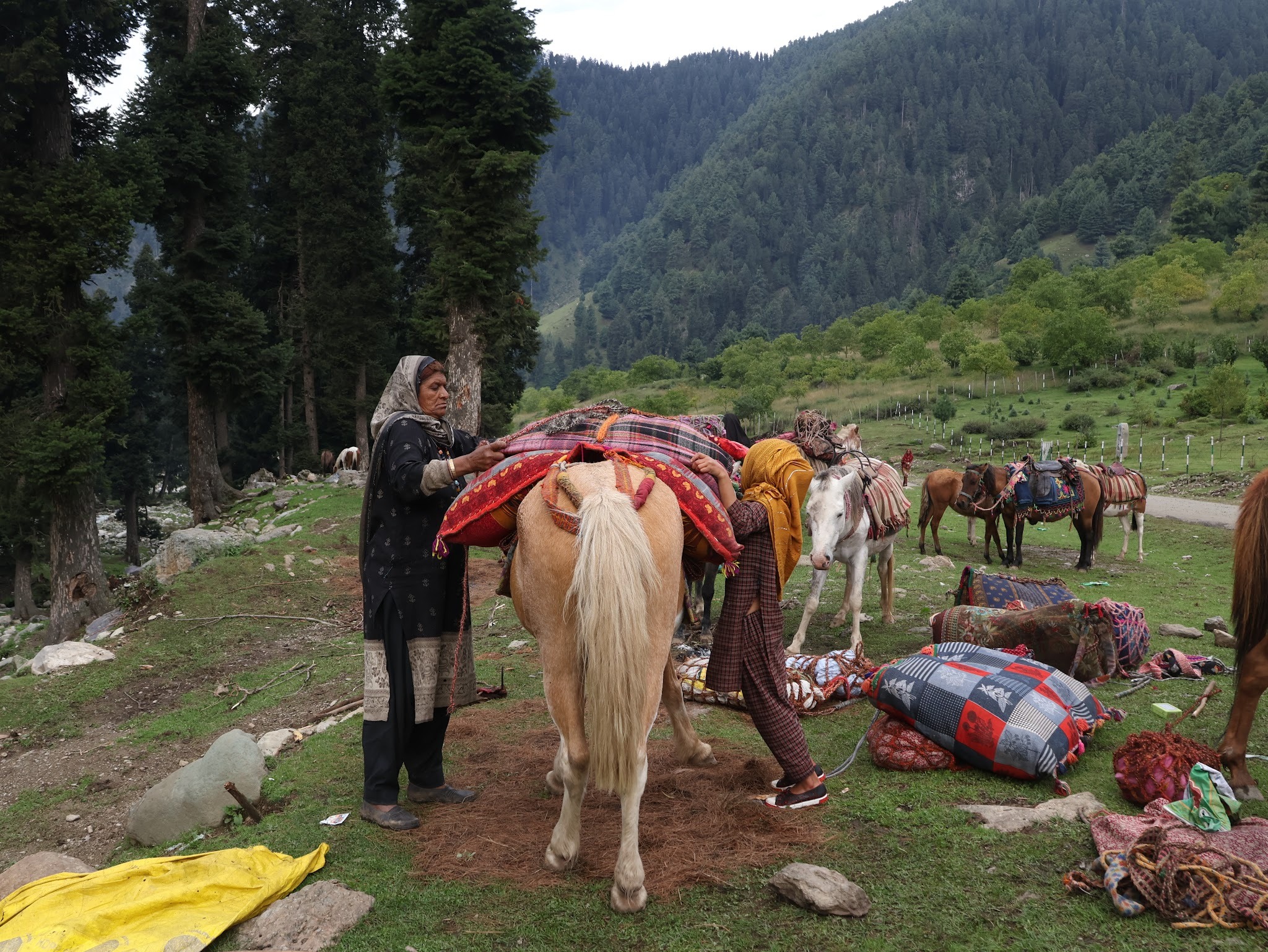
The Gujjar and Bakarwal communities have maintained longstanding relationships with the forests and highland pastures of Jammu and Kashmir. Their seasonal movement, livestock-based livelihoods, and dependence on common natural resources cannot be understood through the narrow lens of ordinary land ownership. Their relationship with forests and grazing areas is part of a way of life transmitted across generations.
At the same time, forests are a public ecological asset. J&K’s forests perform functions that extend far beyond the communities living within or around them. They regulate water systems, protect soil, sustain biodiversity, moderate local climates and provide critical ecological security in a mountainous region particularly vulnerable to environmental degradation.
The administration’s fresh guidelines to streamline forest-rights claims while continuing action against unauthorised occupation could, if implemented transparently, provide an opportunity to bring clarity to a dispute that has too often been clouded by competing narratives.
The key word should be verification.
A genuine claimant should not have to fear arbitrary eviction simply because his or her family has lived in a forest-dependent environment for generations. Equally, a person who has recently occupied protected forest land cannot automatically claim legitimacy merely by invoking the language of tribal or traditional rights.
That framework should be implemented with sensitivity rather than bureaucracy. A nomadic family unfamiliar with administrative paperwork should not be placed at an automatic disadvantage compared with someone possessing greater access to officials, lawyers or documentation.
A settled-land model cannot always capture the lived reality of pastoral communities whose relationship with land is seasonal and collective. Their claims may require an understanding of customary routes, grazing practices, community institutions and historical patterns of habitation. Administrative systems must have the flexibility and expertise to recognise these realities without weakening evidentiary standards.
The legitimate grievances of forest dwellers should not be used as a blanket defence of every occupation of forest land. Jammu and Kashmir has witnessed extensive pressure on its forests from construction, commercial activity, encroachment and changing patterns of land use. If every illegal occupation is reframed as a rights issue, conservation law becomes meaningless.
The answer, therefore, is neither indiscriminate eviction nor indiscriminate regularisation.
It is due process.
Every claim should be examined according to clearly established legal criteria. Every rejection should be reasoned. Every eviction should follow the applicable law. Every legitimate right recognised under the Forest Rights Act should be honoured. And every case of illegal occupation should be dealt with consistently, regardless of the identity or influence of the occupant.
Forest law loses credibility when ordinary families face strict enforcement while powerful interests are perceived to receive accommodation. Conservation cannot become selective. Nor can tribal rights become selective. Both require an administration that applies the same standard to the powerful and the vulnerable.
Altaf’s argument that vulnerable communities were not systematically rendered homeless before 2019 also deserves to be examined in this broader context. The absence of the Forest Rights Act did not mean the absence of all protections, customary arrangements or administrative responsibilities. J&K had its own legal and institutional framework governing forests and land. The existence of the 2006 central legislation cannot retroactively define every forest-related decision taken under the earlier constitutional and legal order.
But neither should the pre-2019 record be romanticised.
Nor does the fact that communities may have historically used forest resources automatically settle their legal claims today.
Both propositions can be true: the earlier system had its own protections, and the post-2019 framework creates new enforceable rights.
There is also a larger lesson here about governance after 2019. Extending a central law to Jammu and Kashmir does not by itself guarantee justice. Laws achieve their purpose through institutions – local committees, revenue officials, forest authorities, district administrations and ultimately the courts. Their decisions must be accessible, transparent and subject to scrutiny.
The debate also needs to move beyond the false choice between people and forests.
The communities that have lived in forest landscapes for generations can be partners in conservation rather than obstacles to it. Their knowledge of forests, seasonal ecosystems, wildlife and grazing patterns can complement modern conservation practices. A rights-based approach, properly implemented, can create incentives for stewardship rather than alienation.
It needs a settlement based on law, evidence and dignity.
Mian Altaf is right to insist that the legal history of J&K before 2019 must be understood on its own terms. But the debate cannot end there. The Forest Rights Act is now part of the legal landscape, and its promise should be measured not by political claims but by whether genuine forest dwellers can secure their rights without weakening the forests on which the entire region depends.
The objective should be neither to empty the forests of people nor to surrender the forests to unregulated occupation.
It should be to establish a fair balance between rights and forests – because in Jammu and Kashmir, the future of one cannot be separated from the future of the other.
About the Author
Bisma Rafiq is interested in human resources and its role in improving journalism and media organisations. She is also a passionate storyteller.