
There are a few bureaucratic phrases that carry as much economic and psychological weight as “Do Not Travel.”
For Kashmir, that warning has hung over one of its most important industries for years. Now, after the first visit to Jammu and Kashmir by US Ambassador Sergio Gor, Washington may finally reconsider it.
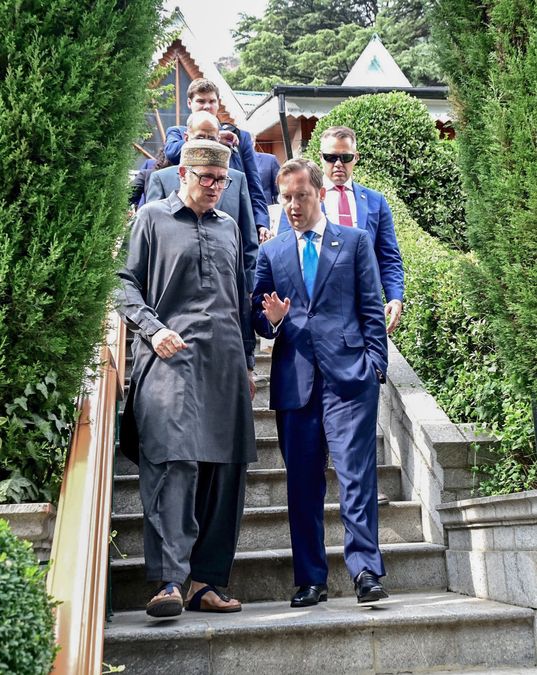
During his Srinagar visit on Wednesday, Gor met Chief Minister Omar Abdullah and described Jammu and Kashmir as an “important part of India.” More consequentially for the Valley’s tourism economy, he said Washington would reassess its travel advisory, citing security improvements. He stopped short of announcing an immediate change.
The current US advisory places Jammu and Kashmir at Level 4 – “Do Not Travel” – except for eastern Ladakh and Leh. It cites terrorism, civil unrest and risks along the Line of Control, and identifies Srinagar, Gulmarg and Pahalgam as places where violence has occurred.
The advisory was tightened after the April 2025 Pahalgam terrorist attack, when 26 people, mostly tourists, were killed.
A warning issued by Washington can influence American travellers, international tour operators, insurers and, indirectly, travellers from other countries who interpret a Western government’s assessment as a shorthand measure of risk. For a destination trying to rebuild its reputation after a devastating attack, that matters.
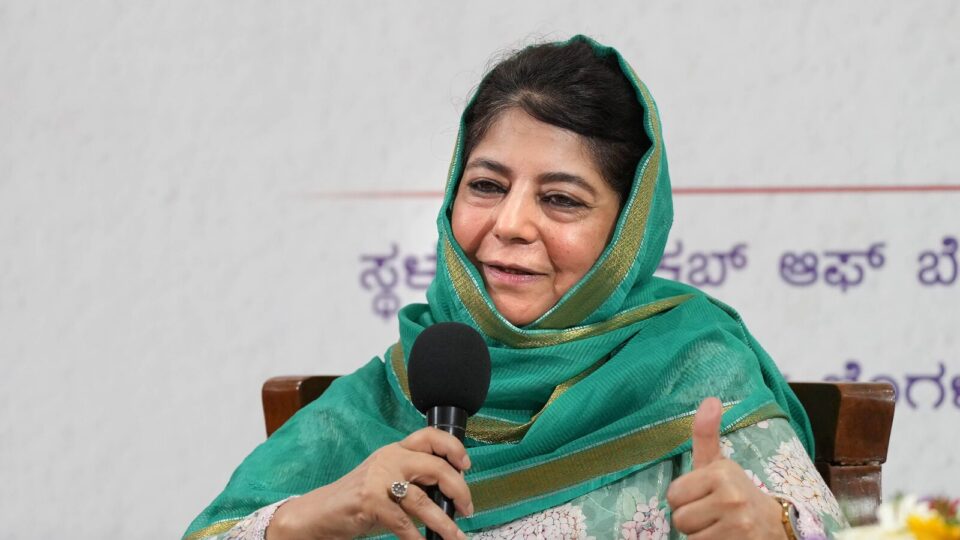
People’s Democratic Party President Mehbooba Mufti urged Gor to review and withdraw the highest-level advisory against Kashmir during his visit. Earlier, CM Omar had urged American diplomats to reconsider travel advisories and invited them to visit Kashmir with their families to help restore international confidence.
Before Gor arrived, CM Omar made clear that he did not intend to take Kashmir’s political complaints to a foreign envoy, saying the region’s problems should be resolved in New Delhi, not Washington.
Kashmir does not need Washington to arbitrate its politics. It does not need a foreign government to certify its constitutional status or define its relationship with India.
But asking a foreign government to update a safety warning is different.
And there is a strong economic case for doing so.
Kashmir entered 2025 with tourism at historic highs. According to government data cited by the Ministry of Tourism, Jammu and Kashmir recorded more than 65,000 foreign tourist visits in 2024, alongside more than 23.5 million domestic tourist visits. In the first six months of 2025 alone, the territory recorded 19,570 foreign and more than 9.5 million domestic visits.
Then came Pahalgam.
The tourism industry was hit almost immediately. Hotels reported mass cancellations, while tour operators, transporters, guides, houseboat owners, pony operators, restaurant workers and countless small businesses dependent on visitors suddenly found themselves without customers.
The damage has lasted.
A year after the attack, hotel occupancy in major Kashmir destinations was still reported at only 30 to 50 percent, according to industry representatives cited by The Economic Times.
This is why the American advisory has consequences beyond American passports.
Tourism is not merely about hotels. It is one of Kashmir’s great employment multipliers. A visitor who books a room also hires a taxi, eats at a restaurant, takes a shikara, buys handicrafts, employs a guide and spends money in markets. The income moves through households and villages far removed from the original booking.
When tourists stay away, the shock travels in the opposite direction.
For ordinary Kashmiris, therefore, the removal or downgrading of the U.S. advisory would mean more than the number of American tourists who might eventually arrive.
It would signal that Kashmir is no longer being viewed internationally through the single lens of exceptional danger.
That does not mean pretending the risks have disappeared. Kashmir remains geographically close to a heavily militarised and contested frontier, and the Pahalgam attack is a reminder that security cannot be taken for granted. The answer is not to ask foreign governments to ignore genuine risks.
The answer is to make the warnings reflect reality.
That is where Gor’s remarks are important. He said the central and Union Territory governments had taken steps that had made Kashmir safer and indicated that the existing advisory could be reassessed.
Washington should now follow that logic carefully and transparently.
If its assessment shows that the situation warrants a lower warning, it should say so. If some areas remain high-risk, those distinctions should be made clearly rather than placing an entire tourist economy under the shadow of a blanket warning.
Kashmir does not need a favour from America.
It needs an accurate description of itself.
And if that description is becoming safer, more open and more welcoming, then the most powerful message may be a simple change of words on a government website: not “Do Not Travel,” but “Reconsider” – or better still, travel with ordinary precautions.
For a region whose livelihoods depend on people choosing to come closer rather than stay away, that change could be worth far more than its wording suggests.
About the Author
Syed Sameer Ahmad Nazki is a filmmaker skilled in editing and videography, with an interest in visual storytelling and sports.