
Kashmir Impulse Desk
Srinagar, Nov 12
Lieutenant Governor Manoj Sinha on Thursday called for a people-led movement to preserve, document and promote Jammu and Kashmir’s cultural heritage, saying educational and cultural institutions had a responsibility to make the region’s historical legacy accessible to future generations.
Addressing a two-day seminar on the revival, preservation and sustainability of Kashmir’s cultural heritage, organised by Kakini Building Humanity, Sinha said Jammu and Kashmir’s contribution extended beyond its natural landscape to philosophy, spirituality, language, art and intellectual thought.
Referring to the philosopher Acharya Abhinavagupta, he said educational institutions should introduce younger generations to the thinkers and scholars who had emerged from the region.
“Every university, every teacher, and every cultural institution of this land should work on translating important texts, encourage research, and provide scholars and students with a common platform,” Sinha said.
He said heritage should remain relevant to contemporary society and guide future generations.
The Lieutenant Governor emphasised the preservation of ancient religious sites, manuscripts, museums and cultural institutions, saying the legacy of different communities should be safeguarded with sensitivity.
He said conservation initiatives were underway across Jammu and Kashmir through monument restoration, archival modernisation, archaeological research and the development of cultural infrastructure.
According to figures shared at the event, conservation work had been initiated on 106 heritage projects under the first two phases, of which more than 40 had been completed.
Under the third phase, 321 projects had been identified and 312 granted administrative approval.
The digitisation of historical records in the Jammu and Srinagar archives is also underway, with nearly 9.68 million pages digitised, accounting for about 68 per cent of available documents.
Under Mission Gyan Bharatam, surveys have identified 43,000 manuscripts, while digitisation work is progressing, Sinha said.
He also referred to ongoing initiatives involving the Sufiana School in Srinagar, the modernisation of Abhinav Theatre and Kala Kendra in Jammu, the restoration of Mubarak Mandi and research into recently discovered Kushan-era Buddhist remains in Baramulla district.
On the Naranag Heritage Complex in Ganderbal, Sinha welcomed research and documentation initiatives undertaken by Kakini Building Humanity and said conservation and restoration work was expected to begin after the completion of necessary procedural requirements.
He also referred to the Harmukh-Gangbal pilgrimage, describing it as part of the region’s cultural and spiritual traditions.
Sinha said Jammu and Kashmir had a long tradition of religious harmony and equal respect for different faiths.
“The vaakhs of Yogini Lalleshwari and Nund Rishi still reach people’s hearts across centuries, because their words contain eternal truths that are untouched by the passage of time,” he said.
He said preserving this tradition was a collective responsibility.
The Lieutenant Governor also described the contribution of Kashmiri Pandits to the region’s literary, spiritual and cultural heritage as invaluable, adding that their dignified return would help restore the Valley’s social and cultural fabric.
Union Culture and Tourism Minister Gajendra Singh Shekhawat joined the seminar virtually.
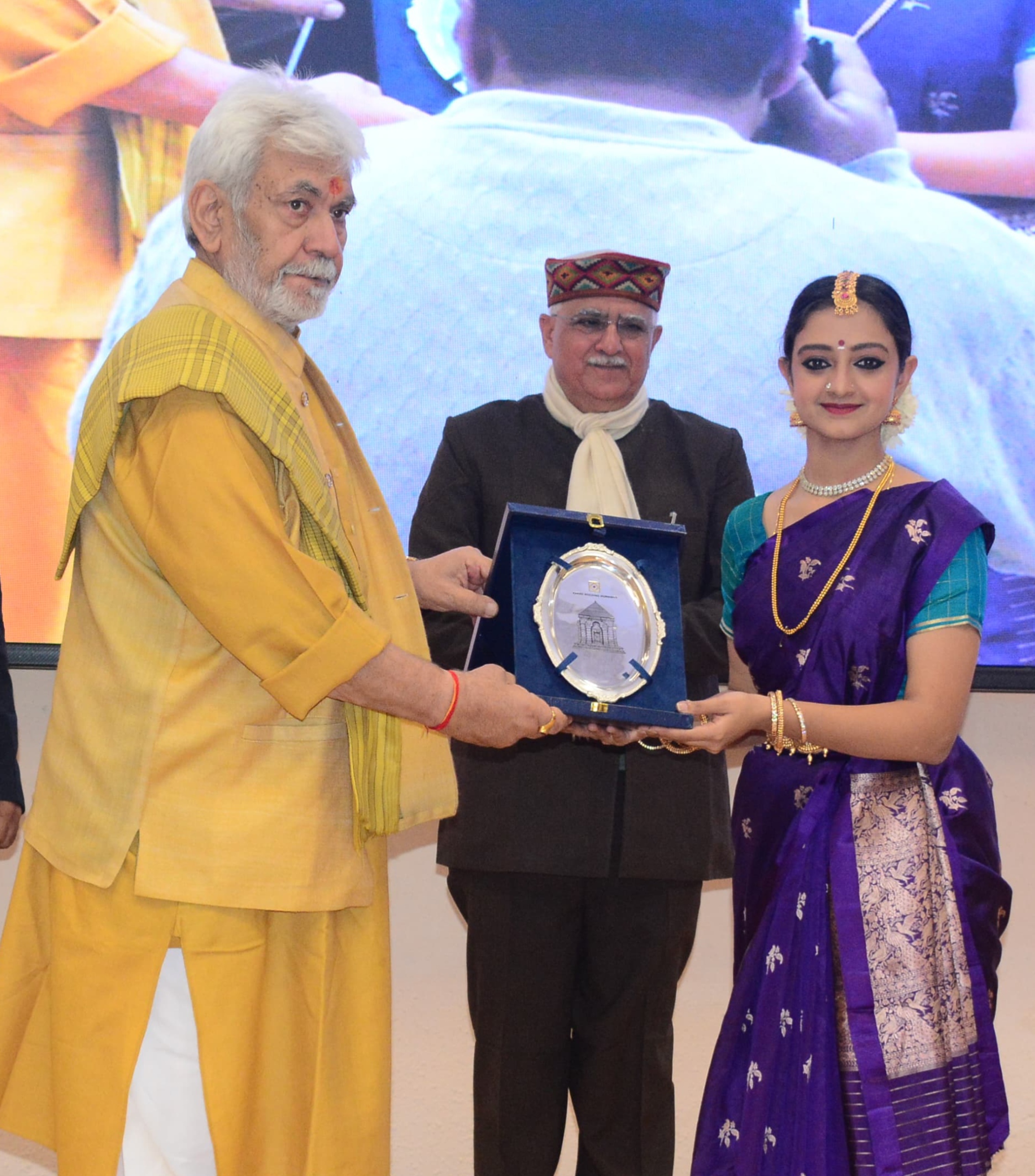
Several scholars, cultural figures and former military officers attended the event. Padma Vibhushan awardee Padma Subrahmanyam and other personalities were felicitated for their contributions to culture and heritage.