
For years, the Ujh River has carried its waters towards the Ravi, much of them eventually crossing the international border. Now, after years of delay, a project designed to harness that flow is once again moving forward – raising hopes that it could transform the economy of Kathua and parts of neighbouring Jammu and Kashmir and Punjab.
The revival of the Ujh Multipurpose Project in Kathua district has brought renewed attention to one of the region’s most ambitious water and power schemes.
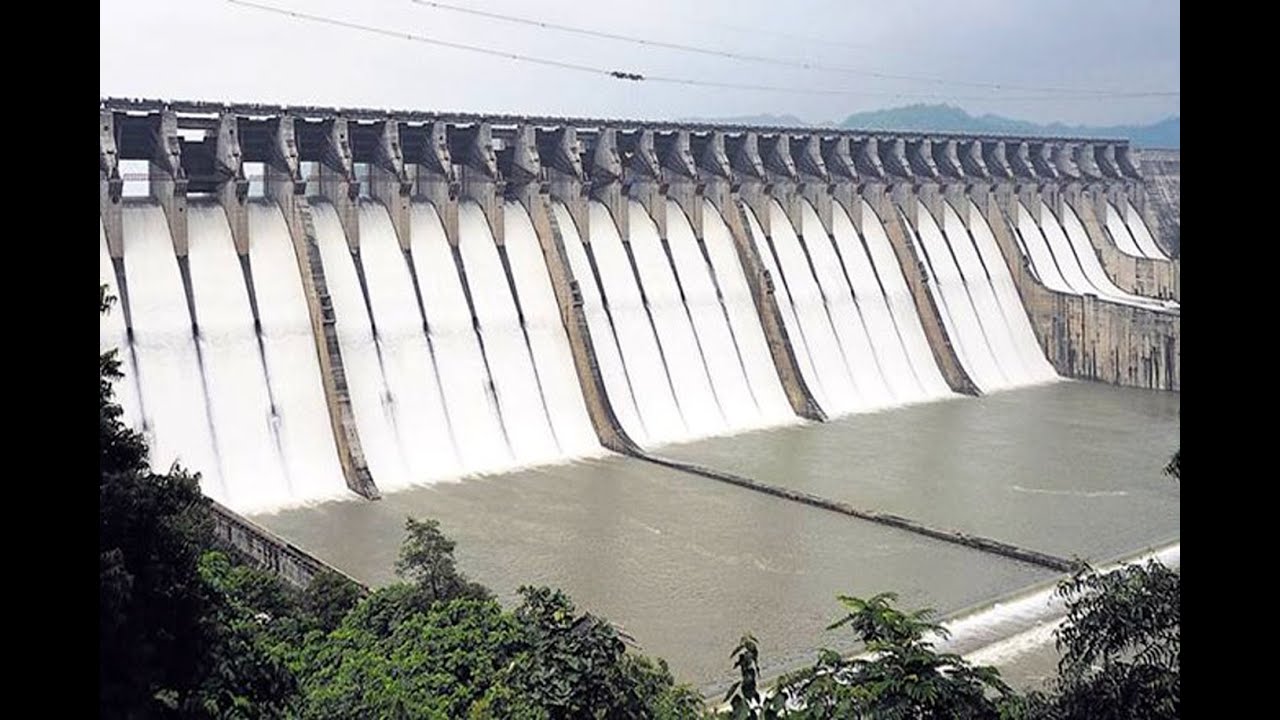
The project, located on the Ujh, a major tributary of the Ravi, envisages a 380-foot-high concrete-faced rockfill dam and a powerhouse expected to generate between 186 MW and 212 MW of electricity.
But its significance extends far beyond power generation.
The project is designed to provide irrigation to nearly 90,000 hectares of agricultural land across Kathua and Samba in Jammu and Kashmir and Pathankot and Gurdaspur in Punjab. It is also expected to provide drinking water to Kathua district and water for industrial use.
For farmers, households and businesses, the promise is straightforward: water that has long flowed through the region could become an economic resource.
“It has been discussed for years, and people here have been waiting to see the project move forward. If completed as planned, it could bring major changes to the area,” said Akshay Kumar, a resident of Kathua.
The project was declared a national project in 2008 but remained stalled for years. Its revival has now renewed expectations that the long-delayed scheme could become a catalyst for development.
For the farming communities of Kathua and Samba, irrigation may be the most immediate benefit.
Agriculture dependent on rainfall is vulnerable to uncertainty. Reliable irrigation can reduce that dependence and allow farmers greater control over cultivation, potentially improving yields and bringing additional land under productive use.
The benefits could be particularly important in tail-end areas, where farmers have historically struggled to receive adequate irrigation water.
“The project was revived due to the efforts of Union Minister Jitendra Singh. Earlier, water was not reaching the tail-end areas, but with the completion of this project, many villages in the tail-end areas of Kathua and Samba districts will receive irrigation water,” MLA Samba Surjeet Singh Slathia told Greater Kashmir.
He said the project could prove a major milestone for farmers by bringing more land under cultivation and improving agricultural productivity.
The effects could ripple outward.
More productive farms create demand for storage, transportation, agricultural equipment, processing and markets. A reliable water supply can therefore generate economic activity well beyond the boundaries of the fields it irrigates.
The project’s second major promise is electricity.
The proposed powerhouse is expected to generate between 186 MW and 212 MW, adding to the region’s hydropower capacity.
The project is also expected to make water available for industrial use.
For Kathua, that could become an important economic advantage. Industries require dependable supplies of both water and power, and uncertainty in either can discourage investment.
If the Ujh project delivers as planned, the additional resources could help attract new businesses and support employment.
Officials and residents also see potential in sectors beyond agriculture and industry.
The reservoir and associated infrastructure could create opportunities in tourism, transport, hospitality and related services.
But those gains will depend on what follows the construction itself.
Roads, tourism facilities, markets and other supporting infrastructure will determine whether the reservoir becomes an isolated engineering project or the centre of a broader economic ecosystem.
The Ujh project also carries a strategic significance because of its location near the international border.
Backed by the Ministry of Home Affairs, it is expected to improve regulation of water flows and strengthen surveillance and management along vulnerable stretches of the riverbed.
River channels can present difficult terrain for border management. Better control and monitoring of these areas could therefore have security implications, particularly along stretches that might otherwise be exploited as infiltration routes.
The project thus brings together several objectives that are usually discussed separately: agriculture, energy, drinking water, industry, border management and strategic water use.
For Kathua, the combination could make the project particularly consequential.
There is also a wider water-management dimension.
The Ujh is a tributary of the Ravi, one of the eastern rivers allocated to India under the Indus Waters Treaty.
At present, a portion of the Ujh’s flow crosses the international border without being fully utilised on the Indian side.
The project seeks to harness a greater share of that water for irrigation, drinking water, industry and power generation.
In practical terms, that means converting a seasonal flow into a managed resource.
In strategic terms, it represents a greater effort to utilise India’s share of the eastern river system.
The idea is not simply to store water but to put it to multiple uses before it leaves the country.
The revival of the project, however, does not erase the difficulties that contributed to its long delay.
Officials say work is being taken up in phases, with construction-related activities and land acquisition progressing simultaneously.
Large infrastructure projects can encounter complications involving land, engineering, environmental requirements, rehabilitation and construction schedules.
For communities that have waited years, the distinction between revival and completion will therefore matter.
The project’s real test will come when the promised benefits begin reaching people. When irrigation water reaches the tail-end villages. When electricity begins flowing from the powerhouse. When households receive a more reliable water supply. When businesses find enough confidence to invest. And when the economic activity expected around the reservoir actually materialises.
The Ujh has always been part of the landscape of Kathua. What is changing is the possibility of how its water will be used.
The numbers are substantial: nearly 90,000 hectares of irrigation, up to 212 MW of power, drinking water for Kathua and supplies for industry.
But the project’s larger promise lies in what those numbers could set in motion.
Reliable irrigation can strengthen agriculture. Water and electricity can support industry. Better infrastructure can encourage tourism and services. And greater utilisation of the river can strengthen both water security and strategic resilience.
That is why the revival of the Ujh Multipurpose Project is being viewed locally as more than the return of an old infrastructure proposal.
It is a bet that a river can become an engine of economic transformation.
For years, the Ujh simply flowed.
The hope now is that its waters will help the region move forward.
About the Author
Syed Sameer Ahmad Nazki is a filmmaker skilled in editing and videography, with an interest in visual storytelling and sports.