
For a child whose family cannot afford private-school fees, the announcement of a 25 percent reservation in entry-level classes could open a door that has long appeared out of reach. Jammu and Kashmir is preparing to implement the provision for children from economically weaker sections and disadvantaged groups under the Right of Children to Free and Compulsory Education Act. The rules are in the final stage of notification, Education Minister Shamim Firdous said at a review meeting on Tuesday.
The provision comes from Section 12(1)(c) of the RTE Act, which requires private schools to reserve 25 percent of entry-level seats for eligible children from economically weaker and disadvantaged backgrounds. The government says it will reimburse schools for admissible expenditure incurred in providing free and compulsory education to those students, according to the rules and procedures that will govern implementation.
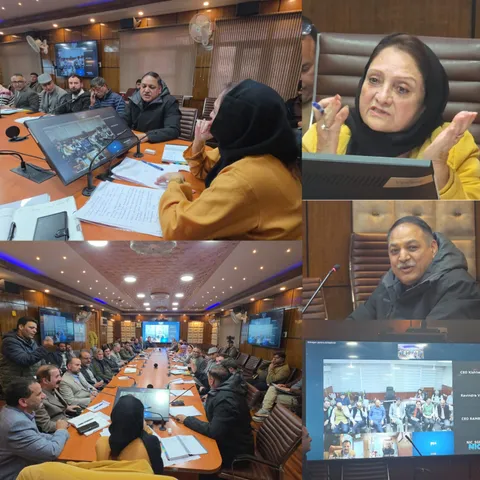
Firdous announced the decision at a meeting attended by senior School Education Department officials, representatives of private-school associations, parents’ groups and members of civil society. An official spokesperson said the rules were close to notification and would be issued shortly.
The announcement establishes the government’s intention, but the practical effect will depend on the details still to be notified. Parents will need to know how eligibility is determined, when applications open, what documents are required and how seats are allocated when demand exceeds availability. Schools will need a clear reimbursement process, including the method for calculating admissible expenditure and the timetable for payments.
Those details matter because a reservation on paper does not automatically produce access. Families may not know that they are eligible, may find the application process difficult or may be uncertain about which schools are covered. Schools, meanwhile, may be reluctant to participate if reimbursement is delayed or the rules are unclear. A transparent process can reduce disputes before they arise.
The RTE provision is intended to place children from disadvantaged backgrounds in private schools alongside their peers. Its promise is not limited to a seat in a classroom. It is also about whether a child can participate fully in school life without being singled out because of family income. Implementation will therefore need to address more than admission. It will require schools to treat eligible students on equal terms and ensure that access is not undermined by additional charges or informal barriers.
The minister’s review meeting also addressed a separate but related concern: the cost of schooling for families already enrolled in private institutions. It was decided that private schools affiliated with the Jammu and Kashmir Board of School Education must follow the JKBOSE curriculum and prescribe textbooks aligned with the NCERT syllabus. Firdous said students should not be burdened with unnecessary supplementary books, in keeping with the National Education Policy 2020’s emphasis on balanced and child-centred learning.
The minister advised schools to use libraries, book banks, e-books and digital resources where additional material is required, rather than compelling parents to purchase multiple sets of books. She also took note of complaints about the alleged sale of textbooks at excessive prices and said unnecessary prescriptions would not be tolerated.
The meeting considered uniforms, notebooks, writing materials and other supplies. Firdous said schools must not restrict parents to particular vendors or shops operating on school premises. Parents, she said, should be free to buy books, uniforms and other materials from vendors of their choice.
These measures address a different dimension of affordability. The 25 percent reservation concerns entry into private schools for eligible children. The directions on textbooks and supplies concern the expenses that can accumulate after admission. A child may receive a seat without tuition fees and still face financial pressure if families are required to buy costly books, uniforms or materials from specified sellers.
For the reservation to work, the government will need to make the rules accessible and publish a clear schedule. It should identify the schools covered, explain the eligibility criteria, establish a simple application route and provide a mechanism for parents to raise grievances. Schools should receive timely information about reimbursement, while families should be able to track applications and understand why a decision has been made.
The source material does not specify the number of eligible children, the number of private schools that will participate or the total budget required for reimbursement. Those figures will be important in assessing the scale of the programme. They will also help determine whether enough entry-level seats are available in locations where eligible families live.
The government’s decision is a step towards making private-school access less dependent on household income. But the measure will be judged by the experience of parents and children, not by the announcement alone. A reservation that is difficult to claim, poorly explained or inadequately reimbursed will leave its promise only partly fulfilled.
The same principle applies to the rules on books and supplies. Schools need academic freedom and access to useful learning material, but parents should not face avoidable costs or be compelled to buy from designated sellers. The objective should be to keep education focused on learning rather than on the volume and price of materials a student is required to purchase.
When the final rules are notified, the government will have to show that access, affordability and accountability can work together. The 25 percent provision offers a route into private classrooms for children who might otherwise be excluded. Its success will depend on whether that route is open, understandable and fair.
A useful implementation framework would publish district-wise admission figures and reimbursement timelines after the first cycle. It should also record how many eligible applicants were unable to secure a place and why. That information would allow the department to identify gaps in awareness, availability or procedure and adjust the programme before the next admission round. Without public reporting, families may have little way to know whether the reservation is being applied consistently across schools.
About the Author
Abid Nissar is a writer by fate, witty by mind, wicked by choice, and endlessly restless, peaceful, human, and always in motion.