
Kashmir Impulse Desk
New Delhi, April 12
High-stakes talks between the United States and Iran ended without a breakthrough after more than 21 hours of negotiations, highlighting deep divisions over key issues including Tehran’s nuclear programme and sanctions relief.
The first direct engagement in years between the two sides failed to yield an agreement, but diplomatic efforts are set to continue through indirect channels, with Pakistan and Oman expected to play mediating roles.
Despite the lack of progress, both sides are maintaining backchannel contacts in an effort to prevent further escalation in the region.
Iran’s foreign ministry downplayed the outcome, saying it had not expected a deal to be reached in a single round of talks.
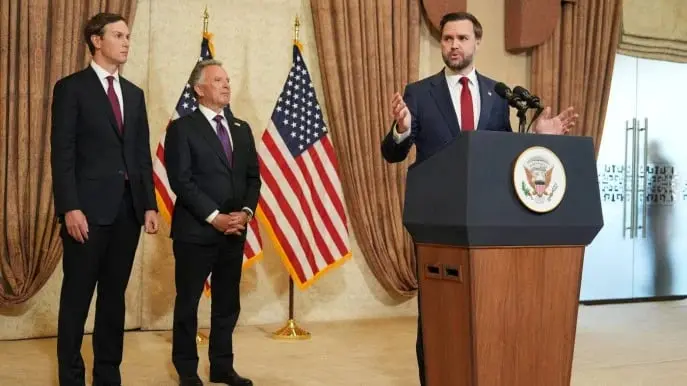
US Vice President J D Vance said one of the main sticking points remained Iran’s nuclear programme, which Washington views as a central security concern.
“We need to see an affirmative commitment that they will not seek a nuclear weapon, and they will not seek the tools that would enable them to quickly achieve a nuclear weapon,” Vance said, describing it as a core objective of President Donald Trump.
Vance said the absence of an agreement was “bad news”, adding it was “bad news for Iran much more than it’s bad news for the United States”.
The talks focused in part on turning a fragile ceasefire into a broader settlement, with the United States prioritising nuclear restrictions and Iran seeking relief from sanctions.
Significant disagreements also persisted over control of the Strait of Hormuz, a strategic waterway vital to global energy supplies, with both sides accusing each other of making unreasonable demands.
Iranian officials said Washington must respect Tehran’s “legitimate rights and interests”, while reiterating long-standing concerns over US policy.
Iranian parliament speaker Mohammad Bagher Ghalibaf, who led Tehran’s delegation, said Iran had negotiated in good faith and presented “forward-looking initiatives”.
“America has understood our logic and principles, and now it’s time for it to decide whether it can earn our trust or not,” he said in a social media post, thanking Pakistan for its mediation.
Iranian leaders pointed to longstanding mistrust shaped by past experience, including Washington’s withdrawal from the 2015 nuclear deal in 2018 under Trump, as a key obstacle to progress.
Pakistan’s Deputy Prime Minister and Foreign Minister Ishaq Dar said the talks had been “comprehensive and constructive” and urged both sides to remain committed to a ceasefire.
He expressed hope that negotiations would continue in a positive direction and said Pakistan would maintain its facilitative role in the process.
The talks, hosted in Islamabad and supported by Prime Minister Shehbaz Sharif, were seen as an important attempt to reduce tensions, but ended with both sides holding firm to their positions.
While no immediate progress was achieved, officials indicated that diplomacy would continue, leaving open the possibility of future engagement.