
Kashmir Impulse Desk
New Delhi, July 29
India’s lower house of parliament on Wednesday passed legislation seeking tougher punishment for examination paper leaks and faster trials, with the government saying it was “open to learning from experiences”.
The Public Examinations (Prevention of Unfair Means) Amendment Bill, 2026, introduced by Union Minister Jitendra Singh, proposes prison terms of five to 10 years and fines of up to 50 million rupees for individuals involved in paper leaks and other unfair practices.
For organised offences, the bill proposes a minimum seven-year prison term and a fine of up to Rs 100 million.
The legislation also calls for investigations to be completed within two months and allows state governments and federal territories to designate sessions courts as special fast-track courts. Trials would be conducted on a day-to-day basis and completed within three months of the filing of chargesheets.
The federal government would also be able to establish a special task force to investigate cases when necessary.
Singh said the government had acted swiftly in the NEET paper leak case and that 52 first information reports had been filed since the original anti-paper leak law came into force in 2024.
He criticised opposition protests during the debate, saying lawmakers should discuss the legislation rather than politicise it.
The bill was introduced amid protests over the government’s handling of student demonstrations linked to the NEET examination controversy. The protests led by the Cockroach Janta Party were called off on Saturday after Education Minister Dharmendra Pradhan resigned and the government accepted the group’s other demands.
Prime Minister Narendra Modi on Sunday announced a high-powered task force headed by Infosys co-founder Nandan Nilekani to recommend reforms aimed at preventing examination leaks.
The 2026 amendment lists 15 offences, including leaking question papers, tampering with OMR sheets, creating fake examination websites and issuing counterfeit admit cards.
The original 2024 law was enacted after a series of controversies over examination leaks. It covers public examinations conducted by bodies including the Union Public Service Commission, Staff Selection Commission, railways, banking recruitment agencies and the National Testing Agency.
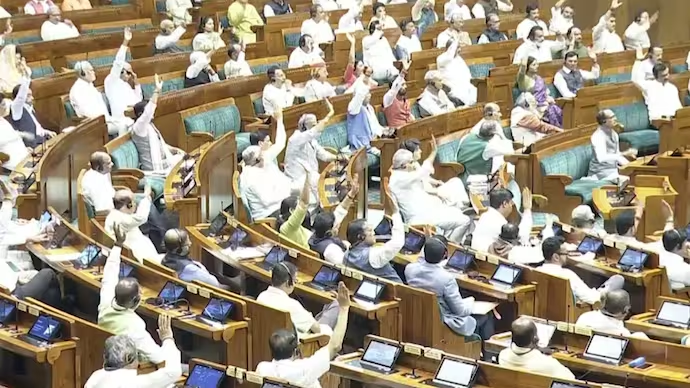
The bill was passed after opposition protests disrupted proceedings, and the Lok Sabha was adjourned for the day immediately afterwards.