

Kashmir Impulse Desk
Jammu, Oct 10
Jammu and Kashmir is seeking to attract Global Capability Centres (GCCs), leveraging its young workforce, improving infrastructure and investor incentives to position the region as a destination for multinational companies, Lieutenant Governor Manoj Sinha said on Saturday.
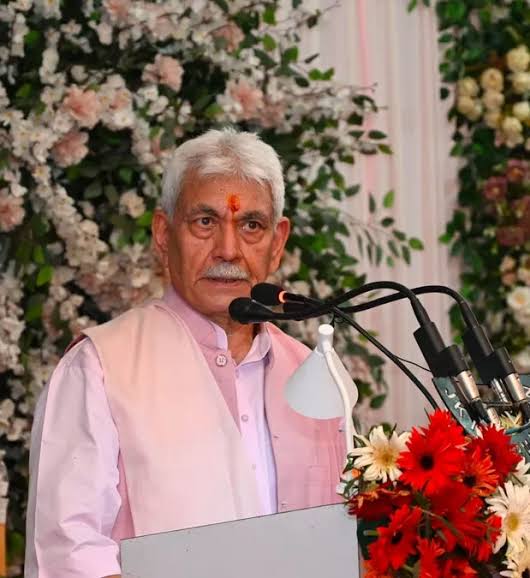
Addressing the concluding session of the J&K Global Capability Centre Summit 2026, Sinha said the region had the potential to move beyond hosting capability centres and become a source of innovation for global businesses.
He urged industry representatives and institutions to work together to make Jammu and Kashmir a preferred location for companies seeking talent, innovation and operational capacity.
Congratulating the Indian Institute of Management Jammu, NASSCOM, partner institutions and the administration on organising the two-day summit, Sinha said the expansion of GCCs into smaller Indian cities offered an opportunity for the Union Territory.
India has more than 2100 GCCs employing over 1.9 million professionals and contributing substantially to exports, he said. An increasing number of these centres are expanding beyond major metropolitan areas into smaller cities, reflecting the wider distribution of India’s skilled workforce.
Sinha said Jammu and Kashmir needed to strengthen its institutions, infrastructure and innovation ecosystem to capitalise on the trend.
He drew a parallel between the region’s development ambitions and the Chenab Rail Bridge, the world’s highest railway arch bridge, describing the structure as a symbol of confidence and the ability to pursue large-scale projects.
The Chenab River, formed by the confluence of the Chandra and Bhaga rivers, also illustrated the value of collaboration, he said.
GCCs could similarly combine multinational companies’ expertise, capital and technology with the talent and ambitions of Jammu and Kashmir’s young people, Sinha said.
He said the sector had evolved from a focus on cost efficiency to one centred on specialised capabilities and excellence.
Sinha attributed improvements in connectivity and infrastructure, rising industrial investment and the expansion of startups to development initiatives under Prime Minister Narendra Modi.
Jammu and Kashmir had 69 startups in 2020, compared with 1305 now, an increase of more than 1800 percent, he said.
Graduates from IIM Jammu, IIT Jammu, the National Institute of Technology Srinagar, and other institutions could help provide the workforce needed by global companies.
The Lieutenant Governor identified six advantages for potential investors: financial support, lower operating costs, incentives for pioneering multinational investors, returning local talent, first-mover opportunities and potential in specialised fields such as agricultural technology, tourism technology and the digitisation of handicrafts.
He outlined a four-pillar strategy for the next five years, focusing on talent development through industry-academia partnerships, credible implementation to build investor confidence, leveraging the region’s distinctive advantages and promoting inclusive growth through a hub-and-spoke model.
Sinha said GCCs could become an important part of Jammu and Kashmir’s industrial ecosystem over the next decade.
Those attending the session included Chief Secretary Atal Dulloo; NIIT Chairman Rajendra Singh Pawar; IIM Jammu Director B S Sahay; Labour and Employment Secretary Kumar Rajeev Ranjan; IIM Jammu Dean of Faculty and Research Jabir Ali; IIM Jammu Dean of Academics Nitin Upadhyay; and Sandeep Ananthanarayanan, chief executive of CITaG at IIM Jammu.