
Kashmir Impulse Desk
Srinagar, Aug 10
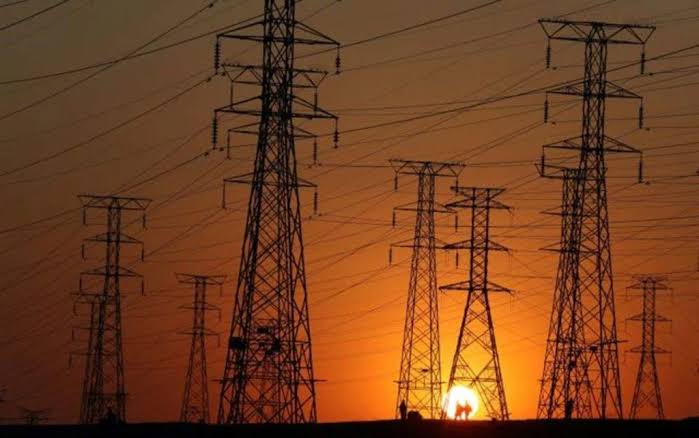
Jammu and Kashmir’s peak electricity demand crossed 3000 megawatts in May, reaching 3063 MW during daytime hours as summer temperatures drove consumption higher, according to data presented by India’s Ministry of Power in Parliament.
The figures show that the region’s power system met the full daytime peak in May but faced a shortfall during non-solar hours, when demand reached 2816 MW and supply met 2776 MW, leaving a gap of 40 MW.
The figures were provided in response to a Rajya Sabha question on peak power demand during the summer of 2026 and cover April, May and June.
May recorded the highest peak demand in J&K during the three-month period.
In April, daytime peak demand stood at 2715 MW and was fully met.
Non-solar peak demand was also 2715 MW and was met in full.
Demand then rose by 348 MW, or nearly 13 percent, in May to reach 3063 MW during daytime hours.
Although the full daytime peak was met, the system came under greater pressure during non-solar hours, when the 40-MW gap was recorded.
By June, peak demand had eased to 2653 MW during daytime hours, all of which was met. Non-solar demand stood at 2592 MW and was also fully supplied.
The data indicate that May was the most demanding month for J&K’s electricity system during the April-June period, while the only recorded peak shortfall occurred during the month’s non-solar period.
The pressure was also visible in overall energy supply.
In May, J&K’s energy requirement stood at 1637 million units, against supply of 1626 million units, leaving an 11-million-unit gap.
In April, the requirement was 1548 million units and supply 1544 million, leaving a four-million-unit gap.
In June, requirement stood at 1584 million units against supply of 1569 million units, a 15-million-unit shortfall.
At the national level, India’s all-time peak demand in May reached 270.8 GW during solar hours and 253.3 GW during non-solar hours, both of which the system met, according to the ministry.
India’s installed generation capacity stood at 548.86 GW as of June 2026.
The ministry said the country had added 324.7 GW of generation capacity since April 2014, moving from a power-deficit situation towards a power-sufficient system.
It said marginal differences between energy requirement and supply are generally associated with constraints in state transmission and distribution networks.
For J&K, the May figures highlight the importance of maintaining sufficient capacity when solar generation is unavailable or reduced.
While daytime demand was fully supplied, the non-solar peak exposed a 40-MW gap.
The central government has planned additional storage and dispatchable capacity to meet future peak demand.
Projected pumped-storage additions for financial years 2027-28 through 2029-30 total 10,950 MW.
Planned Battery Energy Storage System additions stand at 19,766.44 MW in 2027-28, 18,913.78 MW in 2028-29 and 1200 MW in 2029-30.
The Central Electricity Authority publishes monthly and annual power supply reports based on state-wise data covering energy requirements, energy supplied, peak demand, and peak demand met.