
Kashmir Impulse Desk
New Delhi, April 12
Iran said the United States failed to build trust during negotiations in Islamabad that ended without agreement, with senior officials in Tehran adopting a firm stance following the talks.
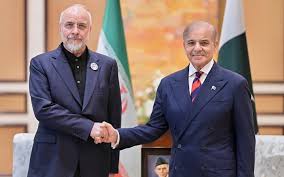
Iranian parliament speaker Mohammad Bagher Ghalibaf, who led Tehran’s delegation, said it was now up to Washington “to decide whether it can earn our trust or not”.
In a post on X, Ghalibaf said Iran had entered the negotiations in “good faith and will” but remained sceptical due to past conflicts. He added that while Tehran had presented “forward-looking initiatives”, the United States “ultimately failed to gain the trust of the Iranian delegation in this round of negotiations”.
He said Iran would continue to consolidate what he described as gains from its recent conflict and would not halt efforts tied to its “national defence”.
A key sticking point was the Strait of Hormuz, a strategic waterway that carries roughly a fifth of global oil and liquefied natural gas supplies. Iranian officials signalled that control over the strait remained non-negotiable.
Deputy Parliament Speaker Haji Babaei was quoted by Iranian media as saying the waterway was “completely in Iran’s hands” and that tolls “must be paid in rials”, underscoring Tehran’s assertion of sovereignty.
Iran’s Islamic Revolutionary Guard Corps also warned that any attempt by foreign military vessels to pass through the strait would face a strong response.
The position contrasts with that of Washington. U.S. Vice President J. D. Vance said American “red lines” had been clearly communicated, but acknowledged Iran had not accepted U.S. terms.
President Donald Trump said the strait would “soon be open”, while U.S. Central Command said naval destroyers had transited the waterway to conduct mine-clearing operations, claims denied by Iran.
Analysts said the failure to reach a deal was not unexpected. Washington was seen as entering the talks expecting Iran’s recent military setbacks to force concessions, while Tehran appeared to believe it retained leverage, particularly through its strategic position over the Strait of Hormuz.
Iranian foreign ministry spokesperson Esmail Baghaei described the talks as taking place in an atmosphere of “mistrust, suspicion and doubt” following weeks of conflict.
He also cautioned against expecting a rapid breakthrough. “We should not have expected from the start that we could reach an agreement in a single session,” he said, adding that “diplomacy never ends”.
The talks, hosted by Pakistan and mediated by Prime Minister Shehbaz Sharif, followed heightened tensions and uncertainty over whether negotiations would proceed.
Delegations from both sides arrived under tight security and initially held separate meetings with Pakistani officials before beginning direct discussions that continued overnight.
While both sides have now left without an agreement, Iranian officials framed the outcome as part of a longer diplomatic process, noting that past breakthroughs between Tehran and Washington took months of negotiations.
For now, however, divisions remain wide, with Iran emphasising resilience and strategic leverage, and the United States maintaining that Tehran must accept its terms, leaving the prospects for further talks uncertain.