
Kashmir Impulse Desk
Jammu, April 2
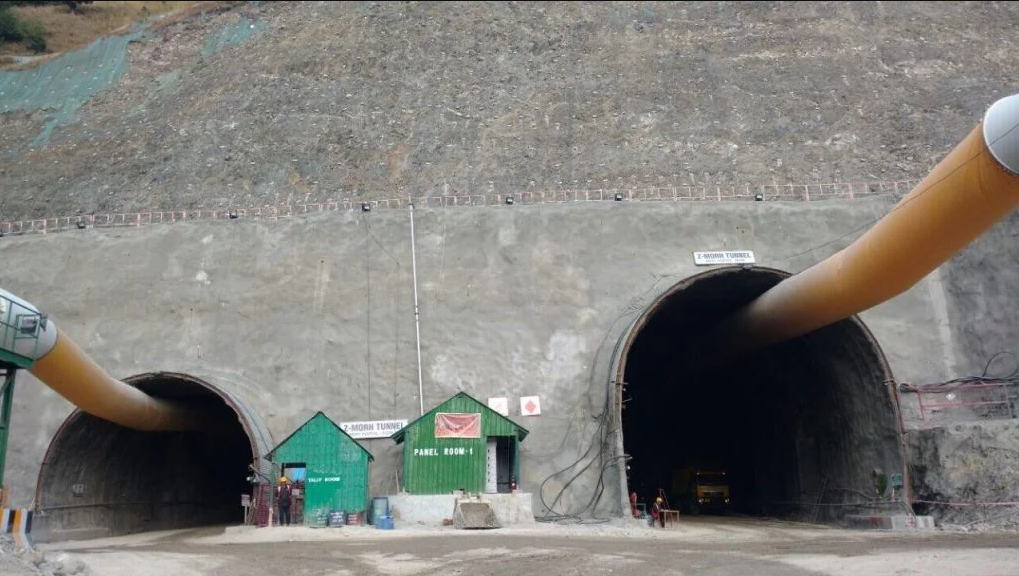
The government approved plans for a tunnel linking the remote Machil sector in Kupwara district with rest of the Kashmir valley, a project officials say is intended to provide year-round connectivity to a region frequently cut off by heavy snowfall.
Deputy Chief Minister Surinder Choudhary told the Legislative Assembly on Thursday that the project, connecting Machil to Z-Gali, has been sanctioned, with a Detailed Project Report (DPR) now being prepared for its inclusion in the government’s Annual Works Plan for 2026-27.
For residents of Machil, a border area near the Line of Control (LoC), winter often brings weeks of isolation as snow blocks roads and disrupts the movement of people, supplies and emergency services.
Officials say the tunnel could ease those disruptions, offering a more reliable route through terrain that is otherwise difficult to traverse for much of the year.
Choudhary said the approval had been granted under a budgetary category used for infrastructure projects outside capital acquisition, and that further planning would determine timelines and costs.
Until such projects are completed, the government relies on contingency measures to manage the winter months.
These include advance stocking of essential supplies and arrangements to maintain access to health care and other basic services in remote areas.
The announcement comes amid broader demands for improved connectivity in the region’s mountainous districts.
Lawmakers noted that residents have also called for a separate tunnel linking the Lolab Valley in Kupwara with Bandipora, citing both economic and strategic considerations.
While the Machil project is still in its early stages, its approval signals a continued focus on infrastructure in border regions, where geography and weather have long shaped daily life.