
The numbers are falling. The danger is not.
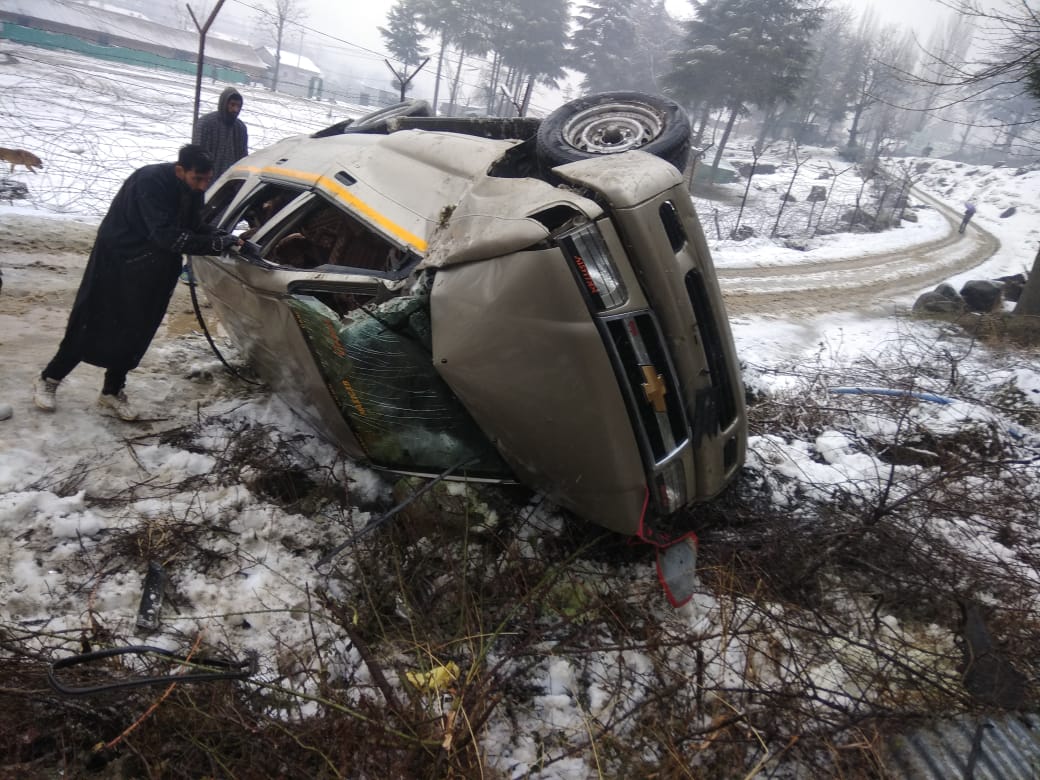
At least 603 people were killed and another 4775 injured in 3,269 road accidents across Jammu and Kashmir between January 1 and the end of July, according to official data – a toll that has kept road safety among the region’s most persistent public concerns.
The scale of the problem is particularly stark in Jammu division, where a combination of busy highways, rapidly expanding traffic, difficult terrain and a concentration of accident-prone stretches has made the region the principal hotspot of road crashes in J&K.
National highways and expressways across the Union Territory accounted for 1109 crashes during the period, leaving 206 people dead and 1,658 injured.
The figures offer a complicated picture. The number of highway accidents has fallen substantially in recent years, from 2,378 in 2022 to 2,342 in 2023, 2,120 in 2024 and 1,867 in 2025. Yet the continued number of deaths shows that fewer crashes do not necessarily mean safer roads.
In the mountains, a single mistake can still have catastrophic consequences.
Authorities have identified 74 accident-prone “black corridors” across Jammu and Kashmir and Ladakh, including 73 in J&K and one in Kargil. The overwhelming majority are concentrated in Jammu division.
Jammu district alone accounts for 30 such corridors. Samba has 14 and Kathua 13. Udhampur and Reasi have four each, while Rajouri has two.
Several of these stretches fall along heavily travelled highway corridors, including routes connected with the Delhi-Amritsar-Katra Expressway network, where rising traffic volumes are adding another layer of complexity to an already difficult road environment.
The result is a road-safety paradox: infrastructure is expanding, accident numbers are declining, but the consequences of crashes remain severe.
The district-level figures underline the concentration of risk.
Kathua recorded 372 accidents and 34 deaths during the period covered by its district tracker. Rajouri recorded 287 crashes and 32 deaths, while Samba reported 214 accidents and 29 fatalities. Doda recorded 191 accidents and 21 deaths.
These figures are not directly comparable in every case because district trackers cover different reporting periods, but together they reveal sustained accident activity across the Jammu region.
Jammu district’s position is particularly concerning.
In 2025, it recorded 937 accidents, 212 deaths and more than 1,100 injuries, making it the worst-affected district in J&K.
The broader annual numbers show why the issue remains difficult to resolve. J&K recorded 5,318 road accidents, 984 deaths and 7,594 injuries in 2025, compared with 5,808 accidents and 831 deaths in 2024.
The decline in the number of crashes has therefore not translated into a comparable reduction in fatalities. In fact, the increase in deaths between 2024 and 2025 points to another problem: the growing severity of individual crashes.
On mountain roads, that severity is often dictated by the landscape itself.
Steep gradients, sharp bends, narrow carriageways, unstable slopes and sudden changes in weather leave drivers with little room for error. The risks are particularly pronounced along the hilly stretches of Ramban, Doda and Kishtwar.
A vehicle travelling too fast into a bend does not need much encouragement from the road to become a disaster.
Perhaps the most troubling trend is taking place outside the statistics on highways.
Pedestrians are increasingly becoming victims of the region’s road-traffic crisis.
Pedestrian fatalities rose sharply from 101 in 2021 to 477 in 2025. Another 226 pedestrian deaths and more than 1,000 injuries were recorded through late July this year.
The rise points to a road-safety problem that cannot be solved simply by policing drivers on highways.
Pedestrians encounter traffic in towns, on market roads, near schools, at bus stops and along stretches where roads have expanded faster than pedestrian infrastructure.
A highway can be engineered to move vehicles efficiently while remaining dangerous for people who have to cross it.
The challenge is therefore broader than reckless driving. It involves how roads are designed, how traffic is managed and how vulnerable road users are protected.
Officials and Ministry data identify familiar causes: excessive speed, rash and negligent driving, mobile-phone use, failure to wear helmets and seat belts, and driving under the influence of alcohol.
Yet human behaviour is only one part of the equation.
Poor road conditions, vehicle defects and the difficult Himalayan terrain can compound the consequences of a mistake.
In hilly districts, a crash does not necessarily end when two vehicles collide. A vehicle can leave the carriageway, plunge down a slope or collide with roadside infrastructure. A damaged crash barrier, inadequate signage or poor visibility can turn what might have been a survivable accident into a fatal one.
The timing of crashes also matters.
Most accidents are reported during afternoon and evening hours, prompting authorities to intensify enforcement and monitoring during periods when traffic and human activity are typically high.
But enforcement faces a familiar problem: a road network can stretch for hundreds of kilometres, while police and transport authorities have finite personnel and equipment.
Technology is increasingly being deployed to bridge that gap.
J&K’s road-safety strategy is built around the “4E” approach: Education, Engineering, Enforcement and Emergency Care.
The idea is straightforward. Roads cannot become safer through policing alone.
Education is intended to change behaviour before a crash occurs. Engineering seeks to remove physical hazards from the road. Enforcement aims to deter violations. Emergency care attempts to reduce the human cost when prevention fails.
Authorities have identified and begun working on black spots and accident-prone corridors, while road-safety audits are being used to identify engineering deficiencies.
Improved signage and crash barriers are among the measures being pursued along vulnerable stretches.
Enforcement has also expanded through e-challans, vehicle seizures and suspension of driving licences. Additional enforcement vehicles and body cameras have been deployed to strengthen monitoring and accountability.
But the effectiveness of these measures will ultimately depend on whether they alter behaviour and conditions on the ground.
A driver who receives a challan after speeding has already committed the dangerous act. A properly engineered road that prevents the vehicle from leaving the carriageway can sometimes stop that mistake from becoming fatal.
That is why the engineering component may prove especially important in the mountains.
The final E – emergency care – begins where prevention ends.
For victims of serious crashes, the minutes after an accident can determine whether injuries become fatal.
Authorities have therefore sought to strengthen emergency response mechanisms, including cashless treatment support under PM-RAHAT and assistance under the Good Samaritan framework.
The latter is intended to encourage members of the public to assist crash victims rather than remain bystanders because of fear of legal or procedural complications.
Compensation is also being provided to affected families through the Road Accident Victim Fund.
But financial assistance, while important, comes after the loss.
For families, the more consequential question is whether the next crash can be prevented.
A road network in transition
J&K’s roads are changing rapidly.
New highways and expressway links are altering travel patterns, connecting previously distant areas and increasing the movement of passenger and commercial vehicles. Improved connectivity is vital to the region’s economy and communities, but it also creates new demands on road-safety systems.
A road built primarily to move vehicles quickly requires corresponding investment in enforcement, emergency response, pedestrian protection and crash-resistant infrastructure.
The growing network of black corridors provides one way of identifying where those investments are most urgently required.
The concentration of high-risk stretches in Jammu division also suggests that road-safety resources cannot necessarily be distributed evenly across the region.
Jammu, Samba and Kathua stand out in the official mapping of dangerous corridors. The hilly districts of Doda, Ramban and Kishtwar face a different set of risks, where terrain and road geometry can amplify the consequences of driver error.
Ladakh and Kargil present another challenge altogether, with extreme terrain, long distances and difficult weather adding to the vulnerability of road users.
The statistics may eventually continue their downward trajectory. But the goal cannot simply be fewer crashes.
It must be fewer deaths.
That distinction is increasingly important as the region tries to modernise its transport network.
A fall from thousands of accidents to fewer crashes is progress. But when hundreds of people are still dying every year – and pedestrians account for an increasingly large share of the toll – the numbers suggest that the road-safety problem has changed rather than disappeared.
The task now is to make the decline in crashes translate into a sharper decline in deaths.
That will require more than challans and awareness campaigns. It will require roads designed to forgive mistakes, vehicles kept fit for the terrain, drivers deterred from dangerous behaviour, emergency teams able to reach victims quickly, and authorities willing to treat the most dangerous corridors as engineering problems rather than merely enforcement zones.
The Himalayan road is unforgiving. The safety system around it cannot be.
About the Author
Tabish Khan is a multimedia journalist and postgraduate in Convergent Journalism, working across text, video, social media, and digital storytelling.