
In a residential neighbourhood of Srinagar, a modest public notice has opened a much larger conversation about what it means to celebrate in a densely populated society: where the freedom to rejoice ends, and the right of everyone else to peace begins.
The notice, issued on August 11 by the Masjid and Mohalla Welfare Committee of Masjid Bilal in Waza Bagh, Hyderpora, asks residents to abandon loudspeakers, high-volume sound systems and firecrackers during weddings and other celebrations. Its language is neither punitive nor hostile to celebration. Instead, it appeals for restraint, invoking the comfort and rights of neighbours, particularly elderly people, patients, students and children.
But the response to the notice has been significant because the problem it identifies extends far beyond one neighbourhood.
Residents across Kashmir say celebrations that once marked a few hours of joy can increasingly stretch late into the night, with amplified music, outdoor sound systems, shouting and fireworks spilling from private compounds into entire residential streets. What is festive for one household can become an intrusion for dozens of others who have no role in the event and no way to escape it.
The question, therefore, is not whether Kashmir should celebrate. It is how it can celebrate without making everyone within earshot participate.
The distinction matters.
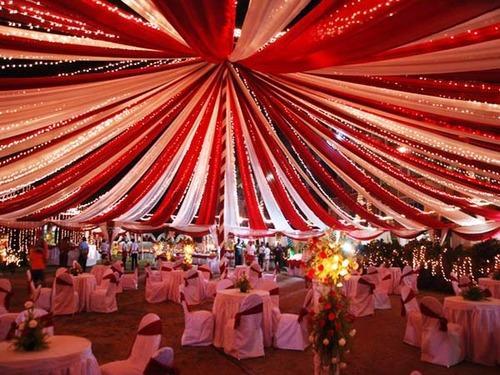
Weddings are among the most important social occasions in Kashmir. They bring families together, reconnect relatives and neighbours, and occupy a central place in the cultural life of the Valley. Religious and social festivals, family gatherings and other occasions likewise deserve to be marked with happiness.
Yet celebration is not a licence to occupy the public soundscape indefinitely.
For the elderly, a night of amplified music can mean a night without sleep. For someone recovering from illness, it can turn a period of rest into prolonged discomfort. For students preparing for examinations, an uninterrupted stream of bass and amplified voices can make concentration difficult. For families with infants and young children, sudden fireworks and loud music can turn the night into a struggle.
And for people who simply need to sleep before work the next morning, there is a more basic issue: their homes are supposed to be places where they can close the door and expect some degree of quiet.
That expectation is increasingly being challenged.
The Waza Bagh notice is notable precisely because it comes from within the community. Rather than framing the issue as a confrontation between residents and authorities, the Mohalla Welfare Committee has asked people themselves to exercise restraint. It says functions should be conducted peacefully and with dignity, and warns that violations may be reported to the police or concerned departments and could invite action under law.
Locals now want the principle behind the notice to be applied much more broadly.
They argue that restrictions should not depend on which neighbourhood happens to have a particularly active residents’ committee or on whether a complaint attracts official attention. If noise regulations exist, they say, they should apply consistently across Kashmir.
That would require more than occasional intervention.
Authorities could establish a clear and predictable mechanism for monitoring noise during wedding seasons and other periods when large gatherings become frequent. Police and civil administration officials could respond to complaints, while local committees, mosque committees, community organisations and event organisers could help prevent violations before they occur.
The aim should not be to criminalise ordinary social life. It should be to establish a culture of consideration.
In many residential communities, noise is treated as a private matter until it becomes intolerable. A family may reason that a wedding happens only once, that relatives have travelled from far away, or that everyone is celebrating. Those arguments are understandable. But the people living nearby may have weddings, illnesses, examinations, early shifts and ordinary lives of their own.
The fact that an event is exceptional for one household does not make its consequences exceptional for everyone else.
This is where the idea of privacy becomes important.
Privacy is usually understood as freedom from unwanted observation or interference. But there is another dimension to it: the ability to retreat into one’s home without being subjected to activity generated elsewhere. A home should offer a degree of control over one’s immediate environment. When sound from a wedding hall, banquet venue, street gathering, or private residence enters that home for hours, particularly late at night, that boundary becomes porous.
A person may shut a window, but not necessarily shut out a powerful speaker system.
A family may turn off its television, but it cannot turn off the music coming from a celebration several houses away.
This is why noise is different from many other forms of inconvenience. It is involuntary. One can choose not to attend a wedding. One cannot always choose not to hear it.
There is also a health dimension to prolonged and excessive noise. Sleep is not merely a luxury that people can sacrifice for the sake of social occasions. It is fundamental to physical and mental well-being. Repeated disruption of sleep can affect concentration, mood, productivity, and overall health. For vulnerable people, including the elderly and those already unwell, the consequences can be more serious.
That makes nighttime quiet a community concern rather than an individual preference.
Kashmir’s towns and cities have changed rapidly. Residential areas have become denser, homes stand closer together, roads are busier, and social functions increasingly take place in neighbourhoods where large numbers of people live within a small area. The old assumption that a celebration affects only the celebrating family and its immediate guests is therefore increasingly untenable.
The sound carries.
And because it carries, responsibility must carry with it.
The challenge for the administration is to strike a balance. Excessive regulation can make ordinary citizens feel that authorities are interfering unnecessarily in private and cultural life. But the absence of enforcement creates the opposite problem: rules become meaningless, and the most aggressive use of sound equipment effectively determines what everyone else must endure.
Uniform enforcement would help resolve that imbalance.
Residents are not asking for weddings to be cancelled, music to disappear or festivities to become joyless. Their demand is considerably more modest: celebrate, but do not force the neighbourhood to celebrate with you.
That principle could be communicated clearly to wedding organisers, banquet halls, event managers and families planning large gatherings. Venues could be encouraged to inform clients about permissible sound levels and hours. Local authorities could establish straightforward complaint mechanisms. Repeated violations could attract proportionate penalties, while ordinary functions conducted within reasonable limits would continue without interference.
Such an approach would also remove the perception of selective enforcement.
When one neighbourhood faces action while another is allowed to continue with loud celebrations deep into the night, residents can reasonably question the fairness of the system. A Kashmir-wide policy, applied according to the same standards, would make the rules easier to understand and easier to respect.
There is a deeper social principle at stake as well.
A community is not simply a collection of people pursuing their individual preferences. It is an agreement to accommodate one another. That accommodation is often invisible when everyone behaves with consideration. It becomes painfully visible when one person’s freedom overwhelms another person’s ability to live normally.
The same principle applies to weddings.
A wedding can be joyous without being deafening. A gathering can be memorable without fireworks exploding after midnight. Music can be enjoyed without being broadcast through powerful speakers into neighbouring bedrooms. Celebration does not become less meaningful because it ends at a reasonable hour.
Indeed, restraint can itself be a form of dignity.
The appeal from Waza Bagh comes at a time when communities across Kashmir are negotiating the pressures of changing urban life. The Valley’s traditions remain strong, but traditions have always adapted to circumstances. A generation ago, the scale and technology of amplification were different. Today, a sound system can carry music far beyond the boundaries of the gathering that hired it.
That technological change requires a corresponding change in social responsibility.
The goal should be a culture in which families organising weddings think about the people outside the guest list before turning up the volume. It should become normal for hosts to ask not only, “Will our guests enjoy this?” but also, “Will our neighbours be able to sleep?”
That question is particularly important after dark.
Nighttime is different from daytime. The expectation of quiet becomes stronger as businesses close, children go to bed, and people return home from work. A celebration that may be tolerable in the afternoon can become deeply disruptive at midnight.
The right to celebrate does not disappear at night. But neither does the right to rest.
The notice from Masjid Bilal is therefore more than a local instruction. It is a small example of community self-regulation at a time when official enforcement alone may not be enough. Its appeal to “peace and harmony” captures the central idea: social peace is not created merely by preventing conflict. It is created by recognising that other people have legitimate needs even when those needs are invisible to us.
Kashmir’s wedding season will continue. Families will gather, songs will be sung, and milestones will be celebrated. They should be.
But celebration should leave room for the neighbour who has an examination in the morning, the patient who needs sleep, the elderly person who cannot tolerate prolonged noise, the child who has finally fallen asleep, and the worker who must wake before dawn.
A good celebration creates happiness for those inside it.
A good community makes sure that happiness does not become suffering for those outside it.
The call now from residents is for authorities to turn that principle into a consistent practice across Kashmir – not through a campaign against weddings or festivities, but through sensible, uniform enforcement of noise-control rules and a stronger culture of mutual consideration.
The issue, ultimately, is not music versus silence, or celebration versus restriction.
It is about whether people can enjoy their happiness without taking away someone else’s peace.
In a crowded neighbourhood, that may be the most basic definition of living together.
About the Author
Mir Suneem is a filmmaker and postgraduate in filmmaking from Jamia Millia Islamia, with a strong interest in editing and narrative craft.