
Kashmir Impulse Desk
New Delhi, April 17
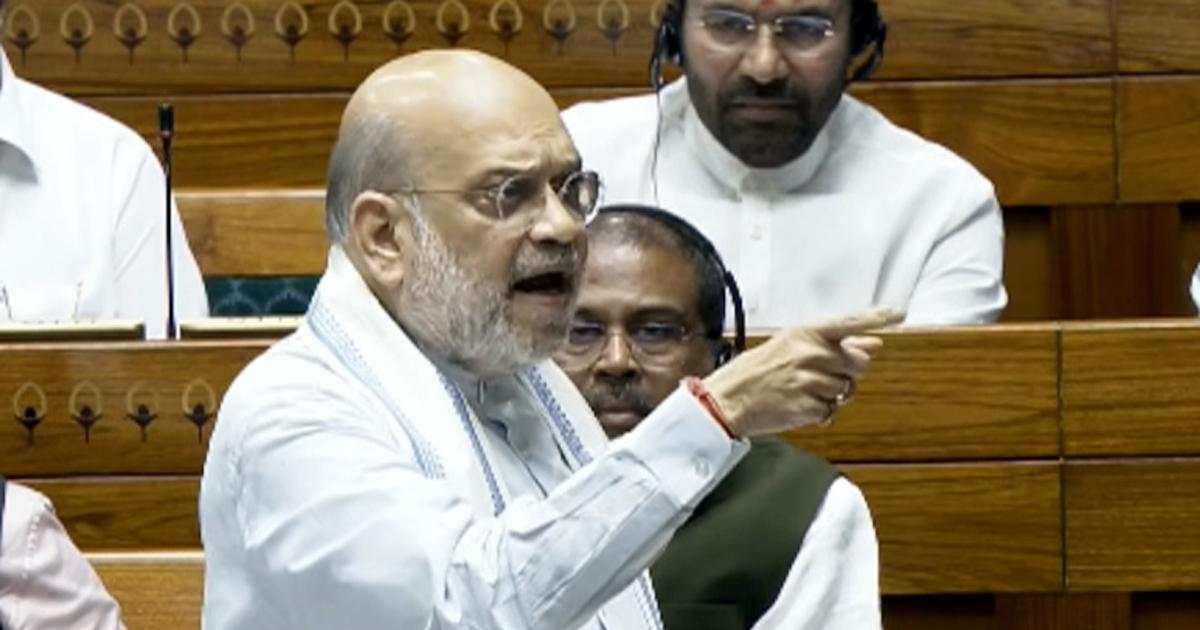
India’s Home Minister Amit Shah on Friday criticised opposition parties after a constitutional amendment bill on women’s reservation failed to pass in parliament, accusing them of blocking a measure aimed at expanding political representation.
Shah said parties including the Congress, the Trinamool Congress (TMC), the Dravida Munnetra Kazhagam (DMK) and the Samajwadi Party prevented the passage of the legislation, which sought to provide 33 percent reservation for women in the Lok Sabha and state assemblies.
“Rejecting the bill and celebrating its defeat is beyond imagination,” he said in a statement posted on social media, adding that the opposition’s stance was “not in the interest of women or the country”.
The bill failed to secure the required two-thirds majority in the lower house, with 298 lawmakers voting in favour and 230 against, out of 528 members present.
Shah warned that voters, particularly women, would respond to the development in future elections.
“The opposition will have to face the consequences at every level,” he said.
During the parliamentary debate, Shah also defended the proposed delimitation exercise linked to the bill, saying it was necessary to ensure equal representation across constituencies.
He said disparities in voter numbers – with some constituencies having significantly higher populations than others – undermined the principle of equal representation.
Shah rejected opposition claims that the proposals were aimed at altering electoral dynamics, and said the constitution provides for periodic delimitation, including adjustments to seats reserved for scheduled castes and scheduled tribes.
He also said the government had offered to introduce amendments, including increasing Lok Sabha seats across states, if opposition parties supported the bill.
The legislation was part of a broader package that included proposals on delimitation and amendments to union territory laws, all of which required broad parliamentary support to pass.