




What might appear on paper as a routine engineering project
As Kashmir prepares for its autumn tourist season, a planned airport closure turns an engineering project into a debate about connectivity, livelihoods, and the fragile rhythms of an economy that depends on open skies. Danish Mohiuddin reports.
In Kashmir, autumn arrives before the leaves turn. It arrives in hotel reservation books. It arrives in airline schedules. It arrives in the calculations of taxi drivers, houseboat owners, pony operators, handicraft sellers, tour guides and restaurant managers who have learned to measure prosperity not by calendars but by tourist arrivals.
Every year, sometime around late September, anticipation begins to spread across the Valley. The summer crowds thin. The heat retreats. Chinar trees prepare for their annual transformation into shades of crimson and gold. Photographers arrive. Honeymooners arrive. Families arrive. October belongs to Kashmir. Which is why a proposed airport closure in October has triggered anxiety far beyond the aviation sector.
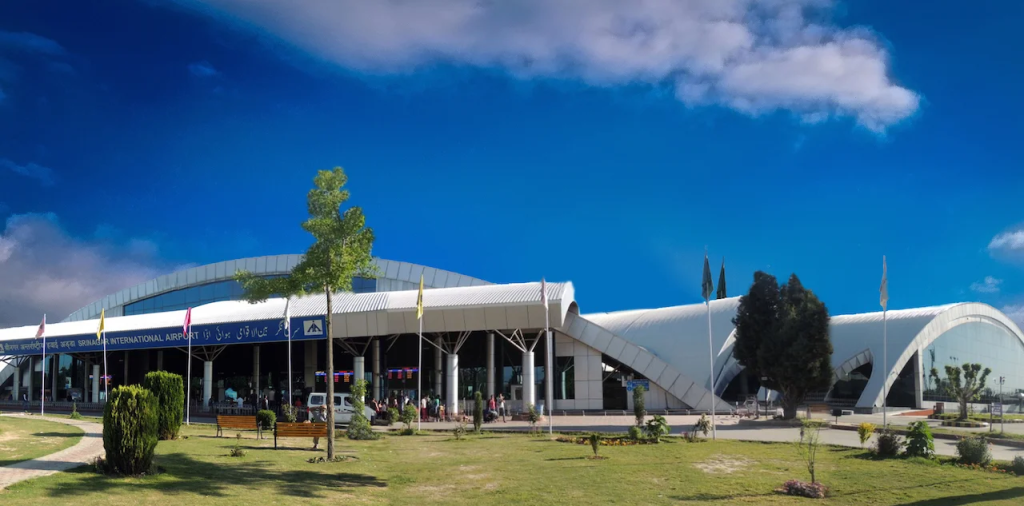
What might appear on paper as a routine engineering project – a 16-day shutdown of Srinagar International Airport for runway resurfacing – has rapidly evolved into a debate about economics, timing, infrastructure and the delicate mechanics of Kashmir’s tourism-dependent economy.
Last week, Chief Minister Omar Abdullah travelled to New Delhi carrying an unusual request. He was not asking the Centre to stop the runway repairs. He was asking whether they could happen at another time. Or another way. Or at least with an alternative plan.
Meeting separately with Defence Minister Rajnath Singh and Civil Aviation Minister K. Rammohan Naidu, Abdullah argued that shutting down Srinagar Airport from October 1 to October 16 would coincide with one of the Valley’s busiest tourism periods and could inflict avoidable damage on thousands of livelihoods.
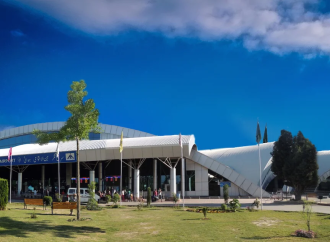
The concern is not merely theoretical. Srinagar Airport is not simply an airport. It is Kashmir’s primary gateway.
Unlike many destinations where tourists can switch easily between road, rail and air travel, Kashmir remains unusually dependent on aviation. The railway network has expanded dramatically in recent years, but for visitors arriving from major metropolitan centres, air travel remains the principal mode of entry.
When flights slow, tourism feels it almost immediately.
The proposed maintenance programme is extensive. Airport authorities have already announced plans that could affect operations from July onward. The runway is expected to remain unavailable every Monday and Tuesday between July 1 and September 30 as part of a maintenance programme overseen by the Indian Air Force. The final phase involves a complete closure from October 1 to October 16. Airport officials insist the work is necessary.
According to the Airports Authority of India, the runway has not undergone major maintenance for approximately fifteen years, even though such infrastructure typically requires resurfacing at shorter intervals. Safety considerations leave little room for postponement indefinitely. Nobody disputes that. The disagreement concerns timing.
For decades, Kashmir’s tourism economy has revolved around seasons. Tulips dominate spring. Pleasant weather drives summer. Snow attracts winter visitors. Yet autumn occupies a special place.
The season is visually spectacular and commercially significant. The Valley’s famed chinar trees become a destination in themselves. Travel agencies market “autumn Kashmir” months in advance. Hotels frequently witness high occupancy levels. Houseboats that spent summer accommodating families continue to host visitors seeking the famed chinar landscape reflected in Dal Lake.
For tourism operators, October is not an off-season. It is an asset A closure during those weeks could force cancellations, rescheduling and uncertainty across a sector that has already spent years navigating disruptions beyond its control. The anxiety extends beyond tourism. Every arriving tourist generates a chain reaction. A flight ticket supports an airline employee. A hotel booking supports hospitality workers. A taxi ride supports drivers. A shawl purchase supports artisans. A meal supports restaurants. An airport closure reverberates through that chain.
Economists sometimes describe transportation infrastructure as a multiplier. Kashmir provides a vivid illustration of why. When connectivity functions smoothly, money circulates rapidly through the local economy. When connectivity falters, the effects spread just as quickly.
This reality explains why Abdullah’s intervention has attracted attention. Rather than opposing the repairs, he has sought alternatives.One proposal involves shortening or phasing the final maintenance schedule. Another looks backward for inspiration. During previous runway repair works in 2010, authorities coordinated temporary civilian flight operations through the Indian Air Force station at Awantipora in south Kashmir. Abdullah has suggested that a similar arrangement could be explored if a complete closure proves unavoidable.
The proposal highlights a unique feature of Srinagar Airport itself. Unlike most civilian airports, Srinagar operates as a civil enclave within an airfield shared with the Indian Air Force. Military and civilian aviation have long coexisted there, creating operational complexities not encountered at purely civilian facilities.
Any alternative arrangement would therefore require coordination among multiple agencies, including the Defence Ministry, Civil Aviation Ministry, Airports Authority of India and the Air Force. Such coordination is possible. Whether it is practical remains another question. For now, no final decision has been announced. The maintenance schedule itself remains subject to approval and operational planning.
Yet the debate reveals something larger than a dispute over runway repairs. It reveals how central connectivity has become to Kashmir’s modern identity. Historically, access to the Valley was dictated by geography. Mountain passes closed. Roads disappeared beneath snow. Journeys required patience. Today, air travel has altered those calculations.
A visitor can leave Mumbai in the morning and reach Dal Lake before lunch. Business travellers move between Srinagar and Delhi in hours rather than days. Students, patients and families depend upon reliable flight schedules for reasons that have nothing to do with tourism. Connectivity has become normal. Which is precisely why its interruption feels consequential. Infrastructure rarely attracts attention when it works. People notice roads when they close. They notice bridges when they fail. And they notice airports when flights stop.
The debate over Srinagar Airport is therefore not really about asphalt, resurfacing equipment or engineering schedules. It is about timing. About economics. About the tension between long-term infrastructure needs and short-term commercial realities. The runway must eventually be repaired. The tourism season cannot easily be postponed.
Somewhere between those two truths lies the challenge now confronting policymakers. By October, the chinar leaves will turn regardless of what happens in New Delhi. The tourists may or may not arrive in the same numbers And an airport runway, invisible to most travellers except during takeoff and landing, will briefly become one of the most important pieces of infrastructure in Kashmir. Not because people are thinking about the runway itself.
But because of everything that depends upon it.
About the Author
Danish Mohuiddin, a postgraduate in Convergent Journalism, approaches storytelling as a visual and narrative craft. With a strong interest in cinematography and filmmaking, his work often lingers on the human dimensions of news. Drawn to stories that matter to people, he writes with an eye for both movement and meaning.