
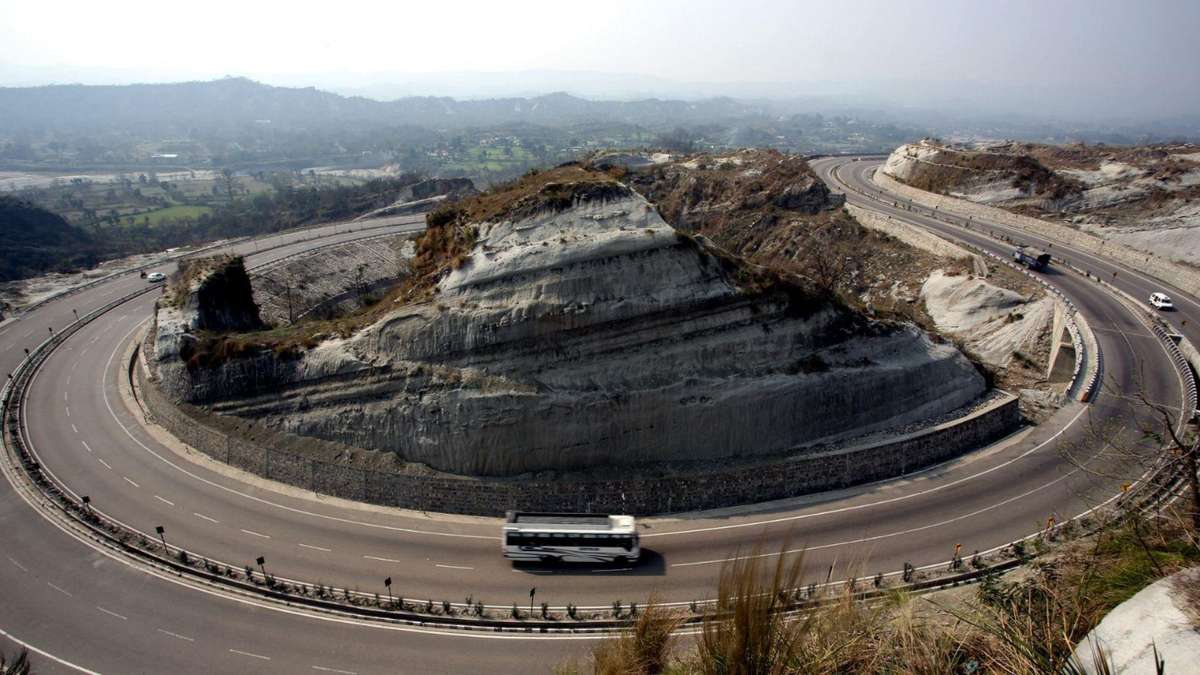
The temporary suspension of night traffic on the Srinagar-Jammu National Highway for repair and relaying works is understandable. Roads require maintenance. Infrastructure cannot be allowed to deteriorate in the name of convenience. The National Highways Authority of India (NHAI) has a responsibility to keep the highway safe and serviceable, and periodic repair works are an essential part of that obligation.
Yet the latest restrictions once again highlight a larger issue that deserves urgent attention: how should repair and maintenance be carried out on the only all-weather surface lifeline connecting Kashmir with the rest of the country?
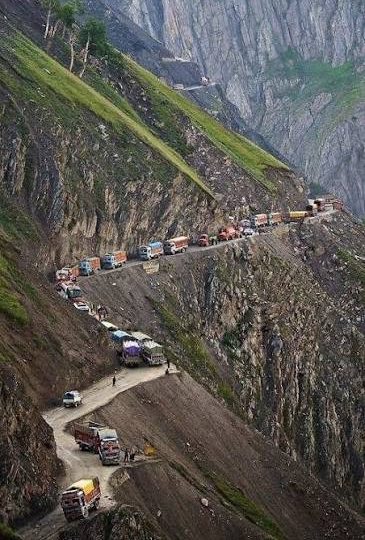
The Srinagar-Jammu National Highway is not just another road. It is Kashmir’s economic artery. Every day, hundreds of trucks carrying fruits, vegetables, medicines, fuel, construction material, industrial supplies and consumer goods travel along this route. Thousands of passengers depend on it for work, education, healthcare and family obligations. When traffic on this highway slows down, the impact is felt far beyond the road itself.
The present restrictions may be temporary, lasting only a few nights. But they point to a recurring challenge. Every time repair works, landslides, weather disruptions or construction activities affect the highway, Kashmir’s vulnerability becomes evident.
For decades, the Valley has experienced the consequences of dependence on a single major road corridor. Delays quickly translate into increased transportation costs. Perishable goods suffer losses. Businesses face uncertainty. Transporters struggle to maintain schedules. Travellers find themselves stranded.
This is why maintenance work on the highway must be approached differently than on ordinary roads.
No reasonable person would oppose efforts to improve road quality and safety. In fact, poor road conditions themselves contribute to accidents, congestion and vehicle damage. However, authorities must explore ways to minimise disruption while carrying out essential works.
The first requirement is planning. Maintenance schedules should be prepared months in advance and communicated widely to transport associations, traders, fruit growers, passenger transport operators and district administrations. Advance notice allows businesses and transporters to adjust logistics accordingly. Too often, stakeholders learn about restrictions only when they are imminent.
The second requirement is better execution. Modern highway engineering offers numerous techniques that can reduce traffic disruption. Around the world, critical transport corridors undergo maintenance while maintaining at least partial traffic movement. Work can be divided into smaller segments. Temporary diversions can be created wherever feasible. Construction schedules can be staggered to ensure that long stretches are not simultaneously affected.
Authorities should study best practices from other mountainous regions where road maintenance is carried out on vital transportation corridors without completely disrupting movement.
The third requirement is the use of technology and modern equipment. One of the reasons maintenance often causes prolonged disruption is the time required to complete projects. Faster paving technologies, improved machinery and round-the-clock work schedules can significantly reduce closure periods. If a highway is to be shut down for repairs, every effort should be made to ensure the shortest possible disruption.
The fourth requirement concerns freight movement. The Srinagar-Jammu highway is particularly important for the transportation of perishable commodities. Kashmir’s horticulture sector depends heavily on reliable road connectivity. During peak seasons, thousands of tonnes of apples, cherries and other produce move through this corridor.
Special arrangements should be considered for vehicles carrying perishable goods, essential medicines and emergency supplies. Dedicated windows for priority cargo movement could help reduce economic losses while ensuring that repair works continue.
The fifth and perhaps most important requirement is strategic thinking. The recurring difficulties associated with highway closures, whether due to repairs, landslides or adverse weather, underscore the need to accelerate the development of alternative transportation options.
The completion of railway connectivity to Kashmir offers an important opportunity. Freight movement through rail can reduce pressure on the highway and provide an alternative during disruptions. Similarly, authorities must continue investing in additional road corridors, tunnels and resilient infrastructure that reduce dependence on a single route.
The challenge is not merely technical. It is economic. Every hour of disruption on the Srinagar-Jammu highway carries a cost. That cost is borne by transporters, traders, farmers, businesses and ordinary citizens. While infrastructure improvement is necessary, the economic consequences of traffic restrictions must be factored into planning and execution.
The authorities deserve credit for attempting to improve road conditions on the highway. Better roads ultimately mean safer travel and smoother transportation. But maintenance of a lifeline requires a different mindset than maintenance of an ordinary road.
The objective should not simply be to complete the work. The objective should be to complete the work while keeping the lifeline functioning.
Kashmir’s connection to the outside world cannot be treated as an inconvenience to be temporarily switched off whenever repairs become necessary. Infrastructure maintenance and uninterrupted connectivity must go hand in hand.
As repair works continue, the government, NHAI and traffic authorities should use this opportunity to develop a long-term framework for maintaining critical infrastructure with minimal disruption. Kashmir deserves roads that are both well maintained and reliably accessible.
The choice should never be between repair and connectivity. Good governance demands both.