

They knew only through calculations, surveys, coordinates and engineering models
With the breakthrough of the Zojila Tunnel, Kashmir and Ladakh meet beneath the mountain that once divided them, transforming a centuries-old seasonal gamble into a permanent promise of connection. Amir Yaseen reports.
On the morning of June 9, 2026, deep beneath one of the Himalayas’ most unforgiving mountain passes, men who had spent years drilling through rock finally saw each other.
For months, perhaps years, they had known the other team was somewhere ahead—on the opposite side of a wall of mountain. They could not see them. They could not hear them. They knew only through calculations, surveys, coordinates and engineering models that another group of workers was advancing from the other end of the earth beneath their feet.
Then, sometime before noon, the final section of rock gave way.
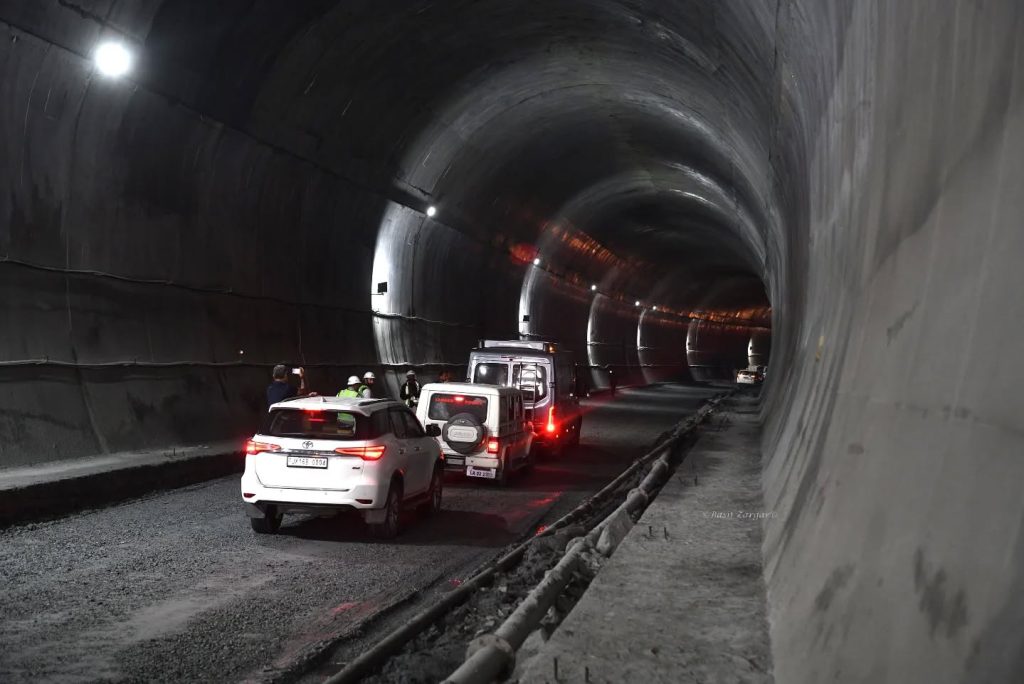
A shaft of light appeared through the dust. Voices echoed through the newly opened cavity. Helmets emerged. Hands were shaken. Smiles spread beneath faces coated in stone powder. The two excavation fronts of the Zojila Tunnel had finally met.
Engineers called it a breakthrough. For Kashmir and Ladakh, it felt like something else. It felt like history tunnelling through geography.
For centuries, the Himalayan wall between the Kashmir Valley and Ladakh has determined the rhythm of life for millions of people. Empires crossed it. Traders crossed it. Pilgrims crossed it. Soldiers crossed it. Families crossed it. But nobody crossed it without first asking permission from the mountain.
Zojila was never merely a pass. It was a season. It was a gamble. It was a warning. And every winter, it was a barrier.
The breakthrough achieved on June 9 did not simply complete a tunnel. It marked the moment when one of the world’s most formidable mountain barriers ceased to be the final authority over connectivity between Kashmir and Ladakh.
For the first time in recorded history, the two regions have a permanent route through the mountain rather than over it. That distinction may prove transformational.
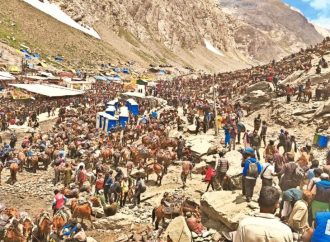
Ask anybody who has travelled regularly between Kashmir and Ladakh and they will tell you that Zojila is not remembered as a place. It is remembered as an experience. Drivers remember anxiety. Passengers remember prayers. Families remember delays. Truckers remember uncertainty.
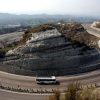
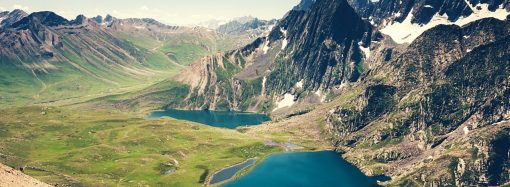
The pass rises between Sonamarg and Drass, standing like a giant threshold between two dramatically different worlds. On one side lies the lush valley landscape of Kashmir. On the other stretches the high-altitude cold desert of Ladakh. The transition is startling.
A traveller leaving Srinagar moves through forests, rivers and meadows before climbing into a landscape of bare rock, immense skies and stark mountain faces. Few roads in the world produce such a dramatic geographical transformation over such a short distance.
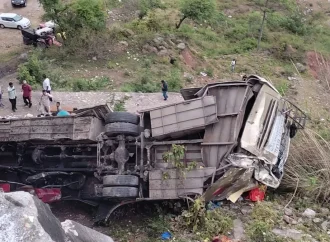
Yet the beauty of Zojila has always come with danger.
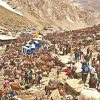
At elevations exceeding 11,500 feet, the pass is exposed to some of the harshest weather conditions in the Himalayas. Heavy snowfall, avalanches, blizzards and landslides routinely disrupt movement. Winter closures lasting months became an accepted fact of life.
Entire communities learned to organize their lives around those closures.
In Ladakh, people stocked supplies before winter. Businesses planned inventories around the road’s opening and closing. Students timed travel with weather forecasts. Construction projects followed seasonal calendars. Medical emergencies often became races against snow.
The road was open when nature allowed it to be open. Everything else was secondary.
The modern strategic significance of Zojila emerged after India’s independence.
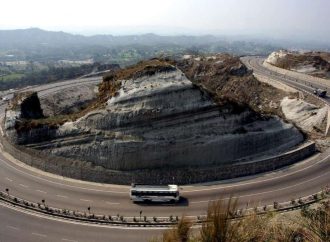
The Srinagar-Kargil-Leh corridor became one of the most critical transportation routes in the country. It connected Ladakh not only to Kashmir but also to the broader national highway network.
Its importance grew further following successive conflicts involving the region. Military planners understood the route’s significance. Economists understood its significance.
Residents understood it even more. For Ladakh, connectivity has never been an abstract policy objective. It has always been a lived reality. The closure of a road in a metropolitan city may mean inconvenience. The closure of a road in Ladakh can mean isolation.
For decades, this reality shaped everyday life.
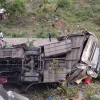
Even after advances in snow clearance technology, winter operations and road engineering, the pass remained vulnerable. A single avalanche could halt traffic. A severe storm could suspend movement for days.
The road existed, but certainty did not. And certainty is often the most valuable form of infrastructure.
The idea of piercing Zojila is older than many people realise. Governments changed.
Administrations changed. Budgets changed. Political priorities shifted. But the dream persisted.
Engineers understood that no amount of maintenance could completely overcome the challenges posed by the pass itself. The solution would require avoiding the pass rather than improving it. That meant going underneath. The proposal appeared audacious.
The Himalayas are among the youngest mountain systems on Earth. Their geology is notoriously complex. Rock formations shift. Water ingress creates challenges. Seismic conditions demand extraordinary caution.
Constructing a tunnel beneath Zojila would require not only money and machinery but persistence on a monumental scale. Yet the strategic, economic and social arguments became increasingly compelling.
The case for an all-weather connection between Kashmir and Ladakh grew stronger with each winter closure. Eventually, the project moved from aspiration to execution.
What followed was one of the most challenging infrastructure undertakings ever attempted in the Indian Himalayas. Most people experience tunnels from the inside of a vehicle. They see concrete walls. Lights. Signage. Ventilation systems.
Few think about what exists before a tunnel exists. The years preceding the June 2026 breakthrough involved a world of geological surveys, drilling operations, explosives, excavation equipment, support structures and constant monitoring. Every metre had to be earned. Workers operated in harsh conditions. Engineers battled unpredictable geology. Construction teams navigated extreme weather and difficult terrain.
The mountain did not surrender easily. Water seepage appeared in some sections. Rock conditions varied dramatically. Progress sometimes accelerated. At other times it slowed.
Each day presented new variables. Yet the tunnel advanced. Metre by metre. Month by month. Year by year.
Until eventually two excavation fronts – one advancing from Kashmir, another from Ladakh – approached each other beneath millions of tonnes of Himalayan rock. By June 2026, only a small section remained. Then, on June 9, the final barrier disappeared.
The breakthrough itself does not mean the tunnel opens immediately. Ventilation systems still need completion. Safety infrastructure must be installed. Electrical systems require testing. Finishing works remain. Commissioning procedures will follow. Yet breakthroughs matter because they represent the moment when a project shifts from excavation to completion. The hardest uncertainty is removed. The mountain has been crossed. Everything afterwards becomes a matter of finishing.
For Kashmir and Ladakh, that distinction carries immense significance. The tunnel’s 13.153-kilometre length will create a protected all-weather route beneath the pass.
Travel disruptions caused by snowfall and avalanches are expected to reduce dramatically.
Journey times will fall. Reliability will improve. Accessibility will increase. What sounds like engineering language translates into human consequences. A medical referral can happen faster. A business shipment can arrive on schedule. A student can travel with confidence. A family can plan without waiting for weather reports. Infrastructure is often measured in kilometres. Its impact is measured in lives.
In Kashmir, the tunnel represents more than enhanced connectivity. It represents the strengthening of an ancient relationship. Historically, Kashmir and Ladakh were never isolated worlds. Trade routes connected them. Cultural exchanges connected them. Religious traditions crossed between them. Families maintained ties across the mountains. The route through Zojila carried not only goods but ideas. Languages travelled. Stories travelled. People travelled. The modern highway inherited a role that had existed for centuries. Every closure interrupted that continuity.The tunnel promises to make those interruptions increasingly rare. For residents of Kashmir’s Ganderbal district, where the western portal is located near Baltal, the project is already reshaping local geography.
Areas once regarded primarily as seasonal transit points are becoming permanent gateways.
The mountain that once marked the edge of accessibility is becoming the centre of a transportation corridor.
If Kashmir sees the tunnel as connection, Ladakh often sees it as assurance. For many residents, winter isolation has long been a practical reality. Flights provide one link. Roads provide another. But roads remain essential for freight, construction materials, fuel supplies, machinery and commerce. Every additional day of reliable road access matters. The benefits extend beyond economics. Predictability itself becomes valuable.
The ability to plan a journey without wondering whether snow will close a pass. The ability to conduct business without seasonal uncertainty. The ability to maintain supply chains throughout the year. These are changes that may not generate headlines every day.
But they alter how societies function. Over time, they can alter how regions develop.
No discussion of Zojila is complete without acknowledging its strategic significance. The Srinagar-Kargil-Leh axis remains one of India’s most important mountain corridors.
Its importance was highlighted during the 1999 Kargil conflict, when maintaining logistical access became a matter of national security. Military planners have long emphasised the importance of dependable connectivity to Ladakh.
The tunnel addresses one of the corridor’s greatest vulnerabilities: weather dependence.
A route that remains functional through winter changes logistical calculations significantly.
In the Himalayas, geography has always influenced strategy. The Zojila Tunnel is an example of engineering reshaping geography.
Officials have understandably highlighted the project’s scale. Its length. Its altitude. Its engineering complexity. Its global standing among mountain tunnels. These records matter.
But infrastructure becomes truly significant when statistics fade into the background. Nobody remembers a bridge because of the amount of steel it contains. People remember the places it connects. Nobody remembers a road because of the number of tonnes of asphalt used. People remember the journeys it enables. The same may ultimately be true of Zojila.
Future generations may not recall the exact length of the tunnel. They may simply grow accustomed to a reality in which Kashmir and Ladakh remain connected throughout the year. And that normality may be the project’s greatest achievement.
There is a temptation in infrastructure stories to portray nature as defeated. But standing at Zojila, that narrative feels incomplete. The mountain remains. The ridges remain. The glaciers remain. The snowstorms remain. The winds remain. Nothing about the Himalayas suggests surrender. Instead, what happened on June 9 felt more like negotiation. Human ingenuity did not remove the mountain. It learned how to pass through it. The breakthrough was not an act of conquest. It was an act of coexistence.
For thousands of years, travellers crossed Zojila by climbing over it. On June 9, 2026, humanity completed a passage beneath it. And somewhere between Baltal and Minamarg, beneath layers of stone older than memory itself, Kashmir and Ladakh met in the middle. Not on a highway. Not at a border. Not at a checkpoint. But inside the mountain that had always stood between them.
The breakthrough lasted only a moment. Its consequences may last for generations.
About the Author
Amir Yaseen is a Srinagar-based journalist with an eye for the telling detail and an ear attuned to the cadences of Kashmir. He approaches news as narrative, locating the human story within the language of policy and progress and the quiet recalibration of everyday life.