



Before leaving Kashmir, I stood quietly in my room late one night, folding clothes into a suitcase while rain tapped against the windows.
A 17-year-old Kashmiri girl journeys from the valleys of Kashmir to the holy city of Makkah, searching for forgiveness, faith, and a deeper connection with Allah amid the spiritual intensity of Hajj. Fatima Muhammad writes.
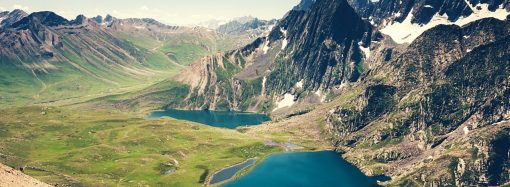
When our flight rose above the mountains of Kashmir, I pressed my forehead softly against the airplane window and tried to find home beneath the clouds. Somewhere below were the walnut trees my grandfather planted, the Jhelum moving quietly through Srinagar, my school notebooks left unfinished on my desk, and my mother’s kitchen where the smell of noon chai lingers in curtains long after morning. I had travelled before, but never like this. This time I was not going somewhere for sightseeing or studies or family visits. I was travelling toward a prayer.
I am 17-years-old, and for most of my life Hajj existed in stories older people told after evening prayers. In our home, the word itself carried a kind of softness. My grandmother would describe Makkah as if it were less a city than a memory of light. She spoke of people crying without shame, of strangers embracing each other in languages they did not understand, of standing before the Kaaba and feeling the world become suddenly smaller and Allah infinitely closer.
As a child, I listened without fully understanding.
Now, on my way to Hajj, I find myself thinking not about the grandeur of the pilgrimage but about my own smallness.
At 17, your heart is crowded with contradictions. You want to become someone important, but you are also frightened of failing. You pray, but your mind wanders. You seek forgiveness, yet repeat the same mistakes. You carry dreams that feel too large for your age and regrets that feel too heavy for your years.
Before leaving Kashmir, I stood quietly in my room late one night, folding clothes into a suitcase while rain tapped against the windows. I remember wondering whether Allah listens differently to prayers made in Makkah. I wondered whether forgiveness feels different there too. People say that during Hajj, a person returns purified, as if reborn. I do not know if I deserve such mercy, but I know I long for it.
The first thing that startled me upon arriving in Saudi Arabia was the movement of humanity itself. Everywhere there were people walking with urgency and devotion. Old men leaning on canes. Women whispering duas under their breath. Children asleep on shoulders. Entire families dressed in simplicity, carrying the same hope toward the same sacred centre.
And then there was the heat.
In Kashmir, even our summers carry traces of coolness from the mountains. Here, the air itself feels weightless and blazing, as if the sky has descended closer to the earth. Yet amid that heat, people continue walking patiently toward prayer.
I watched my father become quieter after arriving in Makkah. Usually he speaks constantly – about politics, cricket, rising prices, relatives, everything. But near the Haram, his voice softened. Sometimes he simply looked upward without speaking. Once, I noticed tears gathering in his eyes during prayer, and I looked away quickly, embarrassed by witnessing something so private.
Faith changes people in subtle ways.
The first time I saw the Kaaba, I forgot every sentence I had rehearsed in my mind.
For years I had imagined what that moment would feel like. I thought perhaps there would be dramatic emotion, sudden crying, some extraordinary certainty descending into my heart. Instead, what came first was silence.
Not outside me – around me thousands of people moved and prayed and recited – but inside.
The Kaaba stood at the centre of everything with a simplicity that almost startled me. No palace. No throne. Just a black cube toward which millions turn their faces every day. And suddenly I understood something difficult to explain: faith is not always thunderous. Sometimes it arrives quietly, removing noise from within you.
I cried later.
Not because I had planned to, but because I began thinking of every prayer I had delayed, every moment I had acted selfishly, every time I hurt someone and pretended not to notice. In ordinary life, distractions protect us from confronting ourselves. School, phones, conversations, routines – they keep the soul occupied. But here, surrounded by people asking Allah for mercy, your own imperfections become impossible to ignore.
I prayed for forgiveness with a sincerity I had never known before.
Not only for major sins, but for smaller failures too: for impatience with my mother, for prayers rushed carelessly, for envy, for arrogance hidden even from myself. At 17, one imagines sin dramatically, as something obvious and enormous. But standing near the Kaaba, I realised how many quiet flaws live inside us unnoticed.
And yet Hajj is not only about guilt. It is also about hope.
Everywhere I look, I see humanity stripped of its usual divisions. Rich and poor walk side by side. Languages dissolve into the same invocations. A woman from Indonesia wipes tears beside a man from Nigeria. An old Kashmiri couple sits near pilgrims from Turkey sharing dates and water. The world outside often feels fractured by borders, sects, politics, and suspicion. But here, for brief moments, humanity feels gathered into a single prayer.
At night in the hotel, I sometimes struggle to sleep. I think about how temporary life is. Back home, my worries often revolve around exams, friendships, appearance, the future. Those things still matter to me; I am still 17. But Hajj rearranges priorities in strange ways. It reminds you that beneath ambition and anxiety, every human being is simply searching for meaning and mercy.
I think often about Kashmir while praying here. I pray for our homes, our wounded histories, our exhausted people. I pray for children growing up amid uncertainty. I pray for mothers waiting for peace that never fully arrives. I pray for our rivers and mountains and graveyards. Distance sharpens love; being away from home has made me realise how deeply Kashmir lives inside me.
During Tawaf, moving with thousands around the Kaaba, I felt something I had never experienced before: the sensation of becoming part of a current larger than myself. Everyone circling together, generation after generation, century after century, repeating the same devotion. The world changes endlessly – technologies, governments, wars, fashions – yet this movement continues unchanged.
There is comfort in that continuity.
I used to think spirituality meant becoming someone perfect. But perhaps it means becoming honest instead. Honest about weakness. Honest about longing. Honest about needing Allah.
One evening after prayers, I sat quietly watching pilgrims flow through the courtyard of the Haram like rivers of white cloth. I realised then that Hajj is not really an escape from ordinary life. It is preparation for returning to it differently.
Soon I will go back to Kashmir. Back to classrooms, family routines, unfinished plans, and familiar streets. I will still be imperfect. I will still make mistakes. Faith does not erase humanity.
But I hope I return softer.
I hope I remember this feeling when life becomes loud again – the feeling of standing before Allah with nothing hidden, asking simply to be forgiven and guided.
At 17, I do not yet understand the world fully. Perhaps nobody ever does. But here in Makkah, beneath the same sky under which millions have prayed before me, I feel certain of one thing: The human heart was created to search for Allah, and sometimes the journey toward Him begins by finally admitting how lost you are without Him.
About the Author
Fatima Muhammad is a science student aspiring to be a doctor. She writes to explore faith, memory, and the quiet emotional landscapes of everyday Kashmir life.













Leave a Comment
Your email address will not be published. Required fields are marked with *