
Kashmir Impulse Desk
Srinagar, June 8
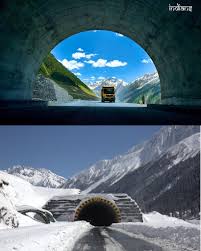
The final breakthrough of the Zojila Tunnel, one of India’s most ambitious mountain infrastructure projects, is set to take place on Monday, marking a major milestone in efforts to provide all-weather road connectivity between Kashmir and Ladakh.
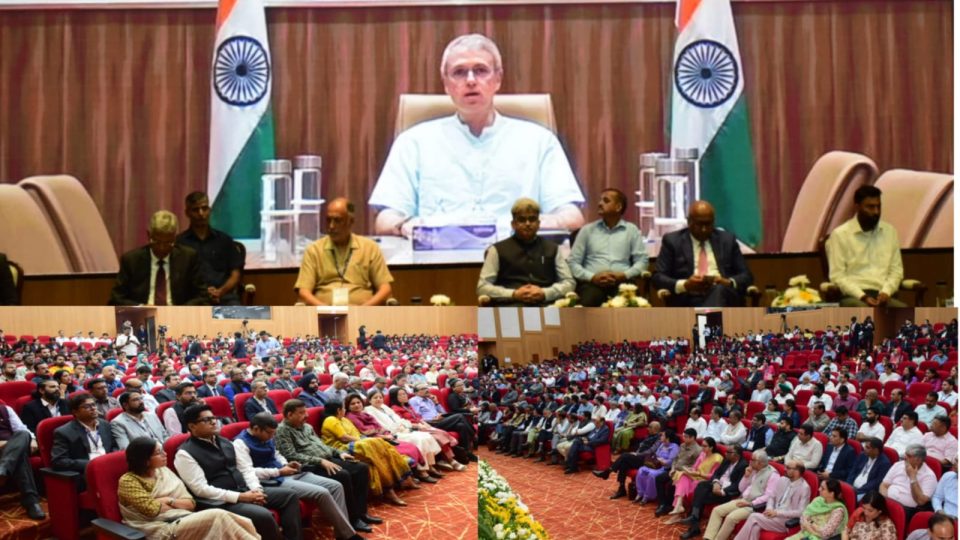
Union Road Transport and Highways Minister Nitin Gadkari is scheduled to visit the project site to witness the breakthrough of the tunnel excavation and review progress on the strategically important project.
The breakthrough of the 13.15-km tunnel will complete the most critical phase of excavation work and move the project closer to becoming operational, ending decades of seasonal disruption caused by heavy snowfall and avalanches on the Srinagar-Leh highway.
Constructed between Baltal in the Sonmarg area of Ganderbal district and Meenamarg in the Drass sector of Ladakh, the tunnel lies at an altitude of about 11,578 feet above sea level.
Once completed, it is expected to be the world’s longest single-tube bi-directional road tunnel at such a high altitude.
The project is being executed by Megha Engineering and Infrastructure Limited for National Highways and Infrastructure Development Corporation Limited and is regarded as one of the country’s most challenging engineering undertakings in the Himalayan region.
Officials associated with the project said the breakthrough represented a significant achievement after years of work under extreme weather conditions, fragile geology and recurring avalanche threats.
Construction began in October 2020 and has included the completion of twin tunnels at Nilgrar, approach roads, bridges, snow galleries and protective structures designed to withstand harsh mountain conditions.
The tunnel is being built using the New Austrian Tunnelling Method, a construction technique widely used in complex geological environments.
“Construction teams worked in temperatures ranging from minus 20 to minus 30 degrees Celsius for nearly 100 days every year,” a project official said.
The site also faced several avalanche incidents during construction, including a major avalanche in January 2023 that stranded more than 170 workers before rescue operations were carried out.
Despite the challenges, excavation work progressed steadily with the support of a workforce of more than 1200 personnel, officials said, adding that local residents accounted for a large share of those employed on the project.
The tunnel is expected to transform connectivity by ensuring uninterrupted movement of passengers, goods and essential supplies throughout the year between Kashmir and Ladakh, regions that have historically faced prolonged winter isolation due to the closure of the Zojila Pass.
Residents and business owners in Ladakh said the project would reduce hardships caused by winter road closures and improve access to essential commodities.
“Earlier, we had to stock supplies for months because the highway would remain closed during winter. Once the tunnel becomes operational, connectivity will improve significantly,” said a resident from Leh visiting the area.
Tourism stakeholders in Sonamarg said year-round access to Ladakh would boost visitor arrivals, extend the tourism season and generate new economic opportunities for local communities dependent on tourism.
“Tourists will be able to travel more easily in every season, which will benefit businesses across the region,” said a local tour guide.
Spread across a total project length of nearly 31 km, including approach roads and bridges, the Zojila Tunnel is expected to strengthen trade, tourism, emergency response capabilities and strategic mobility along one of India’s most sensitive border corridors.
Once completed, the project is expected to provide uninterrupted road access between Kashmir and Ladakh for the first time, reducing travel disruptions that have long affected residents, businesses and security operations in the region.