
Kashmir Impulse Desk
New Delhi, April 9
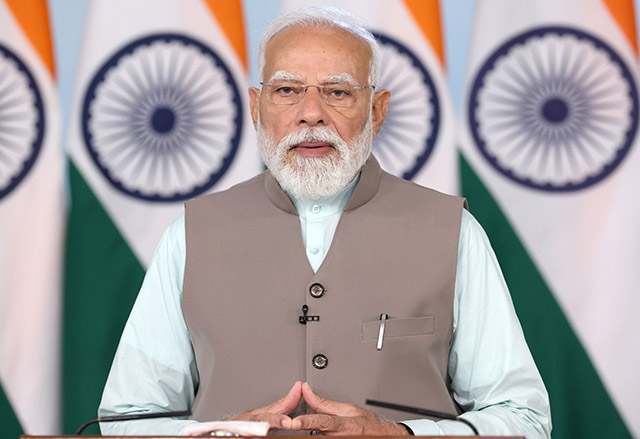
Narendra Modi on Thursday called for broad political consensus to advance amendments to India’s women’s reservation law, describing the effort as central to strengthening the country’s democracy and long-delayed commitment to gender equality.
In a signed article published on his website, PM Modi framed the proposed changes not merely as legislative procedure but as an expression of the aspirations of millions of Indian women.
He urged lawmakers across party lines to support the measure when Parliament convenes for a special session from April 16 to 18.
The amendments are intended to operationalize the Nari Shakti Vandan Adhiniyam, a constitutional provision passed in 2023 that mandates 33 percent reservation for women in the Lok Sabha and state assemblies.
While the law exists, its implementation has been tied to a future delimitation exercise, delaying its rollout.
The government now seeks to accelerate that timeline, with PM Modi arguing that upcoming elections, including the 2029 general election, should be conducted with the reservation in place.
Under current proposals, the number of Lok Sabha seats would increase from 543 to 816, with 273 reserved for women. Reservations would also extend proportionately to seats designated for Scheduled Castes and Scheduled Tribes. The redrawing of constituencies is expected to rely on earlier census data, potentially bypassing delays linked to the 2027 Census.
PM Modi said India stood “at the threshold of a historic occasion,” adding that expanding women’s participation in legislative bodies would deepen democratic representation and improve governance.
While women have made significant strides across sectors from science and entrepreneurship to the armed forces and the arts, he said that their political representation has not kept pace.
Efforts to address this imbalance have spanned decades, with multiple governments introducing proposals that failed to secure passage.
The 2023 law, passed with broad support, marked a breakthrough, but its delayed implementation has drawn criticism.
“This is a moment that cannot be deferred any longer,” PM Modi wrote, warning that continued delay would undermine the inclusiveness of India’s democratic institutions.
Leaders from the ruling Bharatiya Janata Party echoed the Prime Minister’s call, describing the amendments as essential to ensuring fair representation and strengthening governance.
The debate is expected to unfold against a backdrop of national observances and festivals in mid-April, a period PM Modi invoked as symbolic of renewal and collective purpose.
He framed the proposed legislation as a step toward fulfilling the constitutional vision of equality, one that, he said, requires both political will and bipartisan cooperation.
“This is not about any one government or party,” he wrote. “It is about the nation choosing to become more representative, more responsive, and more just.”