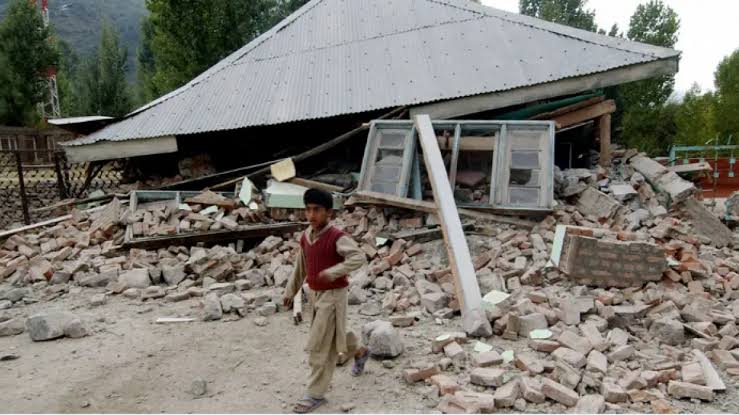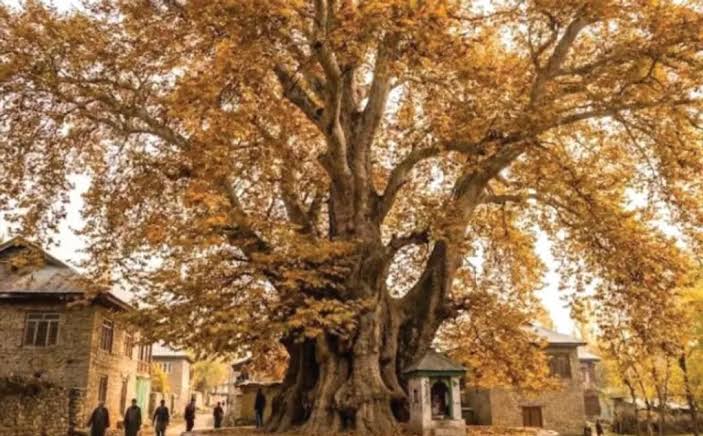


In Kashmir, a hailstorm does not merely damage crops. It dismantles an entire year, Syed Sameer Ahmad Nazki writes.
It arrives suddenly – a darkening sky over Baramulla, Shopian or Tangmarg, a violent burst of wind, then ice falling from the heavens like thrown stones. Within minutes, orchards that took decades to nurture stand stripped bare. Blossoms disappear. Young fruit collapses to the ground. Branches snap. Leaves tear apart. And with them falls the fragile economic security of thousands of families.
This week’s hailstorms across north and south Kashmir were not simply another weather event. They were a reminder that Kashmir’s farmers are fighting a climate battle with almost no protection.
The tragedy is not that hailstorms happen. Nature has always been unpredictable in the Valley. The real tragedy is that after every disaster, farmers are left standing alone in ruined orchards waiting for compensation surveys, political assurances, and bureaucratic sympathy that rarely match the scale of their losses.
Kashmir’s horticulture economy is not a minor rural activity. It is one of the region’s economic backbones. Apples alone sustain hundreds of thousands of livelihoods — from orchard owners and labourers to transporters, box manufacturers, traders, and shopkeepers. Entire villages breathe through horticulture seasons.
Yet astonishingly, the people feeding this economy remain among the least protected.
An engineer whose office suffers damage has insurance. A businessman can insure his warehouse. A car owner can insure a vehicle. But a farmer whose entire annual income hangs from fragile branches facing hail, frost, erratic rain, and windstorms often has nothing except hope.
Hope is not policy.
And climate change is making that reality even harsher.
What once appeared as occasional weather shocks are now becoming recurring patterns. Untimely snowfall, spring frost, prolonged dry spells, sudden cloudbursts, and repeated hailstorms are increasingly disrupting Kashmir’s agricultural calendar. Farmers are investing more money every year into pesticides, irrigation, fertilizers, labour, and high-density plantations while simultaneously facing greater climatic uncertainty.
This is no longer only an agriculture issue. It is an economic resilience issue.
The absence of a comprehensive crop insurance mechanism in Kashmir’s horticulture sector now borders on policy failure. Governments have repeatedly spoken about insurance schemes, budgetary allocations, and farmer welfare programmes. Yet on the ground, growers continue to face disasters without a reliable safety net.
Compensation alone cannot solve this.
Relief packages often arrive late, cover only a fraction of actual losses, and depend heavily on administrative assessments that vary from district to district. Farmers need structural protection, not episodic charity.
Kashmir urgently requires a modern horticulture risk management framework built specifically around mountain agriculture and climate vulnerability.
That begins with implementing a practical, transparent crop insurance scheme tailored for apple growers and small orchard owners. Insurance premiums must remain affordable, particularly for marginal farmers whose entire livelihoods depend on a few kanals of land. The government may need to heavily subsidise such schemes initially because climate resilience is now a public necessity, not merely an agricultural expense.
But insurance alone is insufficient.
The Valley also needs stronger weather forecasting systems with hyperlocal alerts that can warn farmers of hailstorms, frost, or extreme weather hours in advance. Anti-hail net infrastructure should be subsidised and expanded, especially in vulnerable orchard belts. Scientific orchard management training must become more accessible through horticulture departments and agricultural universities.
Equally important is reviving mechanisms like the Market Intervention Scheme so growers are not destroyed twice – first by weather and then by collapsing market prices.
What Kashmir’s farmers require is dignity in disaster, not helplessness after it.
Because behind every damaged orchard is not just economic loss but emotional devastation. Most apple trees in Kashmir are inherited landscapes. Families spend generations tending the same orchards. Farmers know individual trees the way others know family history. Watching hail shred a season’s labour in minutes is not simply financial ruin. It is psychological exhaustion.
And perhaps that is the deepest injustice.
The people who sustain one of Kashmir’s largest economies remain permanently vulnerable to forces entirely beyond their control. Every spring they invest again. Every season they gamble again. Every storm reminds them how alone they are.
A region that proudly celebrates its apples cannot continue treating its growers as expendable.
If Kashmir truly wants to secure its rural economy, preserve its horticultural identity, and protect the thousands of families whose survival depends on orchards, then saving farmers from climate disasters must move from speeches to systems.
Because an orchard should not become a graveyard every time the sky turns violent.
About the Author
Syed Sameer Ahmad Nazki is filmmaker with command over film editing. With a parallel interest in videography, Nazki gravitates toward stories that live at the intersection of image and emotion. Away from the edit table, he remains an engaged observer of sport, particularly cricket and football.