
Kashmir Impulse Desk
New Delhi, July 8
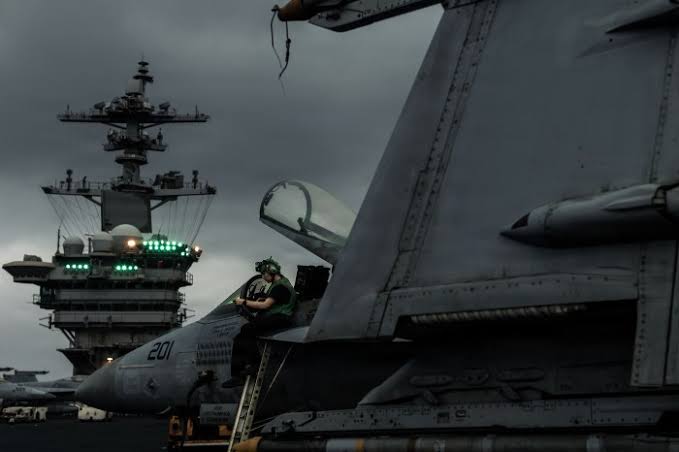
The United States launched a fresh wave of air strikes against Iranian military targets on Wednesday after accusing Tehran of attacking commercial shipping in the Strait of Hormuz, with President Donald Trump declaring that a fragile ceasefire between the two countries was effectively over and warning that further military action could follow.
The strikes targeted Iranian air defence systems, radar installations and more than 60 fast attack boats operated by the Islamic Revolutionary Guard Corps (IRGC), according to U.S. officials, who said the vessels had been involved in threatening commercial shipping in one of the world’s most strategically important maritime corridors.
Iranian state media reported explosions in Bandar Mahshahr and Bushehr, home to Iran’s only operating nuclear power plant, although Iranian authorities did not immediately provide details of the extent of the damage.
The latest military action followed what Washington described as Iranian attacks on three commercial vessels transiting the Strait of Hormuz, prompting the United States to accuse Tehran of violating the ceasefire reached earlier this year and to launch retaliatory strikes.
Speaking on the sidelines of a NATO summit in Ankara, Trump said US forces had struck Iran “very hard” overnight and indicated another round of attacks could take place later in the day.
“For me, the ceasefire is over,” Trump said, blaming Iran for renewed attacks on international shipping and accusing it of escalating the conflict by launching drones and missiles against commercial vessels.
While signalling that diplomatic contacts with Tehran could continue, Trump expressed scepticism that negotiations would succeed. He also renewed earlier warnings that the United States could target Iranian civilian infrastructure, including electricity generation and desalination facilities, and again threatened possible action against Kharg Island, through which most of Iran’s crude oil exports are shipped.
Iran rejected the warnings, with Parliament Speaker Mohammad Bagher Qalibaf saying Tehran would not yield to pressure or intimidation.
The renewed confrontation heightened concerns that the conflict could spread further across the Middle East, triggering sharp gains in global oil prices amid fears of disruption to energy supplies passing through the Strait of Hormuz, a critical artery for global crude exports.
Iran later launched retaliatory strikes against US military facilities in Bahrain and Kuwait, according to regional authorities. Kuwait said its air defences intercepted ballistic missiles and drones, while both Bahrain and Kuwait activated missile warning systems as the exchange of fire intensified.
Washington also revoked a temporary licence that had allowed Iran to sell crude oil under an interim agreement reached earlier this year, further increasing economic pressure on Tehran.
Meanwhile, funeral ceremonies for Iran’s late Supreme Leader Ayatollah Ali Khamenei continued in Iraq, attended by Iranian President Masoud Pezeshkian, Iraqi Prime Minister Ali Falah al-Zaidi and senior officials from both countries.
Funeral prayers were scheduled to be held at the Imam Hussein shrine in Karbala before Khamenei’s body is flown to Iran for burial on Thursday at the Imam Reza shrine in Mashhad, his birthplace.