
By doubling the number of tehsils across one of the world’s highest inhabited regions, Ladakh is attempting something more ambitious than a bureaucratic redraw. The move promises to bring government closer to isolated communities, strengthen border administration and reshape governance across a landscape where distance, altitude and weather have long dictated public life.
For most Indians, visiting a government office is an inconvenience measured in traffic, queues and paperwork.
For many residents of Ladakh, it has historically meant something altogether different.
It could involve travelling hundreds of kilometres across some of the world’s highest motorable roads, crossing mountain passes above 16,000 feet, negotiating landslide-prone highways or waiting months for roads blocked by snow to reopen. A simple land certificate, revenue document or domicile verification could require days of travel, overnight stays and significant expense.
That reality is now set to change.
In one of the biggest administrative reorganisations since Ladakh became a Union Territory in 2019, the administration has approved the creation of 17 new tehsils, increasing the total number from 15 to 32.
At first glance, it appears to be a routine bureaucratic exercise.
In reality, it represents a fundamental shift in how governance reaches one of India’s most remote, sparsely populated and strategically significant regions.
For the people of Ladakh, the decision is not merely about creating new administrative boundaries. It is about bringing the state closer to citizens who have often lived farther from government than almost anyone else in India.
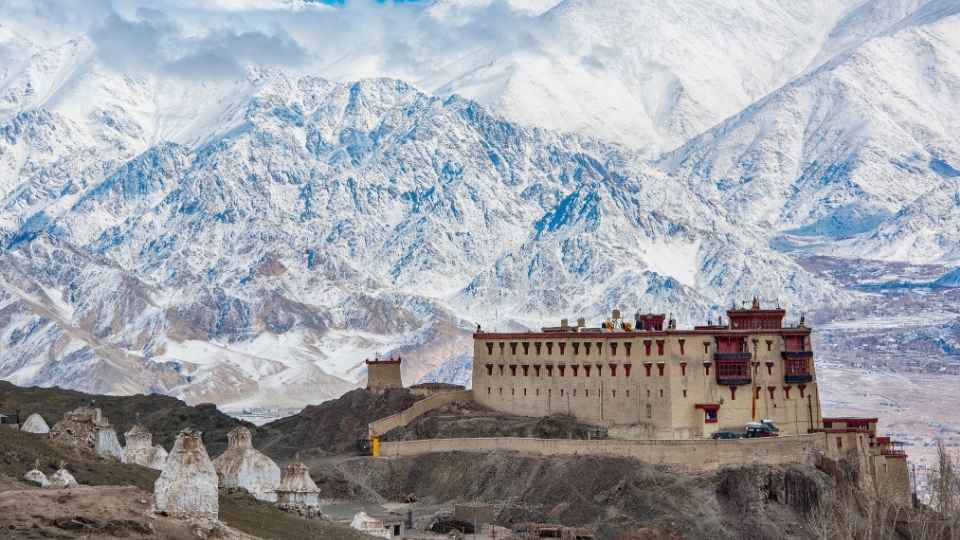
Ladakh has never been an easy place to govern.
Spread across nearly 60,000 square kilometres, it is larger than many Indian states despite having a population of barely three lakh people.
Villages are separated not by distance alone but by towering mountain ranges, glaciers, frozen rivers and some of the harshest climatic conditions anywhere in the country.
Large parts of the region remain cut off for months every winter.
Heavy snowfall closes mountain passes.
Temperatures plunge below minus 30 degrees Celsius.
Entire communities become physically isolated from district headquarters.
For decades, these geographical realities have shaped governance.
Revenue administration, land management, welfare delivery and public services have all had to contend with a landscape where reaching citizens is often the biggest challenge.
Unlike districts, which attract public attention because they often carry political significance, tehsils form the backbone of day-to-day governance.
They are where citizens obtain land records, income certificates, domicile documents, caste certificates and numerous other official services.
Revenue officials handle land ownership, mutations, agricultural records and local administrative matters.
For rural households, these offices are often the primary point of interaction with government.
When the nearest tehsil lies several hours – or even days – away, governance itself becomes inaccessible.
By creating 17 new tehsils, Ladakh is attempting to shorten that distance.
The objective is simple: government should travel to people rather than people travelling endlessly to government.
Distance in Ladakh cannot be measured only in kilometres.
A journey that appears manageable on a map can become impossible because of weather.
Road closures. Avalanches. Flash floods. Landslides. High-altitude sickness.
Even during summer, travelling between remote villages and administrative headquarters often consumes an entire day.
During winter, it may become impossible altogether.
This geographical isolation has long delayed everything from pension applications to welfare benefits and land-related documentation.
Officials believe decentralising administration will significantly reduce travel time while improving access to essential services.
One of the less discussed but perhaps most important aspects of the restructuring is administrative clarity.
Previously, some villages fell within overlapping administrative jurisdictions.
Officials often had to coordinate across multiple offices.
Residents sometimes found themselves navigating complicated bureaucratic arrangements.
The new framework seeks to ensure every village belongs to a single tehsil and every tehsil aligns with one district.
While this may sound technical, it has practical consequences.
It simplifies governance.
Reduces duplication. Clarifies administrative responsibility. Makes planning easier. Speeds up service delivery.
In a region where logistics already complicate governance, eliminating administrative confusion can significantly improve efficiency.
The latest reforms are also part of Ladakh’s evolving administrative identity.
When Ladakh became a separate Union Territory in August 2019 following the reorganisation of the former state of Jammu and Kashmir, the region inherited an administrative framework designed under different political and geographical realities.
Since then, governance has gradually been restructured.
New institutions have emerged. Infrastructure projects have accelerated. Road connectivity has expanded. Digital governance has increased.
The creation of additional districts earlier this year represented one stage of that transformation.
The expansion of tehsils builds upon that process by strengthening governance at a much more local level.
Perhaps the greatest beneficiaries could be residents living close to India’s international borders.
Ladakh shares sensitive frontiers with both China and Pakistan.
Many villages lie in areas of enormous strategic importance.
Historically, these communities have not only faced geographical isolation but have also lived under the shadow of difficult security conditions.
Improving administrative access serves multiple purposes.
It strengthens governance. Improves delivery of welfare schemes. Supports local populations. Reinforces the state’s presence in border areas.
In strategic terms, effective governance often becomes an essential component of national security.
Thriving border communities strengthen border management.
Land remains central to livelihoods across Ladakh.
Agriculture may be limited by climate, but ownership records determine everything from inheritance to compensation, infrastructure acquisition and government assistance.
Revenue administration therefore plays a crucial role.
With additional tehsils, officials expect land-related services to become faster and more efficient.
Mutations could be processed quicker. Ownership disputes may be resolved sooner. Digital land record implementation could accelerate.
These seemingly administrative improvements have significant implications for both citizens and development projects.
Ladakh today is witnessing rapid transformation. Road construction. Tunnel projects. Border infrastructure. Renewable energy. Tourism expansion. Digital connectivity. Military logistics. Educational institutions. Healthcare improvements. Each requires efficient local administration.
Projects cannot proceed smoothly without land acquisition, revenue records, clear jurisdiction and coordinated governance.
Administrative decentralisation therefore becomes an enabling factor for development.
Tourism has become one of Ladakh’s largest economic sectors.
While Leh continues to dominate visitor arrivals, policymakers increasingly seek to promote lesser-known destinations.
Many of these lie far from established administrative centres.
Improved governance could facilitate tourism infrastructure, licensing, local planning and community participation in emerging destinations across Nubra, Zanskar, Changthang and Sham.
Better administration often translates into faster approvals and stronger local coordination.
Government schemes are only as effective as their delivery mechanisms.
Whether pensions, scholarships, rural employment programmes or agricultural assistance, beneficiaries often depend upon revenue offices for documentation and verification.
Reducing administrative distance improves access.
For elderly residents especially, avoiding long journeys across mountains represents a major improvement in quality of life.
Similarly, women, differently-abled persons and economically weaker households stand to benefit from governance becoming physically closer.
Administrative decentralisation also assumes greater importance in an era of climate uncertainty.
Ladakh is increasingly experiencing changing snowfall patterns, glacial retreat, flash floods and cloudbursts.
The devastating floods that struck Leh in 2010 demonstrated how quickly disasters can overwhelm remote regions.
Local administrative capacity becomes essential during emergencies.
Additional tehsils could strengthen disaster preparedness by bringing officials closer to vulnerable communities and improving coordination during relief operations.
India’s digital governance revolution has transformed service delivery.
Many applications can now be submitted online. Certificates are increasingly digitised.
Yet digital governance alone cannot overcome every challenge in Ladakh.
Internet connectivity remains uneven in remote areas.
Older residents often require assistance navigating online systems.
Land verification frequently demands field-level administration.
Local offices therefore remain indispensable despite technological advances.
The expansion also raises important questions.
Creating new administrative units requires personnel, infrastructure and financial resources.
Buildings must be established. Officials recruited. Support staff appointed. Digital systems integrated.
Without adequate staffing, new tehsils risk existing only on paper.
The success of the reform will ultimately depend upon effective implementation rather than administrative notification alone.
Critics sometimes question whether creating new administrative units increases government expenditure.
The answer lies in balancing costs against long-term benefits.
When citizens repeatedly travel long distances for basic services, the hidden economic costs are enormous. Lost workdays. Travel expenses. Delayed documentation. Postponed investments. Administrative inefficiencies.
Reducing these burdens generates broader economic gains that often outweigh the cost of decentralisation.
Ladakh is culturally diverse. Its administrative regions encompass distinct languages, traditions and historical identities.
Local governance becomes more effective when it reflects local realities.
Smaller administrative units can better understand community-specific needs while improving communication between citizens and officials.
That responsiveness becomes particularly important in culturally unique regions like Changthang or Zanskar.
Ultimately, this reform is about more than maps. It reflects an evolving philosophy of governance.
For decades, Ladakh’s remoteness often meant that administration remained concentrated in relatively few centres.
Today’s approach seeks to reverse that equation.
Rather than expecting citizens to overcome geography, governance itself is adapting to geography.
In mountainous regions, proximity matters. Not merely politically. Practically.
A shorter journey to a revenue office can mean faster compensation after a disaster. Earlier access to welfare. Quicker land records. Better coordination during emergencies. Greater confidence in public institutions.
The true impact of the new tehsils will not be measured by notifications or boundary maps.
It will be measured by whether a farmer in Nubra receives a land certificate without travelling for two days.
Whether an elderly pensioner in Zanskar can complete documentation locally.
Whether disaster response reaches isolated villages faster.
Whether border communities feel more connected to the administration.
Whether governance becomes visible not only in district headquarters but also in villages scattered across one of the world’s highest inhabited landscapes.
For most Indian states, administrative restructuring often remains an internal government exercise.
In Ladakh, where geography has always shaped governance as much as policy, the creation of 17 new tehsils carries deeper significance.
It acknowledges a simple but powerful reality: in the cold desert, distance has always been one of the greatest barriers to development.
Reducing that distance is not merely administrative reform.
It is an investment in accessibility, inclusion and resilience.
As Ladakh continues to redefine itself after becoming a Union Territory, the expansion of its tehsil network marks another step in bringing governance closer to the people who live amid the mountains.
For communities accustomed to measuring journeys not only in kilometres but in mountain passes, snowfall and seasons, that may prove to be one of the most meaningful changes of all.
About the Author
Mir Suneem is a filmmaker and a postgraduate in filmmaking from Jamia Millia Islamia. With a strong grounding in film editing and narrative craft, she is drawn to stories the frame extends beyond the visible into the lived.