
Three young men drowned in the Jhelum in Hajin. But in Kashmir, the river has always carried more than water. Mir Suneem sends a detailed report .
On Friday afternoon, the Jhelum moved past Hajin the way it always does in late spring — swollen, cold, deceptively calm from a distance.
Along the banks at Chandargeer in north Kashmir’s Bandipora district, three young men had gone to wash tent fabric near the river. The work was ordinary enough to escape memory later. In Kashmir, where weddings, political rallies, funerals, and religious gatherings depend on rented shamianas and canvas tents, washing them along riverbanks is routine seasonal labour. Then one of them slipped.
Witnesses would later say he lost balance near the edge where the muddy embankment drops suddenly into deeper current. Another jumped in to save him. Then a third. Within moments, all three were gone.
By evening, rescue teams from the State Disaster Response Force, local volunteers, and police personnel had retrieved the bodies from the river.
The dead were identified as Sohail Ahmad Dar, 22; Aadil Ahmad Dar, 18; and Sameer Ahmad Dar, sons of the same landscape, the same locality, the same river valley that has spent centuries nourishing Kashmir and, with unsettling regularity, mourning it. ()
By nightfall, condolence messages arrived in the formal language of governance.
Lieutenant Governor Manoj Sinha described himself as “deeply pained.” Chief Minister Omar Abdullah called the incident “deeply unfortunate.” Nizamuddin Bhat spoke of unbearable grief.
In Hajin itself, however, the language was different. People spoke softly. As Kashmiris often do after sudden deaths.
“He went to save his friend.” “They were good boys.” “It happened too fast.”
And then the oldest sentence in Kashmir’s vocabulary of mourning: “It was destiny.”
But destiny alone cannot explain why the Jhelum keeps swallowing Kashmir’s young.
The Jhelum is not merely a river in Kashmir. It is geography, memory, economy, mythology, politics, and grief flowing through the same channel.
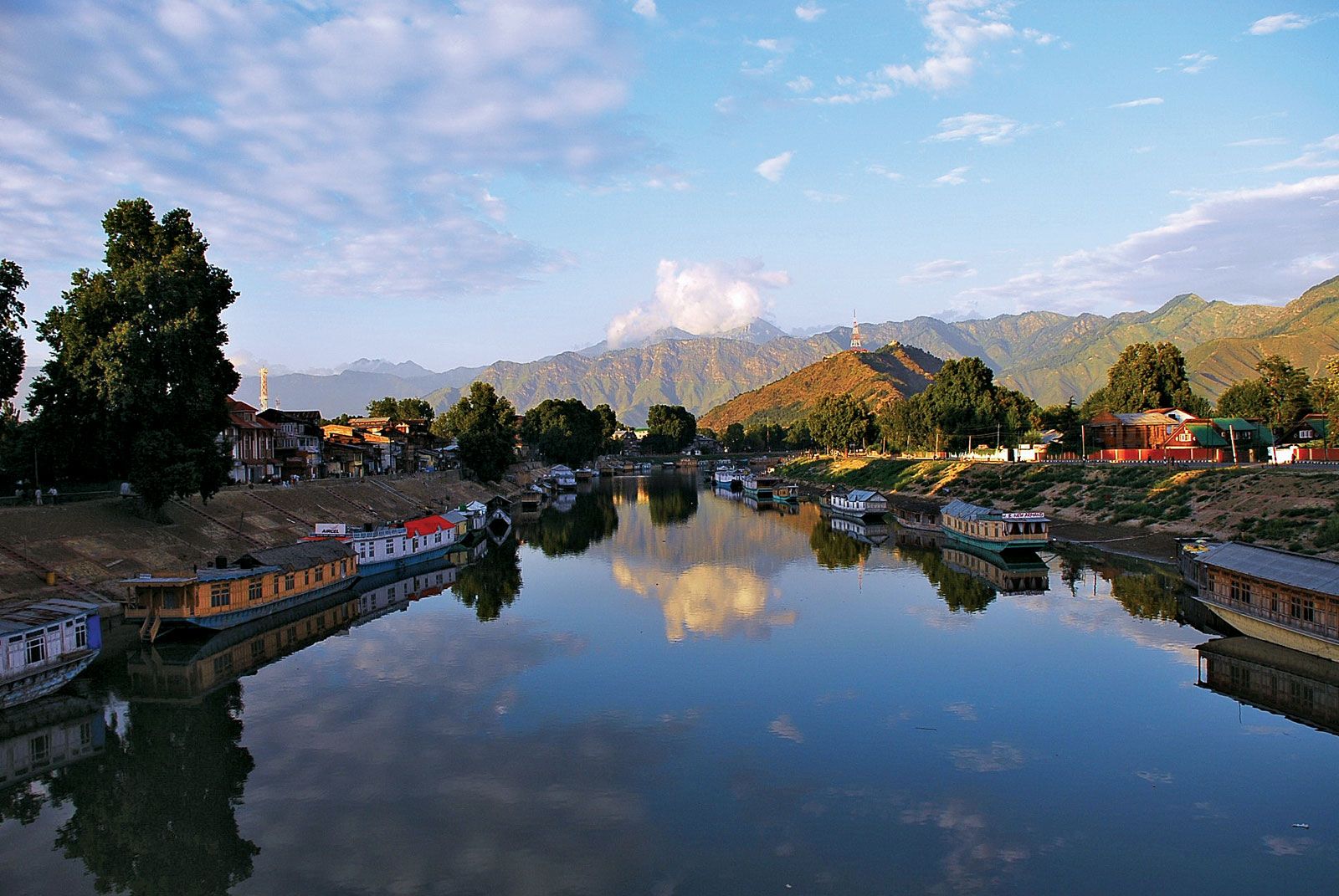
Known locally as Vyeth, the river begins in Verinag in south Kashmir and winds through the Valley before entering Wular Lake and eventually crossing the Line of Control. Srinagar was built around it. Entire towns lean toward it. Bridges define neighbourhoods. Markets face it. Mosques echo above it.
For centuries, the Jhelum carried trade, timber, stories, and migration. Now it also carries headlines. Every year, especially during spring and summer, Kashmir reports drowning incidents involving children, labourers, students, shepherds, fishermen, and young men attempting rescues.
Sometimes the victims are bathing. Sometimes washing livestock. Sometimes crossing in boats. Sometimes trying to save somebody else.
In April this year, two brothers drowned in Bijbehara after slipping into the river while washing sheep near the bank. One reportedly fell first; the second entered the water trying to rescue him. Both died.
That detail – the attempted rescue – recurs with haunting frequency across Kashmir’s drowning tragedies.
The Valley’s river deaths often unfold not through recklessness but through instinctive loyalty. Someone slips. Someone else jumps in. Then the river takes both. Or three. Or more.
Hajin sits close to water in every direction. The town lies between the Jhelum and Wular Lake, in a landscape where waterways shape daily life as naturally as roads elsewhere. Fishing communities, boatmen, labourers, and farmers have long lived in negotiation with water here.
But Bandipora also carries another memory associated with drowning. In 2006, the Wular Lake boat tragedy killed twenty-one schoolchildren after an overcrowded boat capsized during a storm. The incident traumatised the district so deeply that even today older residents recall the names of the dead without pause.
For many in Bandipora, Friday’s drowning reopened something older than immediate grief.
Water in Kashmir does not merely sustain life. It stores memory.
At tea shops in Hajin after the latest tragedy, conversations moved unpredictably between present and past. Someone mentioned the Wular boat disaster. Someone else recalled another drowning from years ago. A man standing beside a pharmacy remembered a teenager who disappeared into the Jhelum during floods.
The dead accumulate along the river in fragments of conversation. The Jhelum remembers differently than humans do. It remembers collectively.
Across Kashmir, drowning victims are overwhelmingly young and overwhelmingly male. Teenagers bathing in canals. Boys diving from bridges. Young labourers washing equipment near riverbanks. Friends taking photographs too close to embankments. Rescue attempts gone wrong. The pattern reflects not only the geography of Kashmir but also its social architecture. Young men spend more time outdoors, around rivers, canals, and lakes, often engaged in physical work or recreation near dangerous water currents.
Yet infrastructure around these waterways remains inconsistent. Many riverbanks lack barriers or warning systems. Rescue preparedness outside urban centres is limited. Swimming education is rare despite Kashmir’s intense relationship with water.
And then there is the illusion of familiarity. People who grow up near rivers often underestimate them. The Jhelum especially appears deceptively manageable from the surface. Its violence is often underwater – sudden current shifts, deep pockets near embankments, suction beneath bridges, soft mud collapse along river edges.
Local residents in Hajin described Friday’s current as unusually strong due to rising water levels. But rivers rarely announce danger in ways visible to the inexperienced. A still surface can conceal enormous force.
In Kashmir, rescue operations have their own choreography. The first responders are almost always local people. Before the SDRF arrives. Before police cordons appear. Before official statements. Men from nearby shops, homes, and boats run toward the river instinctively.
On Friday in Hajin, eyewitnesses said volunteers entered the water immediately after the youths disappeared. Others gathered along the bank scanning for movement. Rescue personnel later joined the operation alongside Jammu and Kashmir Police teams. ()
In many Kashmiri towns, rescue culture has become deeply communal because tragedies occur with such frequency.
Boatmen become divers. Shopkeepers become search volunteers. Teenagers hold ropes along embankments. People who cannot swim still gather because absence feels morally impossible. And yet the river often returns bodies only after hours. Sometimes days. Sometimes not at all. The waiting becomes its own form of trauma.
In earlier drowning incidents across Kashmir, families have spent days along riverbanks watching rescue teams drag hooks through water while rumours circulate constantly: a body spotted downstream, clothing found near reeds, SDRF divers entering another section of the river.
In Srinagar, rescue personnel privately describe the psychological difficulty of recovering young bodies from the Jhelum repeatedly across seasons.
“You stop sleeping properly for some days,” one rescue worker once told a local reporter after a drowning case near Chattabal.
The work follows them home. Kashmir is a society unusually familiar with premature mourning.
Conflict conditioned the Valley to sudden funerals long before drowning accidents became recurring headlines. Over decades, people here developed rituals for grief almost as survival mechanisms.
Loudspeakers announce deaths. Neighbours arrive automatically. Tea circulates endlessly.
Men gather outside homes in rows of silence. Women mourn inside. Children observe everything quietly.
And because death has remained publicly visible for generations in Kashmir – through conflict, accidents, natural disasters, crossfire, militant killings, floods, avalanches -communities often process tragedy collectively rather than privately.
Friday’s drowning in Hajin produced exactly that atmosphere.
The locality reportedly entered mourning almost immediately. Shops shut early. Residents gathered near the families’ homes. Young men stood in clusters replaying the incident repeatedly, as though narration itself might somehow reverse chronology.
“He jumped to save him.” “No, first the other one slipped.” “They were washing tents.” “The current was too strong.”
Every tragedy in Kashmir eventually becomes oral history. There is another reason drownings in Kashmir feel especially painful. The Valley is already haunted by the vulnerability of its young.
For decades, Kashmiri youth have existed at the centre of political unrest, militarisation, unemployment, psychological distress, and migration anxieties. Young people dominate the Valley’s stories of protest, detention, addiction, militancy, policing, and now increasingly mental-health crises.
To lose young men to something as abrupt and senseless as a river accident feels unbearable partly because Kashmir already fears losing them in so many other ways. That emotional layering shapes public reaction to incidents like Hajin. The deaths are not interpreted only as accidents. They become symbols of fragility itself. A generation already carrying too much uncertainty disappearing into water.
In Kashmir, rivers occupy a strange place between beauty and threat. Tourism advertisements frame the Jhelum romantically – houseboats, reflections, wooden bridges at dusk. Poetry treats rivers as metaphors of longing and continuity. But residents living beside these waterways understand another reality.
The Jhelum floods. The Jhelum erodes. The Jhelum takes.
Older Kashmiris still speak about the catastrophic 2014 floods almost biblically, describing entire neighbourhoods swallowed by water. In rural areas, stories of drownings circulate across generations like inherited cautionary tales.
Children are warned not to stand too close to canals. Parents shout at boys diving from bridges. Yet youth repeatedly test rivers anyway. Partly because youth everywhere believes itself temporarily immune to death. And partly because rivers in Kashmir are not separate from life. They are inside it.
By evening on Friday, the bodies had been returned home.
Mourners gathered beneath dim lights in Chandargeer Hajin while relatives moved through the stunned mechanics of burial preparation. Someone recited verses softly. Someone else arranged blankets for arriving visitors. Outside, the Jhelum kept moving. Rivers never pause for mourning. That may be the cruelest thing about them.
They continue carrying snowmelt, silt, branches, reflections, and memory downstream exactly as before, indifferent to the names newly added to their history.
Somewhere beyond Hajin, the same river passes through Sopore, Srinagar, Bijbehara, and dozens of other places where people already carry stories of someone lost to water.
And now the names of Sohail Ahmad Dar, Aadil Ahmad Dar, and Sameer Ahmad Dar will travel with it too.
In Kashmir, grief moves like the river itself. Quietly. Collectively. And without ever fully disappearing.
About the Author
Mir Suneem is a filmmaker and a postgraduate in filmmaking from Jamia Millia Islamia. With a strong grounding in film editing and narrative craft, she is drawn to stories the frame extends beyond the visible into the lived.