
By Syed Sameer Ahmad Nazki
The punch that changed everything arrived late in the bout.
Not wild. Not desperate. Not theatrical.
Just precise.
A short right hand thrown with the kind of calm that young boxers are not supposed to possess under continental pressure. The Kazakh boxer staggered half a step backward, enough for the judges to notice, enough for momentum to tilt, enough for a boy from Rajouri to suddenly feel history opening inside the ring.
Inside the Under-15 Asian Boxing Championship in Uzbekistan – amid flags, coaches, whistles and the familiar metallic smell of sweat and canvas – Yasir kept moving forward.
When the final result was announced, the Indian contingent erupted.
Kazakhstan had been beaten.
And a teenager from Jammu and Kashmir had guaranteed India a medal at one of Asia’s most competitive youth boxing tournaments.
For most of India, it was another promising sporting result buried inside a crowded news cycle.
For Rajouri, it felt much larger.
Because boys like Yasir are not expected to arrive on continental podiums.
They are expected to disappear quietly into circumstance.
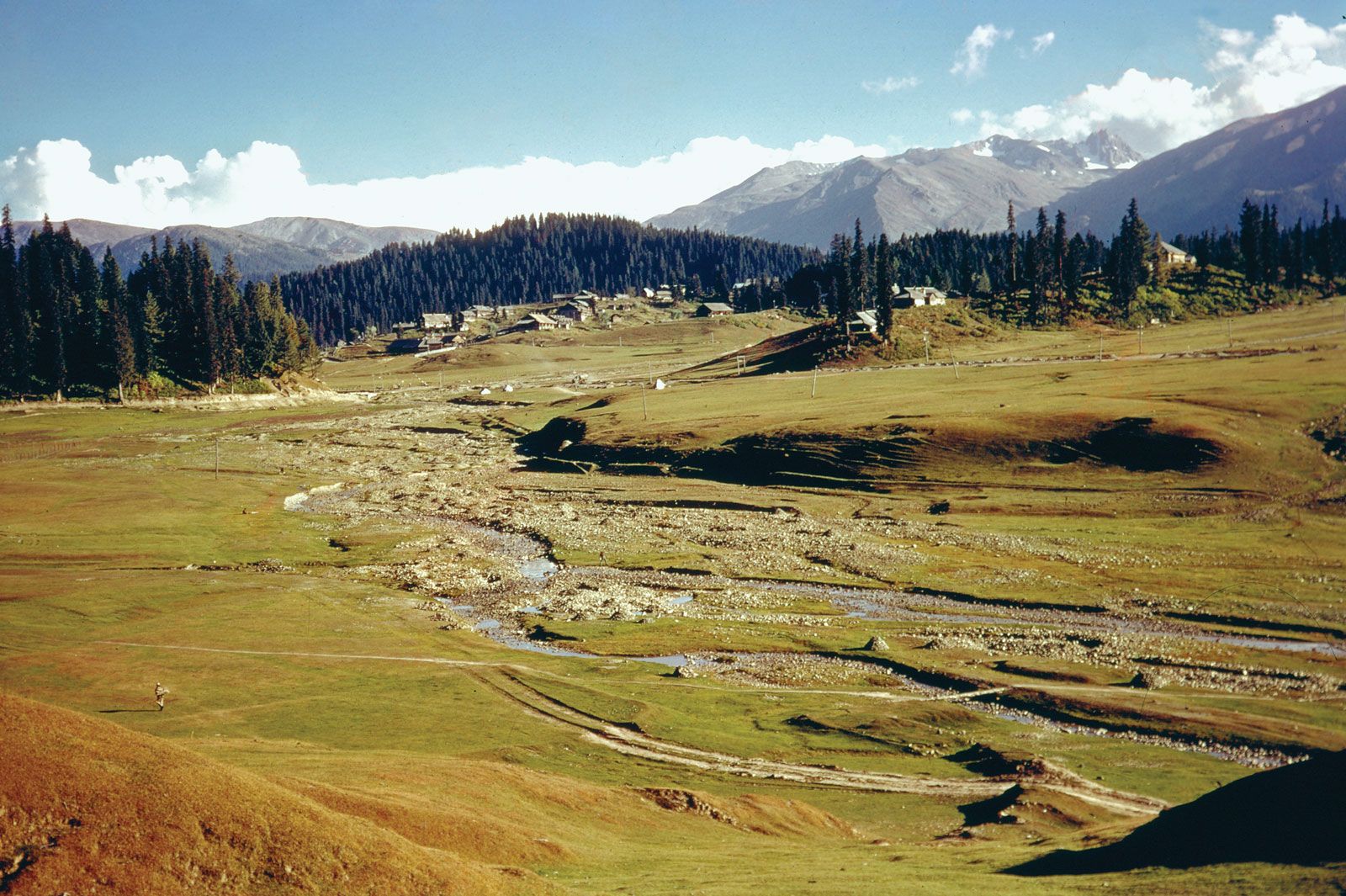
Rajouri sits in the hills of Jammu and Kashmir like a place permanently negotiating endurance.
The roads twist through mountains scarred by weather and history. Military convoys move through the district as routinely as school buses. Conversations here often carry the vocabulary of survival – jobs, exams, migration, security, uncertainty.
Sport, in such places, is rarely treated as destiny.
It is treated as escape.
Yet over the last decade, districts like Rajouri have slowly begun producing a different kind of athlete: hardened, disciplined, psychologically resilient competitors forged not in elite academies but in difficult environments where ambition itself becomes a form of resistance.
Boxing fits naturally into that landscape.
The sport rewards stubbornness as much as talent.
And Yasir, coaches say, possessed both.
At the Khelo India Boxing Centre in Rajouri, trainers noticed early that he fought differently from many boys his age. He was composed under pressure. Economical. Patient. He did not waste movement trying to impress crowds.
“He listens,” one local coach said recently. “That is rare in young fighters.”
Listening matters in boxing.
Especially when survival already taught you discipline before sport ever did.
The Asian Championships in Uzbekistan were always going to be unforgiving.
Youth boxing in Asia has evolved into one of the world’s most technically demanding circuits, with countries like Kazakhstan, Uzbekistan, Iran, and Kazakhstan producing extraordinarily disciplined amateur fighters. Many future Olympians emerge from these systems long before the world notices their names.
Kazakh boxers, especially, carry a particular reputation in amateur boxing circles.
Sharp footwork. Relentless conditioning. Technical aggression.
They fight like athletes raised inside systems built specifically for combat sports excellence.
And yet, bout after bout, Yasir kept advancing. Three consecutive wins.
Then came the Kazakh opponent. To defeat a boxer from Kazakhstan at this level is never merely another victory on paper. It signals legitimacy. It tells coaches, selectors, and rival camps that a fighter belongs at the tournament’s highest levels.
According to officials from the Jammu & Kashmir Sports Council, Yasir displayed “remarkable skill, determination and composure.”
But composure may be the most important word there.
Young boxers often lose emotionally before they lose tactically. The atmosphere overwhelms them – foreign crowds, national expectations, unfamiliar judges, intimidating opponents.
Yasir did not break. He kept throwing.
And somewhere between combinations and counterpunches, Rajouri entered the semifinals of the Asian Championship.
There is another reason this story resonates so deeply in Jammu and Kashmir. Yasir is an orphan.
In official language, that detail appears briefly, almost administratively. But in reality, it changes the emotional gravity of everything.
Because talent without support in places like Rajouri often collapses long before recognition arrives.
According to district officials, Yasir and his family currently live in modest conditions near the Sports Stadium Rajouri, inside accommodation at the ITI building. The image feels almost cinematic in its symbolism – a young boxer living beside the arena where he trained himself into possibility.
His story is not one of glamour or institutional privilege.
It is a story of persistence against erosion. Limited resources. Limited infrastructure. Limited certainty. And yet he kept training.
Perhaps that is what makes combat sports so emotionally powerful in regions like Jammu and Kashmir. Boxing strips narrative down to something brutally simple: endurance. No politics inside the ropes. No rhetoric.
Just whether you can absorb pressure longer than the person standing opposite you.
Kashmir’s sporting stories often carry unusual emotional force because they emerge from a region internationally associated more with conflict than competition.
For decades, Kashmir and Jammu regions have been narrated primarily through security language: borders, crackdowns, ceasefires, instability.
Athletes disrupt that narrative. A footballer from downtown Srinagar. A cricketer from Jammu. A skier from Gulmarg. Now a boxer from Rajouri defeating Kazakhstan in Uzbekistan.
These moments matter because they produce alternative imagination. They allow young people in places burdened by uncertainty to briefly envision futures not entirely defined by politics.
The Jammu and Kashmir administration appears increasingly aware of sport’s symbolic power. Yasir’s financial assistance from the Rajouri district administration came under the broader “Nasha Mukt Jammu & Kashmir Abhiyan,” an anti-drug initiative attempting to steer youth toward sports and community engagement.
The logic is clear. Where hopelessness grows, addiction often follows. Where aspiration survives, resilience becomes possible.
Sport alone cannot solve the structural challenges facing youth in Jammu and Kashmir. But it can create islands of purpose inside difficult environments.
And sometimes purpose is enough to alter a life’s direction.
Youth boxing has a strange emotional rhythm. One day, a teenager is training anonymously inside a regional sports centre. A week later, he carries the pressure of an entire country’s flag stitched across his chest.
How Yasir handles that pressure may matter as much as technique.
The best young fighters understand something essential early: boxing punishes distraction.
The crowd disappears. The headlines disappear. The mythology disappears. Only timing remains.
Distance. Breathing. Hands. Instinct.
Somewhere in Uzbekistan, coaches will now study footage late into the night, analysing the Iranian boxer’s movement patterns and defensive habits. Somewhere in Rajouri, boys will replay clips of Yasir’s victory on mobile phones. Somewhere in Kashmir, parents who once discouraged sport as impractical may quietly reconsider.
Because representation changes possibility.
When one athlete escapes limitation, others begin imagining they might too.
A boxer from Rajouri forced people to pay attention. Not out of sympathy. Out of excellence. That distinction matters.
Too often, athletes from Jammu and Kashmir are framed primarily through adversity narratives – conflict, poverty, survival. Those realities are real, but they are not the whole story.
Yasir is not merely inspiring because he struggled. He is inspiring because he won. Against elite opposition. On a continental stage. Under pressure. That is sport’s purest language.
Late Thursday evening, as news of the victory spread across social media in Jammu and Kashmir, congratulatory messages poured in from coaches, officials, politicians and ordinary residents. In Rajouri, pride moved quickly through streets that understand how rarely international sporting recognition arrives here.
And somewhere beyond all the celebration, inside a boxing hall far from home, a teenager prepared for another fight.
Because boxing teaches one final lesson above all else: No victory lasts long. The bell rings again.
About the Author
Syed Sameer Ahmad Nazki is filmmaker with command over film editing. With a parallel interest in videography, Nazki gravitates toward stories that live at the intersection of image and emotion. Away from the edit table, he remains an engaged observer of sport, particularly cricket and football.