
Kashmir Impulse Desk
Srinagar, May 23
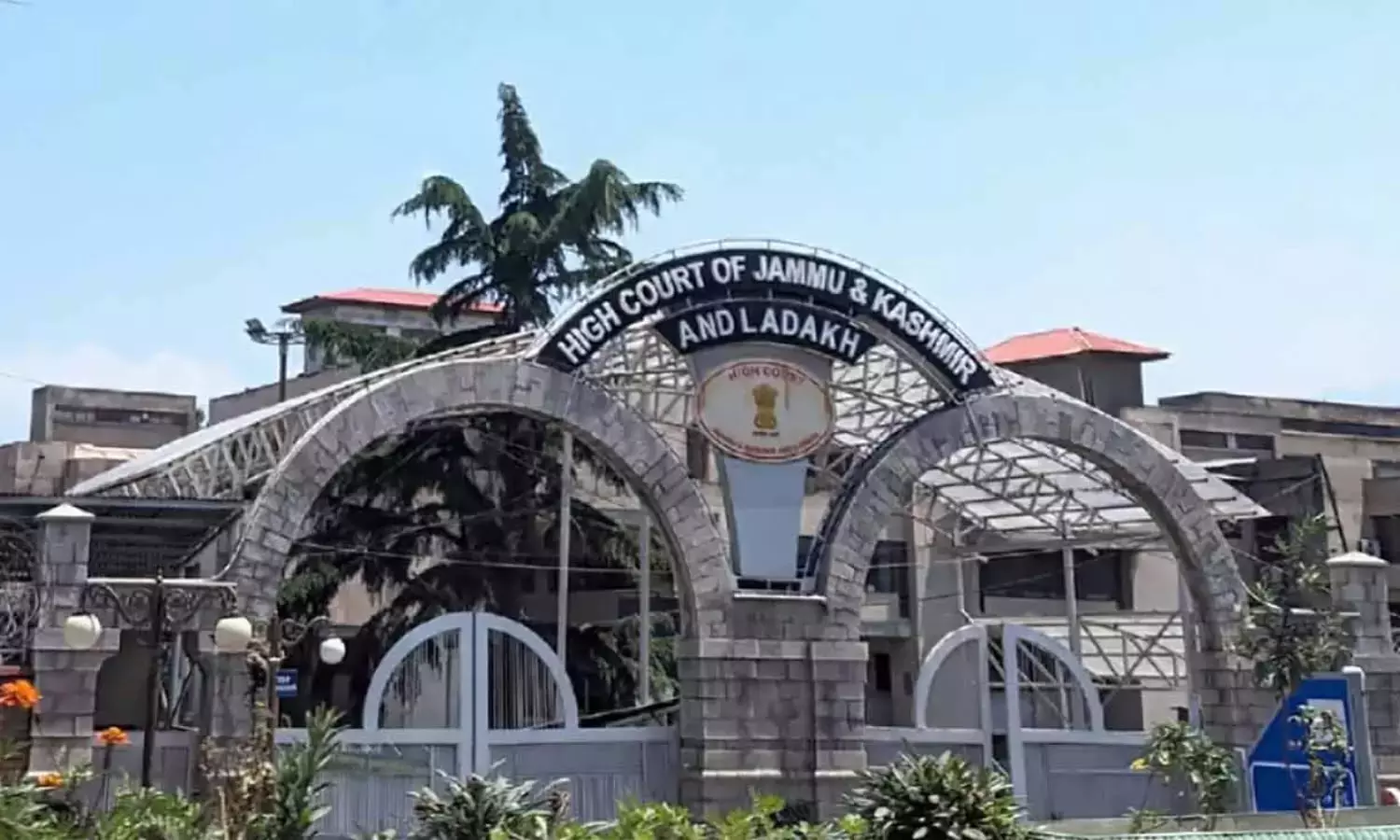
The High Court of Jammu and Kashmir and Ladakh has held that prolonged incarceration coupled with delay in completion of trial violates the fundamental right to life and personal liberty under Article 21 of the Constitution, while directing a special court to expedite proceedings in a UAPA case pending since 2020.
A bench of Justice Wasim Sadiq Nargal made the observation while hearing a plea filed by undertrial prisoner Arif Billa Sheikh, who sought directions for early conclusion of trial in a case registered at Bomai police station in Baramulla district.
Sheikh has been in custody since 2020 in connection with offences under the Unlawful Activities (Prevention) Act, Explosive Substances Act and provisions of the Indian Penal Code.
Relying on Supreme Court judgments, the court said prolonged incarceration without conclusion of trial amounts to a violation of constitutional rights.
“Prolonged detention and delay in conclusion of trial itself is violative of Article 21 of the Constitution of India,” the court said.
The bench observed that even in cases involving stringent provisions such as the UAPA, constitutional courts can intervene where an accused has remained in custody for a long period and the trial is unlikely to conclude within a reasonable time.
According to the plea, the chargesheet in the case was filed in October 2020 and charges were framed in March 2021, but the trial remains pending despite substantial recording of prosecution evidence.
The petitioner argued that the delay in concluding proceedings infringed upon his right to a speedy trial guaranteed under Article 21.
“Criminal justice is founded on the principle of fairness. Such fairness is not limited only to providing an opportunity of hearing to the parties, but also requires that proceedings are concluded within a reasonable time,” the court said.
The bench noted that delays in criminal trials erode public confidence in the justice delivery system and defeat the objective of fair adjudication.
Reiterating that the right to speedy trial extends to investigation, inquiry and trial, the court said constitutional guarantees cannot be overridden solely because allegations are serious or relate to national security.
“Every accused continues to enjoy presumption of innocence till guilt is established in accordance with law through a fair trial,” the court said.
It said that where an accused remains incarcerated for a prolonged period without trial reaching its logical conclusion, courts are constitutionally obligated to assess whether such delay infringes fundamental rights.
The court observed that while cases under special laws involve broader societal and national security concerns, extended delays cannot be ignored.
“If trials under such enactments remain pending, the process itself may become punitive,” the bench said, adding that courts must balance national security concerns with individual liberty.
Referring to Section 19 of the National Investigation Agency Act, 2008, the court said Parliament had clearly mandated day-to-day trial before special courts in such cases to prevent prosecutions from lingering indefinitely.
“The mandate of day-to-day trial is intended to strike a balance between societal interest and individual liberty,” it said.
Without commenting on the merits of the allegations against the accused, the High Court directed the special court to accord priority to the matter and make all possible efforts to conclude the trial expeditiously.