

By Bisma Rafiq
There are moments in Indian politics when election results feel less like arithmetic and more like weather systems shifting over an entire civilisation.
This assembly verdicts across West Bengal, Assam, Kerala, Tamil Nadu and Puducherry were one such moment.
The Bharatiya Janata Party’s historic breakthrough in West Bengal. The Congress party’s emphatic return in Kerala. The emergence of actor Vijay as a disruptive force in Tamil Nadu. The BJP’s consolidation in Assam. The fragmentation of old certainties in the South.
Each result belongs to its own regional story.
But together, they reveal something larger: India is politically restless again.
And from Kashmir, these tremors feel especially significant.
Because Kashmir has always watched India not merely as geography, but as mood.
For nearly 15 years, Mamata Banerjee appeared politically inseparable from West Bengal itself. She embodied Bengali regional resistance against central domination with extraordinary theatrical energy – street politics wrapped in emotional populism.
But Indian democracy possesses a brutal habit of eventually humbling all political permanence.
The BJP’s victory in Bengal is historically significant not only because it ended Trinamool Congress rule, but because it demonstrates the BJP’s continued ability to enter political territories once considered culturally resistant to Hindutva politics.
For years, Bengal was described as ideologically immune to the BJP’s national rise – too literary, too left-influenced, too regionally proud, too politically distinct.
Now that assumption lies broken.
And Kashmir understands the symbolism immediately.
Because for regional parties across India, Bengal represented something emotionally important: proof that charismatic state-level leadership could indefinitely resist the BJP’s electoral machine.
That illusion has weakened. The BJP is no longer merely a Hindi-heartland force. It has become a national political atmosphere.
Yet the same election cycle also delivered another equally important message. The Congress party is not politically extinct.
Its sweeping victory in Kerala matters because Indian politics had increasingly begun treating Congress as a fading archival structure rather than a competitive force. Kerala interrupts that obituary.
In many ways, Kerala’s result reflects the resilience of ideological politics in parts of southern India. Welfare governance, coalition discipline, minority confidence, and local political culture still matter enormously there.
For Kashmiris watching from afar, the Kerala verdict carries another emotional resonance.
It suggests that India’s political future may still remain plural rather than singular.
That matters deeply in Kashmir, where anxieties about centralisation and majoritarian consolidation remain intense after the abrogation of Article 370 in 2019.
Regional diversity within India has always psychologically mattered more in Kashmir than mainland commentators often understand. Every strong regional mandate somewhere else — whether in Tamil Nadu, Bengal, or Kerala – subtly reassures Kashmir that India’s federal structure still breathes.
Then came Tamil Nadu. Or more precisely, the arrival of Vijay.
Indian politics has long possessed a cinematic instinct, but Tamil Nadu perfected it into a governing tradition. From M G Ramachandran to J Jayalalithaa, cinema and political power have historically moved together there almost seamlessly.
Still, the speed of Vijay’s rise startled even seasoned observers. His party emerging as the single largest force in its electoral debut signals not merely celebrity popularity but public exhaustion with entrenched binaries.
Across India, voters increasingly appear willing to disrupt old political structures dramatically if existing parties fail to inspire emotional imagination.
That emotional component matters.
Modern Indian politics is no longer driven only by ideology or caste arithmetic.
It is increasingly driven by narrative energy.
Who can embody aspiration? Who can project emotional certainty? Who can transform anger into belonging?
The BJP mastered this nationally under Narendra Modi. Vijay appears to be attempting a regional version of the same phenomenon in Tamil Nadu – though ideologically very different.
In Srinagar this week, political workers, journalists, students and bureaucrats followed election results with unusual intensity.
Partly because Kashmir always studies Delhi carefully. But partly because Kashmir now studies the rest of India more carefully too.
The Valley’s political imagination changed after 2019.
Earlier, national elections often felt psychologically distant from Kashmiri daily life. Today, every major electoral shift elsewhere in India is examined for clues about federalism, opposition survival, regional autonomy, constitutional politics, and the future direction of the republic itself.
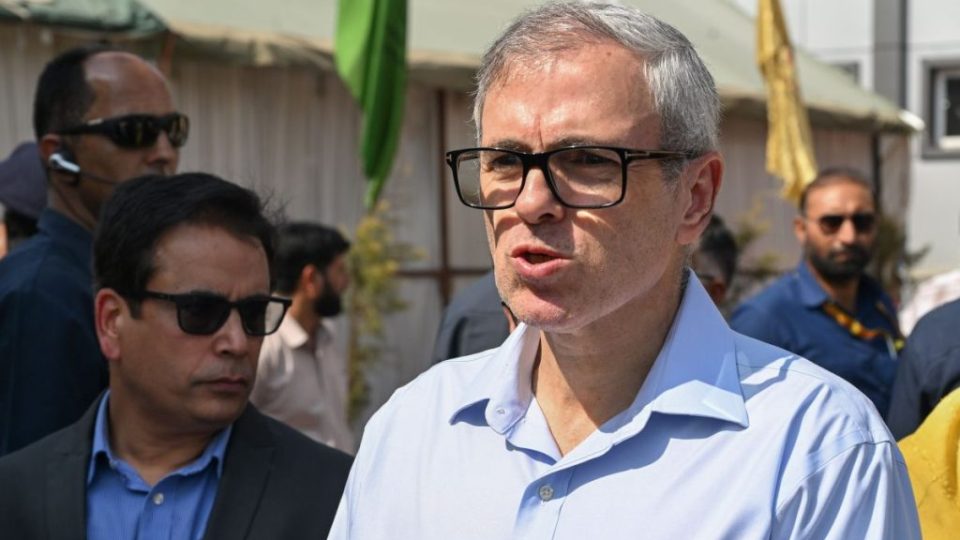
That is why Chief Minister Omar Abdullah described the results as “political earthquakes” whose aftershocks could continue until 2029.
The phrase sounded dramatic. But it was not entirely inaccurate.
These elections reveal a country simultaneously consolidating and fragmenting.
The BJP continues expanding geographically.
Yet regional forces continue reinventing themselves.
Congress declines in one state and resurrects itself in another.
India refuses ideological simplicity.
And Kashmir, perhaps more than anywhere else, understands the consequences of that complexity.
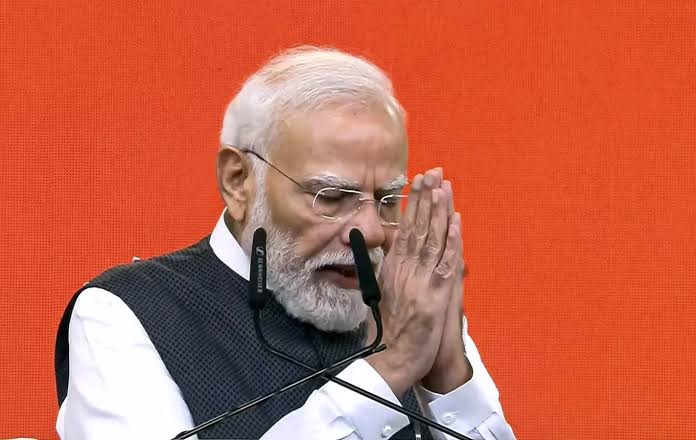
Prime Minister Narendra Modi responded to the Bengal victory by urging “change, not revenge.”
It was politically astute language.
West Bengal’s political culture has historically been shaped by cycles of ideological violence, cadre dominance, and retaliatory mobilisation. By invoking reconciliation, Modi attempted to position the BJP not as conqueror but as stabiliser.
Whether that promise survives actual governance remains another question.
Because the BJP now faces a different kind of challenge in Bengal: converting electoral victory into durable cultural legitimacy.
Winning Bengal electorally is one thing.
Understanding Bengal emotionally is another.
The same challenge shadows the BJP’s larger national expansion.
Can a party built around centralised leadership successfully absorb India’s immense regional diversity without flattening it?
This question matters profoundly from Kashmir.
Because Kashmir’s deepest anxieties have never been only about governance.
They have been about cultural and political absorption.
Perhaps the most striking lesson from these elections is that southern India continues resisting political homogenisation in uniquely creative ways.
Kerala reaffirmed coalition politics.
Tamil Nadu reinvented personality politics.
Even where the BJP grows electorally, the South still negotiates power differently than northern India.
Language remains central. Regional pride remains potent. State identities remain emotionally alive. And from Kashmir, this feels strangely familiar.
Kashmir too has always resisted being reduced to a single national script.
Its politics, culture, memory, and emotional rhythms remain deeply regional even while tied to larger Indian structures.
That is why Kashmir often instinctively understands southern regional assertions better than mainland observers expect.
Both emerge partly from the same instinct: the desire to remain distinct without necessarily ceasing to belong.
Indian democracy often appears chaotic because it contains too many Indias arguing simultaneously.
But perhaps that argument itself is the republic’s deepest strength.
This week’s elections produced no single national story.
Instead, they produced multiple truths at once. The BJP is stronger than ever in some places.
Congress is more alive than expected in others. Regional politics remains resilient. Voters remain unpredictable. And no political fortress is eternal. From Kashmir, these conclusions matter enormously.
Because Kashmir has spent years wondering whether the country’s political future would become fully centralised, emotionally uniform, and electorally predetermined.
These elections suggest something more complicated.
India is still restless. Still argumentative. Still capable of surprising itself.
And perhaps that uncertainty – noisy, unstable, exhausting though it may be – remains democracy’s last real proof of life.
About the Author
Bisma Rafiq is interested in human resources and wants to improve journalism from the human resources point of view. She is also a passionate story teller.