
Kashmir Impulse Desk
New Delhi, May 16
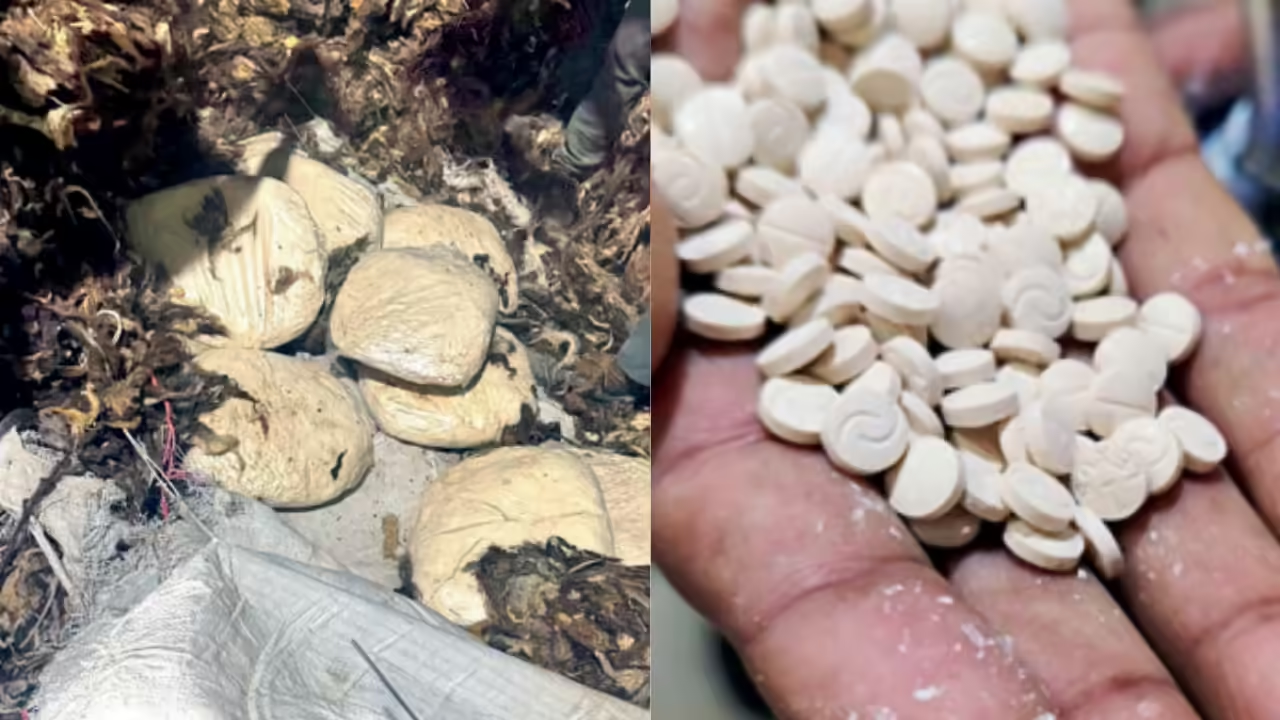
India’s Narcotics Control Bureau said on Friday it had dismantled an international drug trafficking syndicate and seized about 227.7 kg of Captagon tablets and powder in the country’s first major seizure of the synthetic drug, arresting a Syrian national in the operation.
The operation, codenamed “Operation RAGEPILL”, led to the recovery of Captagon consignments valued at about 1.82 billion rupees ($21.8 million) in illicit markets across the Gulf and Middle East, the agency said.
Captagon typically contains fenetylline and amphetamine, substances regulated under India’s narcotics laws.
Home Minister Amit Shah congratulated the agency, describing the seizure as a significant success against transnational narcotics trafficking networks.
“Modi govt is resolved for a ‘Drug-Free India’,” Shah said in a post on X, adding that the operation reflected India’s “zero tolerance” policy against drugs.
The NCB said the investigation began after information was shared by a foreign drug law enforcement agency indicating that India was being used as a transit point for Captagon trafficking.
A search conducted on May 11 at a rented house in Neb Sarai in New Delhi led to the recovery of around 31.5 kg of Captagon tablets concealed inside a commercial chapati-cutting machine allegedly intended for export to Jeddah.
Investigators said the arrested Syrian national had entered India on a tourist visa in November 2024 and remained in the country illegally after his visa expired in January 2025.
Further questioning led investigators to a container at the Container Facilitation Station in Mundra, where authorities recovered another 196.2 kg of Captagon powder on May 14.
The container, imported from Syria and declared as carrying sheep wool, allegedly contained three bags of the narcotic substance hidden inside the shipment.
The NCB said preliminary findings suggested the consignment was intended for transshipment to Gulf countries, particularly Saudi Arabia and neighbouring Middle Eastern states where Captagon abuse has emerged as a major law enforcement concern.
Officials said the seizure highlighted attempts by international drug syndicates to use India as a transit hub for narcotics trafficking.
The agency said it had launched a wider investigation into procurement sources, hawala financing links, logistics facilitators and international receivers connected to the syndicate.
The NCB added that the case underscored the growing misuse of global cargo and container trade routes by transnational drug trafficking networks, referring to a separate recent seizure of 349 kg of cocaine in Mumbai linked to a shipment originating from Ecuador.