
Kashmir Impulse Desk
Srinagar, June 5
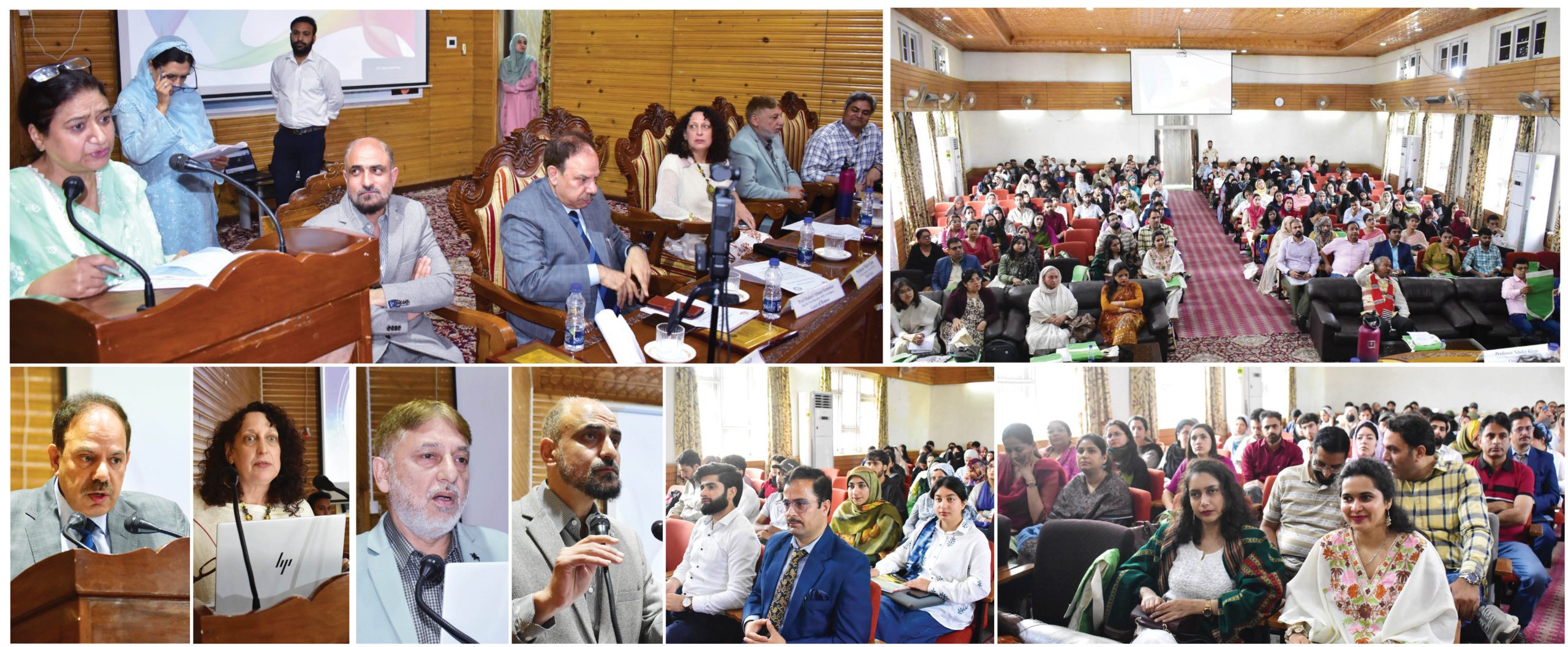
Academics, researchers and environmental scholars from India and abroad gathered at the University of Kashmir (KU) on Thursday for a two-day international conference examining the relationship between climate change, sustainability and literature, as institutions increasingly explore interdisciplinary approaches to addressing environmental challenges.
The conference ‘Climate Action, Sustainability and Literature: The Ecosophical Proximity in the Contemporary Anthropocentric Epoch,’ has been organised by the university’s Department of English in collaboration with the Ecosophical Foundation for the Study of Literature and Environment (EFSLE).
Organisers said the event seeks to create a platform for dialogue on climate change, ecological responsibility and sustainable development through the lens of literature, culture and the humanities.
The conference comes at a time when climate-related concerns have assumed increasing importance globally, with scientists warning that rising temperatures, extreme weather events and environmental degradation require coordinated responses from governments, researchers and civil society.
Addressing the inaugural session, University of Kashmir Vice Chancellor Nilofer Khan said climate change was no longer a distant or theoretical concern but a reality affecting communities across the world.
“Climate change is no longer a distant possibility but a lived reality,” Khan said.
She said universities had an important responsibility in promoting awareness, encouraging critical inquiry and generating knowledge capable of contributing to environmental sustainability.
According to Khan, literature and the humanities can provide valuable perspectives on environmental crises by helping societies understand the human dimensions of climate change and ecological degradation.
“Universities must encourage critical reflection and informed public discourse on environmental challenges,” she said.
The conference brings together scholars from disciplines including literature, environmental studies, anthropology, policy studies and cultural research.
Speakers emphasised the importance of integrating scientific knowledge with broader social and cultural understanding in order to develop effective responses to environmental challenges.
Vice Chancellor of the Islamic University of Science and Technology (IUST), Awantipora, Shakil Ahmad Romshoo, said climate change required coordinated action involving governments, academic institutions, communities and policymakers.
Romshoo highlighted the importance of combining scientific understanding with governance and policy frameworks capable of promoting environmental resilience and sustainable development.
Dean Academic Affairs at the University of Kashmir, Shariefuddin Pirzada, stressed the value of interdisciplinary research and academic collaboration in advancing sustainability-related discussions.
He said environmental challenges increasingly cut across traditional academic boundaries and therefore require collaborative approaches involving multiple disciplines.
Rishikesh Kumar, president of EFSLE, spoke about the growing relevance of ecosophical approaches in literary and cultural studies and their role in understanding contemporary environmental concerns.
Earlier, Head of the Department of English Mufti Mudasir Farooqi outlined the objectives of the conference and said it aimed to encourage dialogue among scholars, researchers and practitioners examining environmental issues from literary and interdisciplinary perspectives.
The conference programme includes keynote lectures, plenary sessions, technical presentations and panel discussions involving participants from institutions in India and abroad.
One of the keynote addresses is being delivered by Diana J. Fox of Bridgewater State University in the United States.
Organisers said discussions would focus on themes including climate action, sustainability, ecocriticism, environmental humanities and the role of culture and literature in shaping ecological awareness.
The event reflects a growing trend within higher education institutions to integrate environmental concerns into humanities and social science research, alongside traditional scientific approaches to climate studies.
Proceedings of the inaugural session were conducted by faculty member Iffat Maqbool of the Department of English.
The conference concluded with additional technical sessions and research presentations examining contemporary environmental challenges and pathways toward sustainability.