
From the mountains of Reasi to the geopolitics of the Strait of Hormuz, as the world races for critical minerals, J&K’s lithium reserves promise opportunity, anxiety, and a new economic destiny. Amir Yaseen reports.
In the winter of 2023, when snow still clung to the Pir Panjal ridges and the Chenab roared cold and green beneath the cliffs of Reasi, a government announcement from New Delhi briefly transformed a quiet belt of Jammu and Kashmir into the centre of India’s energy imagination. The Geological Survey of India declared that it had identified “5.9 million tonnes inferred resources (G3) of lithium” in the Salal-Haimana area of Reasi district.
This was the first major lithium discovery ever reported in India.
The language was bureaucratic. The reaction was anything but.
Within hours, television studios were calling it “India’s white gold.” Politicians spoke of an economic revolution. Mining analysts speculated that India might finally loosen its dependence on China-dominated lithium supply chains. In Kashmir, where generations have grown up hearing promises tied to hydropower, tourism, handicrafts, railways, industrial corridors, and post-conflict investment, the news landed somewhere between hope and disbelief.
In tea shops in Jammu, in university corridors in Srinagar, and in villages around Reasi, people began asking the same question: Could this mineral buried beneath the Himalayan foothills alter the destiny of Jammu and Kashmir?
The timing of the discovery made it even more dramatic. The world was already racing toward electrification. Electric vehicles had become central to industrial policy from Washington to Beijing. Europe was scrambling to secure battery supply chains. China controlled much of the world’s lithium refining capacity. Global oil markets remained vulnerable to geopolitical shocks. And now, every new flare-up in West Asia revives fears about the Strait of Hormuz – the narrow maritime artery through which a substantial portion of the world’s oil passes.
For India, which imports the overwhelming majority of its crude oil requirements, the anxiety was strategic as much as economic. Nearly every oil shock in the country’s modern history, from the Gulf War to recent regional tensions, has reminded policymakers how vulnerable India remains to external disruptions.
Lithium, suddenly, appeared not merely as a mineral but as an escape route.
The dream was seductive: batteries made in India, electric cars running on Indian lithium, solar grids storing Indian energy in Indian-made cells. A country historically dependent on imported oil imagining energy sovereignty through a metal hidden beneath the mountains of Jammu and Kashmir.
Yet three years later, the story of Kashmir’s lithium remains suspended between geology and mythology.
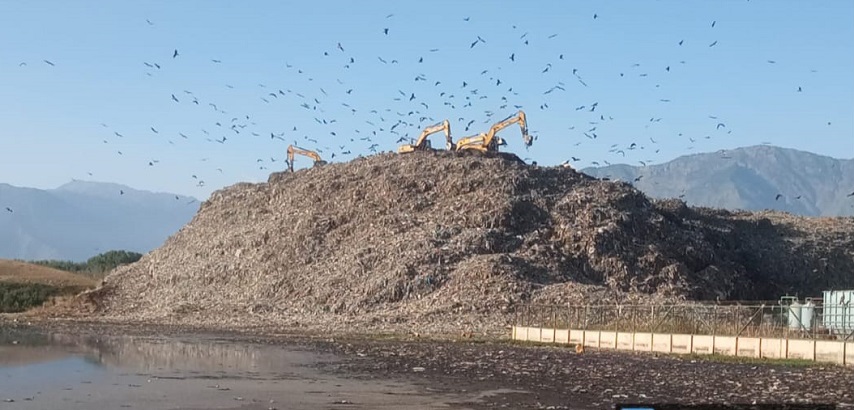
The reserve has not yet become a mine. No extraction has begun. Scientists continue to debate the commercial viability of the deposit. Environmentalists warn of irreversible ecological damage. Economists caution that mineral discoveries do not automatically create prosperity. And in Reasi itself, a district better known for pilgrimage routes, forested hills and scattered mountain settlements, life remains largely unchanged.
Still, the idea of lithium has already transformed the way India looks at Jammu and Kashmir.
The official announcement in 2023 sounded sudden, but the story actually began decades earlier.
Geologists had found traces of lithium in the Salal belt as far back as the mid-1990s. A Geological Survey of India report from 1995-97 observed persistent lithium values in the bauxite-rich formations of the area and recommended further investigation.
At the time, however, lithium was not the geopolitical obsession it would later become.
Back then, the mineral economy of the world revolved overwhelmingly around oil, gas and coal. Electric vehicles were niche products. Smartphones were still years away from reshaping global consumer habits. India itself was struggling with insurgency in Jammu and Kashmir, economic liberalisation, and basic infrastructure deficits. The idea that a Himalayan district could one day sit at the centre of a global battery race would have sounded fantastical.
But the twenty-first century changed the hierarchy of minerals.
Lithium became indispensable to rechargeable batteries used in electric vehicles, smartphones, laptops, grid storage systems, and renewable-energy infrastructure. Governments began treating critical minerals the way earlier generations treated oil reserves. Countries scrambled to secure supply chains. Mining companies expanded aggressively across South America, Australia, and Africa. China emerged as the dominant refining power in the lithium economy.
India, meanwhile, found itself heavily dependent on imports.
According to official and industry estimates, India imports almost all of its lithium requirements and remains highly dependent on Chinese supply chains for battery components and lithium-ion cells.
That dependence worried policymakers.
The electric-vehicle transition is no longer a peripheral policy ambition in India. It is now linked to climate commitments, manufacturing growth, urban pollution control, industrial competitiveness and energy security. India wants electric vehicles to constitute a major share of future mobility, especially in two-wheelers, buses and urban transport systems. The demand for lithium-ion batteries is projected to surge dramatically by 2030.
And so when the Reasi discovery was announced, it was interpreted not merely as a geological event but as a strategic breakthrough.
Travel through Reasi district and it is difficult to reconcile the landscape with the futuristic rhetoric surrounding lithium.
The region is rugged, folded and deeply mountainous. Pine forests descend toward river valleys. Villages cling to slopes connected by narrow roads. The Chenab River cuts through the terrain with immense force, feeding hydroelectric projects that already symbolize one kind of energy extraction in Jammu and Kashmir.
Unlike the salt flats of Chile or the giant open-pit mines of Australia, Kashmir’s lithium story is embedded in a fragile Himalayan ecosystem.
That fragility matters.
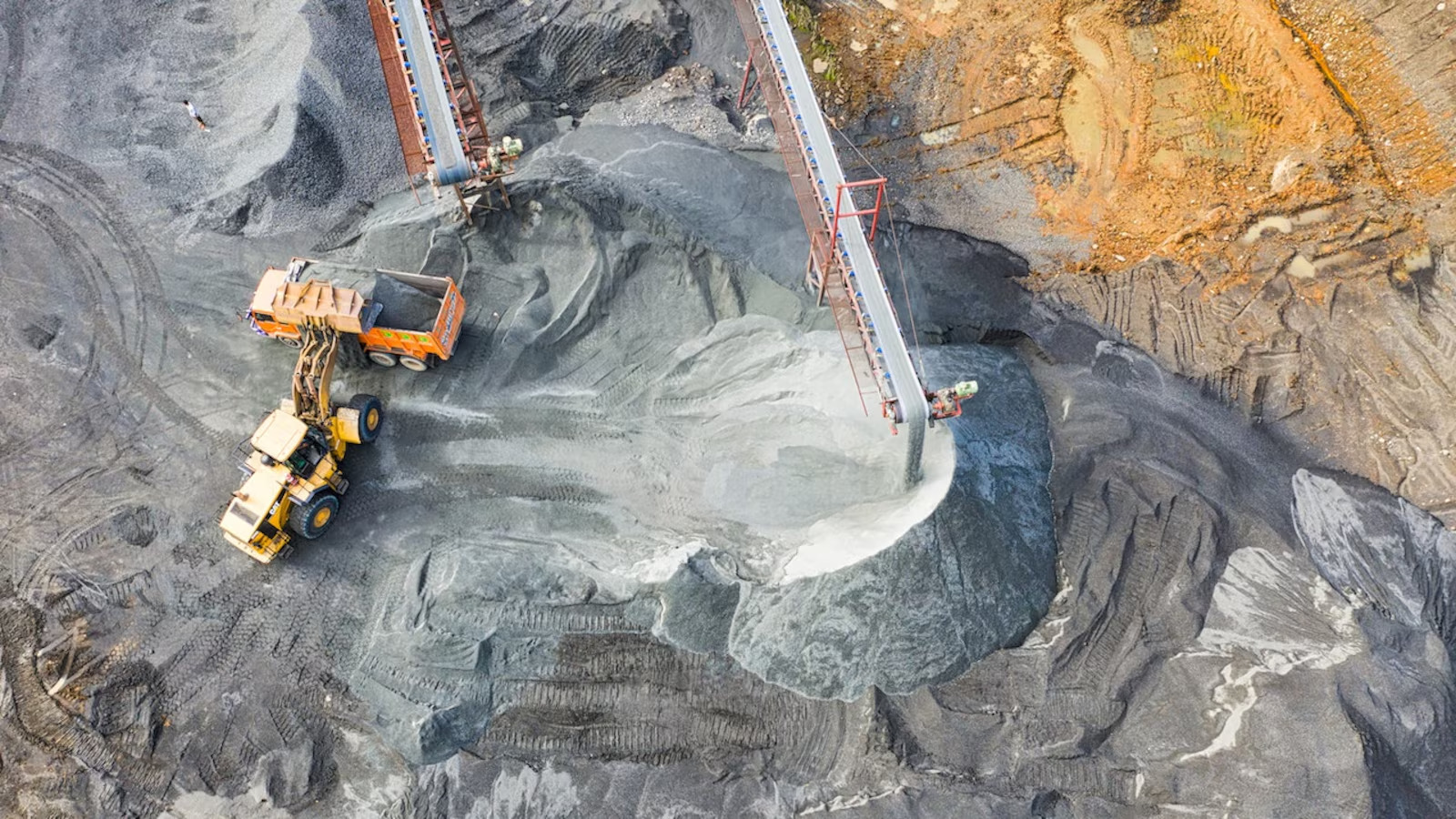
Lithium extraction worldwide has often triggered environmental controversy. Mining can consume enormous quantities of water, alter landscapes, generate toxic waste and disrupt local ecosystems. In the Himalayas, already vulnerable to landslides, seismic instability, erratic rainfall and climate change, industrial mining raises particularly difficult questions.
Even scientists enthusiastic about the discovery have warned about environmental consequences.
The Kashmiri earth scientist Shakil Romshoo says that while the reserves could transform India’s energy future, extraction would have to minimise ecological damage through advanced and environmentally sensitive technologies.
The tension reflects a larger paradox running through the global clean-energy transition.
Electric vehicles are marketed as environmentally friendly. Yet the minerals required to build their batteries are extracted through processes that can themselves be environmentally destructive. Around the world – from Chile’s Atacama Desert to Congo’s cobalt mines – communities have grappled with the hidden ecological and social costs of “green” technology.
Kashmir now stands at the edge of that contradiction.
Can a region already ecologically fragile absorb large-scale mining without repeating the environmental disasters seen elsewhere?
And perhaps even more importantly: who benefits if extraction actually begins?
Economists have long observed a painful irony in mineral-rich regions around the world: natural wealth does not automatically produce public prosperity.
Nigeria has oil yet struggles with poverty. Congo possesses enormous mineral reserves yet remains unstable. Latin America’s lithium triangle has seen repeated political disputes over ownership and extraction. The phrase “resource curse” emerged precisely because many resource-rich regions became trapped in inequality, corruption, environmental degradation or political conflict.
That history weighs heavily in Jammu and Kashmir.
For decades, Kashmiris have watched outsiders profit from local resources while ordinary residents saw limited transformation in daily life. Timber extraction, hydroelectric projects, and tourism often generated revenue without proportionate local economic empowerment.
This explains why the political language around lithium became so sensitive almost immediately.
When Union Mines Minister Pralhad Joshi said that Jammu and Kashmir would “wholly own the mines despite it being a Union Territory,” the assurance was meant to calm fears that the region’s resources would simply be controlled from Delhi.
But skepticism persists.
Many Kashmiris worry that lithium could become another story in which raw material leaves the region while high-value manufacturing and profits accumulate elsewhere. Mining alone rarely creates large-scale prosperity unless it is linked to broader industrial ecosystems –refining, battery manufacturing, research facilities, logistics networks, skill development, and local reinvestment.
And here lies the central challenge.
India may possess lithium-bearing ore in Reasi, but mining lithium is only one small part of the battery economy. The real economic power lies in refining, chemical processing, battery-cell manufacturing and technology development – sectors currently dominated globally by China.
In other words, digging lithium out of the ground does not automatically make India a battery superpower.
To understand why Reasi matters strategically, one has to look far beyond Kashmir.
For decades, India’s energy security calculations revolved around oil tankers sailing through the Strait of Hormuz – the narrow waterway between Iran and Oman through which much of the world’s petroleum trade flows.
Every conflict in West Asia reverberates through India’s economy. Rising oil prices widen trade deficits, increase inflation, weaken the rupee and raise transport costs. For an import-dependent economy, geopolitical instability in the Gulf is not distant diplomacy; it is domestic vulnerability.
That vulnerability has become sharper in recent years as tensions across West Asia intensified. Policymakers increasingly view electrification as both an environmental necessity and a strategic shield.
Electric mobility reduces long-term dependence on imported oil.
But electrification creates a new dependency: critical minerals.
And here, China dominates.
China controls a substantial share of global lithium refining and battery manufacturing capacity. Even countries with lithium reserves often send raw materials to China for processing before importing finished battery components back.
India’s lithium strategy therefore sits at the intersection of economics, climate policy and geopolitics.
The country has launched a National Critical Mineral Mission aimed at strengthening exploration, mining, processing and recycling capabilities. Officials are also working on incentive schemes for domestic lithium and nickel processing.
Seen through this lens, the Reasi reserves are not merely about Jammu and Kashmir. They are part of India’s attempt to reposition itself in the emerging global energy order.
Oil defined the geopolitics of the twentieth century.
Lithium may shape much of the twenty-first.
In official imagination, lithium could help create a new economic identity for Jammu and Kashmir.
For decades, the region’s economy has relied heavily on agriculture, horticulture, handicrafts, tourism and government employment. Industrialization has remained weak, limited partly by geography, political instability and infrastructure deficits.
Lithium raises the possibility, at least theoretically, of integrating Jammu and Kashmir into India’s future-facing industrial sectors.
Battery assembly units. Mineral-processing hubs. EV supply chains. Research centers focused on advanced materials. Ancillary industries linked to storage technology.
Such transformation would require enormous investment and long-term planning. But even the possibility has generated excitement among sections of the business community.
Supporters of mining argue that the reserves could create jobs, improve infrastructure, expand revenue generation and stimulate associated industries. They envision Reasi becoming part of a strategic industrial corridor connecting mineral extraction with manufacturing ecosystems elsewhere in India.
Some policymakers have even framed lithium as an opportunity to reposition Jammu and Kashmir from a conflict narrative to a technology-and-energy narrative.
But that transition faces structural obstacles.
The terrain is difficult. Mining infrastructure remains limited. Environmental clearances in Himalayan zones are complex. Local communities may resist disruptive extraction. Security considerations persist. And the lithium itself remains at an inferred resource stage — meaning much more exploration is required before commercial viability can be fully established.
The difference between geological optimism and commercially extractable reserves is enormous.
In Kashmir, every new promise eventually enters folklore.
Hydropower was once supposed to transform the region’s economy. Tourism booms were repeatedly described as turning points. Rail connectivity was imagined as revolutionary. Information-technology parks, horticulture expansion, cross-border trade initiatives — all arrived carrying visions of economic rebirth.
Lithium has now joined that long list of transformational dreams.
But unlike many earlier promises, lithium resonates with something larger than regional economics. It taps into a global anxiety about energy transition itself.
The world is attempting an industrial transformation without historical precedent: replacing fossil-fuel systems while simultaneously increasing energy consumption through digitisation, electric mobility and AI-driven infrastructure.
This transformation requires extraordinary quantities of minerals.
Lithium, cobalt, nickel, graphite and rare earth elements are now strategic assets. Nations compete for them diplomatically. Corporations fight over supply chains. Investors speculate on them like oil futures. Governments treat them as instruments of national security.
In this new global order, Kashmir’s mountains suddenly appear differently.
Not merely as landscapes of beauty or conflict but as repositories of strategic material.
That shift has psychological consequences too.
For generations, Kashmiris have often experienced their region as geopolitically important because of territory, borders and security. Lithium introduces another layer: economic-strategic value tied to the future of global energy systems.
Whether that ultimately empowers the region or intensifies external competition over it remains uncertain.
What Happens Next?
Today, the Reasi reserves remain more potential than reality.
Further exploration is required. Mining feasibility studies must be completed. Questions about grade, extraction economics and processing technologies remain unresolved. Government agencies continue discussions over auction mechanisms and licensing structures.
Even under optimistic scenarios, commercial production could still take years.
And by then, the battery economy itself may evolve dramatically.
Researchers are already exploring sodium-ion batteries, solid-state technologies and recycling-based supply chains that could reduce future dependence on freshly mined lithium. India itself is investing increasingly in critical-mineral recycling infrastructure.
This means the future value of Kashmir’s lithium may depend not only on geology but on technological timing.
If India succeeds in building an integrated domestic battery ecosystem – from mining to refining to recycling – the Reasi reserves could become historically significant.
If not, the deposits risk becoming another underutilised resource trapped between bureaucratic delays, environmental concerns and shifting market realities.
In Kashmir, mountains have always shaped destiny.
They isolate villages, redirect rivers, attract pilgrims, shelter militants, inspire poets and frustrate engineers. Now, beneath some of those mountains, India believes it has found the mineral that could power its electric future.
There is something almost poetic about the geography of it.
For centuries, the Himalayan region has been imagined through romance, spirituality and conflict. Lithium introduces a colder vocabulary: battery chemistry, critical minerals, supply chains, gigafactories, strategic autonomy.
And yet the older Kashmir remains present beneath the futuristic rhetoric.
The shepherd moving across alpine meadows above Reasi. The farmer waiting for rains. The laborer seeking work in Jammu city. The student in Srinagar hoping industrial growth might finally create jobs beyond government service. The environmentalist worrying about blasted mountainsides and contaminated streams.
All of them are part of the lithium story too.
The discovery of 5.9 million tonnes of inferred lithium resources in Jammu and Kashmir may eventually become one of the most consequential economic developments in modern Indian history.
Or it may become another grand promise deferred by politics, ecology, technology and time.
At the moment, it exists in a suspended state, somewhere between aspiration and excavation.
But even before the first commercial extraction begins, lithium has already changed the imagination of Kashmir.
The mountains of Reasi are no longer seen merely as remote Himalayan terrain.
They are now viewed as part of the global struggle over the future of energy itself.
About the Author
Amir Yaseen is a Srinagar-based journalist with an eye for the telling detail and an ear attuned to the cadences of Kashmir. He approaches news as narrative, locating the human story within the language of policy and progress and the quiet recalibration of everyday life.