
Kashmir Impulse Desk
New Delhi, May 18
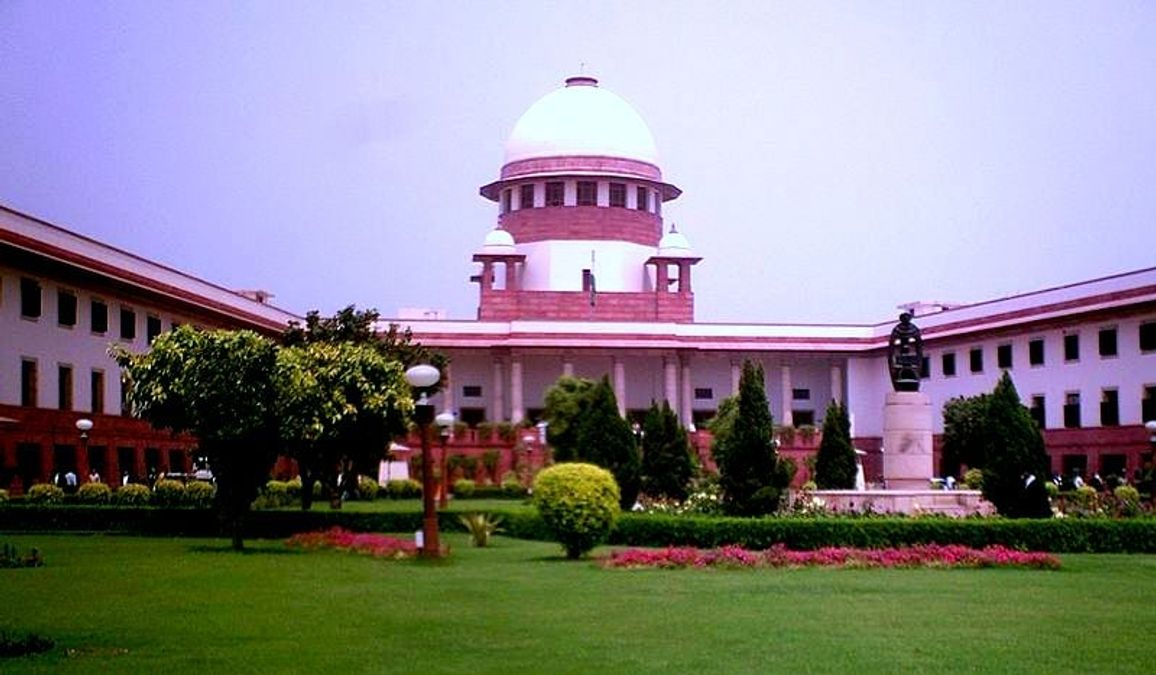
Supreme Court on Monday highlighted low conviction rates under the Unlawful Activities (Prevention) Act (UAPA), saying more than 90 percent of such cases nationwide end in acquittal, while conviction rates in Jammu and Kashmir remain below 1 percent.
A bench comprising Justices B V Nagarathna and Ujjal Bhuyan made the observations while granting bail to Syed Iftikhar Andrabi, a Jammu and Kashmir resident accused in a narco-terrorism case investigated by the National Investigation Agency (NIA).
Referring to National Crime Records Bureau (NCRB) data for 2019-2023, the court said conviction rates under the anti-terror law ranged between 2 percent and 6 percent nationally.
“In other words, there is a 94 percent to 98 percent possibility of acquittal in such cases in the country,” the bench said in its order.
The court said the situation in Jammu and Kashmir was “abysmal”, noting that annual conviction rates under the law in the federally administered territory remained below 1 percent during the same period.
“It means that at the end of the trial, there is a 99 percent possibility of acquittal in such cases,” the bench observed, questioning whether prolonged detention was justified solely because charges were serious.
The court said Andrabi had made out a case for bail as no cash or contraband had been recovered from him or from premises linked to him.
It also noted that statements implicating Andrabi, including his alleged confession, were made before police and were prima facie hit by Section 25 of the Indian Evidence Act, which restricts admissibility of confessions made to police officers.
The bench said no material had been placed on record showing Andrabi’s prior involvement in narcotics trafficking or terrorist activities.
“On the contrary, it is stated that the appellant is an ardent advocate of the constitutional, federal and democratic set-up of India,” the court said, adding that Andrabi was a supporter of the Jammu and Kashmir People’s Conference, a registered mainstream political party.
Andrabi had challenged an earlier order by the High Court of Jammu and Kashmir and Ladakh rejecting his bail plea after investigators cited cellphone records allegedly showing contact with operatives across the border.
According to the NIA, police intercepted a vehicle belonging to Abdul Momin Peer at Kairo Bridge in Handwara on June 11, 2020, seizing 2 kg of heroin and Rs 2.001 million in cash.
Police later arrested Andrabi and another accused, Islam-ul-Haq Peer, based on disclosures made during the investigation.
The chargesheet alleged that the accused were involved in cross-border heroin smuggling operations in Jammu and Kashmir and elsewhere in India, procuring narcotics from associates in Pakistan.
Investigators also alleged that Andrabi and Abdul Momin Peer travelled to Pakistan in 2016 and 2017 to meet operatives linked to militant groups including Lashkar-e-Taiba and Hizbul Mujahideen, and that proceeds from heroin sales were used to fund militant activities.