
Kashmir Impulse Desk
Lucknow, May 30
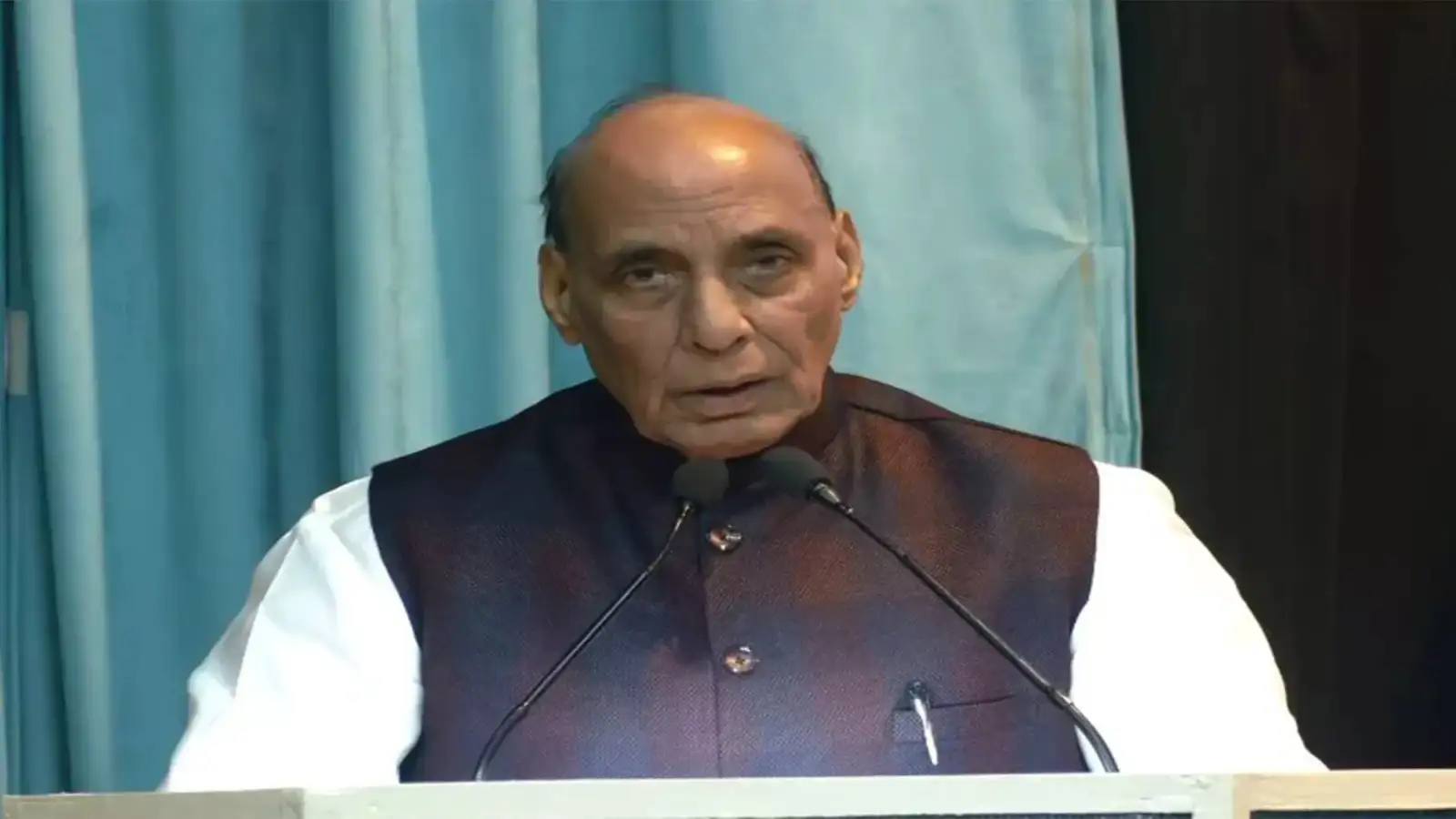
Defence Minister Rajnath Singh said on Saturday that the Indian Navy kept Pakistan’s naval forces confined to their ports during Operation Sindoor by maintaining sustained pressure in the Arabian Sea.
Speaking at the inauguration of Nausena Shaurya Vatika, an open-air naval museum in Lucknow, Singh said the Navy played a key role in the operation through forward deployment and operational readiness.
“Our Navy was deployed in the Arabian Sea with full preparedness and strength, maintaining constant pressure on the adversary. As a result, Pakistan’s entire Navy remained confined to its ports,” Singh said.
The museum, developed jointly by the Indian Navy and the Uttar Pradesh Tourism Department in Lucknow’s CG City area, was inaugurated by Singh along with Uttar Pradesh Chief Minister Yogi Adityanath. Indian Navy Chief Admiral Dinesh K. Tripathi and Deputy Chief Ministers Brajesh Pathak and Keshav Prasad Maurya were also present.
Singh said the facility would showcase the Indian Navy’s legacy, operational capabilities and maritime achievements, and would serve both as a centre of inspiration and a tourist attraction.
“In the coming years, this facility will not only become a centre of inspiration for Lucknow but will also develop into a tourist hub and emerge as one of the city’s defining landmarks,” he said.
Addressing questions over establishing a naval museum in a landlocked city, Singh said maritime security was linked to every Indian citizen regardless of geography.
“The Indian Ocean is connected to our economy, trade and energy requirements. Those who safeguard it come from every village, town and city of India,” he said. “The Navy is an asset of the entire nation.”
Singh also highlighted the connection between Lucknow and the decommissioned warship INS Gomati, which forms the centrepiece of the museum.
“Just as the Gomti river flows through the city and eventually reaches the sea, INS Gomati brought honour to Lucknow while serving in the Indian Ocean,” he said, noting that the ship’s crest carried the image of the city’s historic Chhatar Manzil.
Calling the Shaurya Vatika more than a tourist site, Singh said it would stand as a reminder of the sacrifices made by the armed forces and help future generations understand the value of national security.
“This is not an ordinary tourist destination but a living centre of inspiration,” he said.
The defence minister also pointed to India’s growing indigenous defence manufacturing capacity, saying exports had risen sharply in recent years.
“Before 2014, India’s defence exports were worth less than Rs 1,000 crore. Today, we are exporting defence equipment worth nearly Rs 40,000 crore to countries around the world,” he said.
Praising the Uttar Pradesh government, Singh said the state had undergone major transformation under Chief Minister Yogi Adityanath, and credited him with ensuring the museum’s completion in record time.
He also announced plans to further expand the attraction by bringing a submarine to the site.
A major exhibit at the museum is INS Gomati, decommissioned on May 28, 2022. Other displays include the ship’s anchor, main mast, propeller and submarine obstacle equipment, with installations aimed at educating visitors about maritime security, naval operations and the technological capabilities of the Indian Navy.