
Kashmir Impulse Desk
Srinagar, June 28
National Conference-led government on Sunday rejected opposition allegations that it had carried out large-scale backdoor appointments through outsourcing, saying the policy was inherited from the previous People’s Democratic Party (PDP)-Bharatiya Janata Party (BJP) administration and that no regular government jobs had been filled outside the statutory recruitment process since it assumed office.
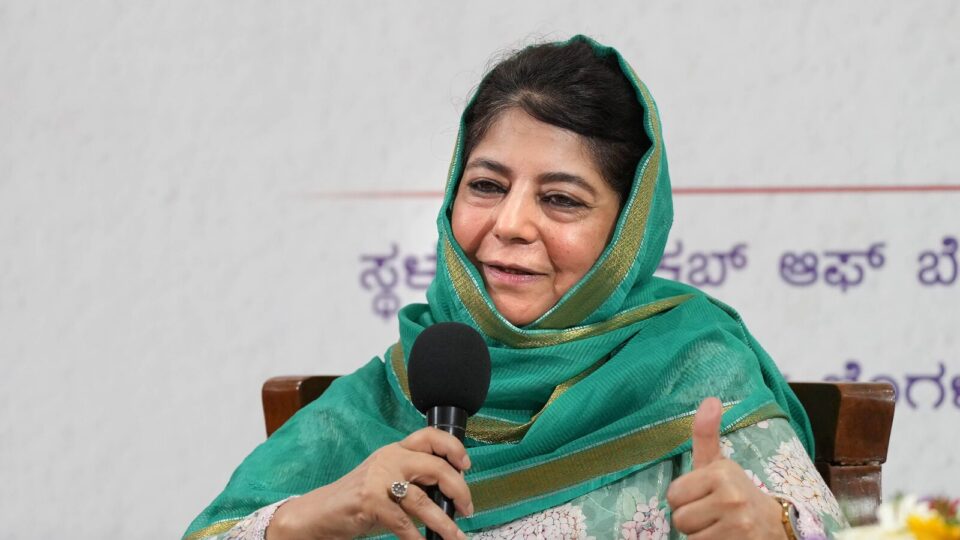
The clarification came after the opposition, led by PDP President Mehbooba Mufti, accused the Omar Abdullah government of making thousands of appointments through outsourcing agencies while educated unemployed youth continued to await recruitment to permanent government posts.
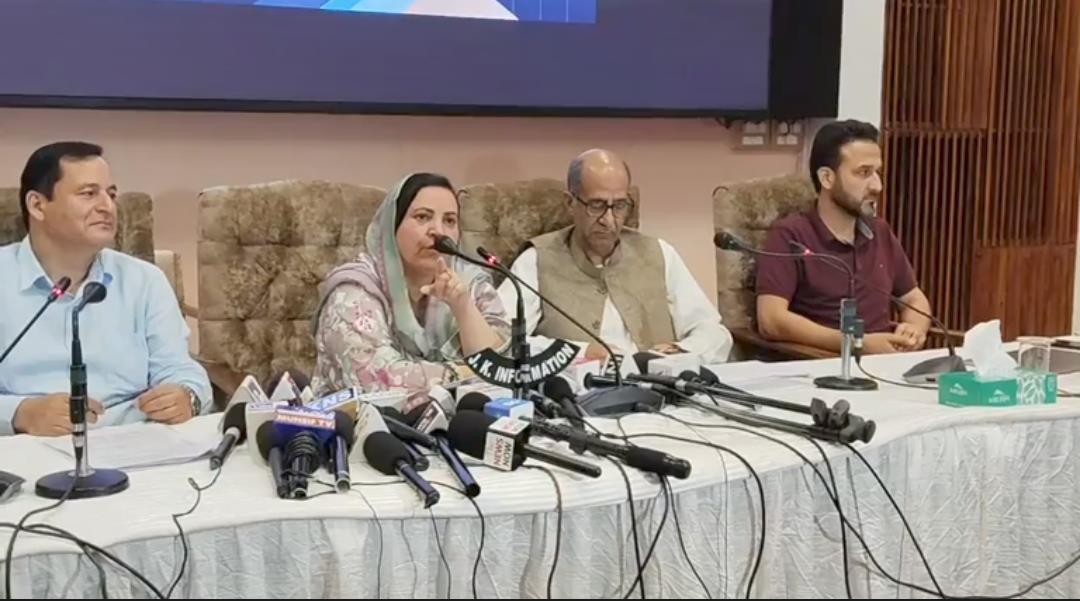
Addressing a joint press conference in Srinagar, Advisor to Chief Minister Omar Abdullah, Nasir Aslam Wani, flanked by cabinet ministers Sakeena Itoo and Javed Ahmad Dar, said the controversy stemmed from attempts to portray temporary outsourced engagements as regular government employment.
“We did not introduce this outsourcing system. We inherited it,” Wani told reporters, adding that the framework had been put in place between 2015 and 2018 during the PDP-BJP coalition government. “The present government has not made a single backdoor appointment. If the opposition has evidence of even one such appointment, it should place it before the people.”
The exchange marks the latest political confrontation over employment, one of the most sensitive issues in Jammu and Kashmir, where unemployment among educated youth remains among the highest in India and successive governments have faced criticism over recruitment delays, alleged irregularities and prolonged vacancies across departments.
The National Conference formed government in October 2024 following the first assembly elections held after the revocation of Jammu and Kashmir’s special constitutional status in 2019.
Seeking to distinguish outsourcing from government recruitment, Wani said permanent appointments were made only against sanctioned posts through constitutional recruiting bodies such as the Jammu and Kashmir Public Service Commission (JKPSC) and the Jammu and Kashmir Services Selection Board (JKSSB).
Outsourcing, he said, was an administrative mechanism used to temporarily supplement manpower requirements where departments faced workloads exceeding their sanctioned strength.
“It cannot be equated with government recruitment,” he said.
He cited hospitals as an example, saying departments could not suspend healthcare services while waiting for lengthy recruitment procedures whenever additional technicians or support staff were required.
Similarly, seasonal departments involved in agriculture, horticulture, irrigation and plantation work often required temporary manpower during peak activity periods, he said.
According to the government, outsourced personnel are engaged through private agencies selected under competitive procurement procedures, including the Government e-Marketplace (GeM), rather than being appointed directly by departments.
The ministers also argued that a substantial portion of outsourced workers were employed under centrally sponsored programmes such as Samagra Shiksha, Mission Vatsalya, the Integrated Child Protection Scheme, the Pradhan Mantri Awas Yojana and various agriculture-related schemes, where project guidelines issued by the federal government permit contractual manpower.
Cabinet Minister Sakeena Itoo said the figures frequently cited by the opposition – between 25,000 and 28,000 outsourced workers – represented cumulative engagements made over nearly a decade rather than appointments made by the present administration.
She accused opposition parties of misleading unemployed youth by presenting outsourced assignments as permanent government jobs.
“Outsourcing is not government employment,” she said. “Outsourced workers do not occupy sanctioned posts and are not entitled to pension, grade pay or other benefits available to regular employees.”
The government reiterated its election promise to create one lakh jobs, saying recruitment against sanctioned vacancies was continuing through statutory agencies.
Itoo said hundreds of vacancies had already been referred for recruitment, including 724 lecturer posts, 626 paramedical positions and around 900 doctor posts. She said about 500 doctors had already joined service while the remaining candidates were completing mandatory verification procedures.
“Our commitment to providing one lakh jobs remains unchanged,” she said.
The ministers also sought to shift political scrutiny onto previous administrations, referring to recruitment controversies involving Jammu and Kashmir Bank and the Jammu and Kashmir Khadi and Village Industries Board (KVIB), both of which have been investigated by anti-corruption authorities.
Without naming individuals, Wani said those questioning the current government’s employment practices should first explain alleged irregularities during their own tenure.
“Those accusing us today should answer questions about recruitments carried out when they were in power,” he said.
Dar said outsourcing was not unique to Jammu and Kashmir but was widely used across India under centrally sponsored programmes that required implementing agencies to engage contractual manpower.
He cited the Livestock Health and Disease Control Programme, a federally funded scheme under which outsourced personnel were engaged in accordance with operational guidelines issued by the Government of India.
Dar also listed several categories of regular vacancies that had been referred to recruiting agencies since October 2024, including posts in agriculture, horticulture, animal husbandry and sheep husbandry departments.
Responding to allegations regarding appointments of relatives of politicians in universities, Dar said higher educational institutions functioned autonomously and the government had no role in their recruitment processes.
“Our universities have their own recruitment procedures,” he said. “The government neither controls nor interferes in those selections.”
During the interaction, journalists suggested the government establish a dedicated online portal for outsourced engagements to improve transparency and public oversight.
Wani said the administration was open to reforms.
“We inherited the existing financial rules governing outsourcing, but improvements can certainly be examined to make the system more transparent,” he said.
The debate over outsourcing has become politically charged in Jammu and Kashmir as thousands of educated young people continue to seek permanent public-sector employment, long regarded as one of the region’s most stable sources of income. While successive administrations have increasingly relied on contractual and outsourced manpower to meet operational requirements, opposition parties argue the practice has weakened employment security and reduced opportunities for regular recruitment, allegations the government denies.