
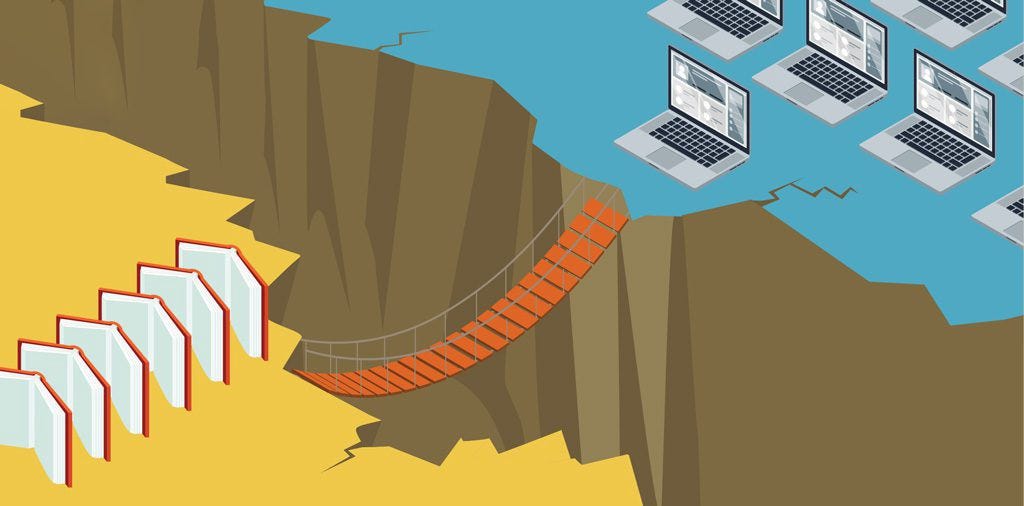
As AI reshapes education, work, and communication across the world, Kashmir risks being left behind unless it learns to adapt quickly.
By Moien Darial
On a winter evening in Srinagar earlier this year, a university student sat inside a café near Rajbagh asking ChatGPT to summarise a political science chapter before an exam. A few tables away, a young entrepreneur was using artificial-intelligence tools to design logos for clients in Dubai. Nearby, a schoolteacher experimented with AI-generated lesson plans in Urdu and English.
Outside, traffic crawled through the city’s usual congestion while shopkeepers closed shutters against the cold.
Quietly, almost invisibly, a technological revolution had already entered Kashmir.
Not through factories or giant corporate campuses.
But through smartphones.
Over the last two years, artificial intelligence has moved from being a distant Silicon Valley concept to an everyday reality for students, freelancers, journalists, small-business owners, designers, coders, teachers and even government employees across India. Tools once available only to elite technology companies are now accessible through mobile applications and web browsers.
In Kashmir, however, the arrival of AI carries a complicated duality. It offers extraordinary opportunity. And serious risk.
Because while the world rapidly reorganises itself around AI-driven productivity, automation and digital economies, Kashmir still struggles with unstable employment, uneven digital infrastructure, limited research ecosystems and educational systems that often remain disconnected from emerging technological realities.
The question is no longer whether AI will change Kashmir. It already is. The real question is whether Kashmir will become a participant in this technological transition – or merely its consumer.
Unlike earlier waves of technological change, artificial intelligence entered Kashmir almost silently. There were no major announcements. No dramatic launches. No large public debates. Students simply began using it.
Ask college students in Srinagar, Baramulla or Anantnag today and many will already be familiar with AI tools for summarising notes, generating essays, translating text, writing code, editing photos, creating presentations or preparing job applications.
Freelancers working from Kashmir’s growing digital economy – graphic designers, content creators, video editors and marketers – increasingly rely on AI-assisted workflows to compete globally.
For many young Kashmiris, AI is not futuristic. It is practical. A faster way to complete assignments. A cheaper alternative to expensive software. A digital assistant for people trying to survive inside a highly competitive economy.
And that practicality matters enormously in Kashmir, where unemployment remains one of the region’s deepest anxieties.
According to recent national surveys, youth unemployment continues to remain significantly high across Jammu and Kashmir compared to national averages. Government jobs remain limited. Private-sector growth is uneven. Thousands of educated graduates compete for relatively few stable opportunities.
In such an environment, AI is increasingly viewed less as a philosophical issue and more as an economic tool.
The logic is simple: If technology can help someone earn remotely from Kashmir, people will adopt it quickly.
One of the least discussed transformations in Kashmir over the last decade has been the emergence of a quiet remote-work culture.
Graphic designers in Sopore work for clients in Canada. Video editors in Pulwama edit reels for influencers in Mumbai. Coders in Srinagar freelance for Gulf-based companies. Writers, digital marketers and translators increasingly operate inside global online economies without ever leaving the Valley.
Artificial Intelligence is accelerating this shift dramatically. Tasks that once required expensive teams or advanced technical expertise can now be performed by individuals using AI-assisted software. A small freelancer with strong prompting skills and internet access can produce work at speeds unimaginable even three years ago.
For Kashmir, this could become economically transformative. The region’s geography and political history have often limited industrial growth and large-scale private investment. But digital economies function differently. They are less dependent on geography and more dependent on connectivity, skills and adaptability.
A young person in Srinagar today potentially competes in the same digital marketplace as someone in Bengaluru or London. That possibility is revolutionary. But only if educational institutions and policymakers recognise the scale of change underway.
This is where the concern begins. Most schools and colleges in Kashmir are still preparing students for an economy that is rapidly disappearing.
Across the world, AI is reshaping industries including journalism, software development, customer service, design, accounting, translation, administration and even medicine. Repetitive cognitive tasks – once considered secure white-collar work – are increasingly vulnerable to automation.
Yet many educational systems continue emphasising rote memorisation over adaptability, creativity, digital literacy and problem-solving. Kashmir is no exception. Students are still often rewarded for reproducing information rather than critically analysing it. Technological infrastructure remains uneven. Coding and AI literacy are limited largely to urban pockets or private institutions. Many teachers themselves remain unfamiliar with emerging digital tools.
This creates a dangerous possibility: A generation educated for jobs that may no longer exist by the time they graduate. Already, universities worldwide are rewriting curricula to incorporate AI-assisted learning, digital ethics, data literacy and automation awareness. Major companies increasingly value adaptability over traditional credentialism.
Kashmir cannot afford to remain technologically delayed while the global economy transforms around it.
There is also another side to the AI conversation – anxiety. Journalists fear automation of writing tasks. Graphic designers worry about AI-generated art. Teachers worry about plagiarism. Parents worry that students will stop thinking independently. And many workers quietly wonder whether machines will eventually replace them altogether. These fears are not irrational. Artificial Intelligence will almost certainly eliminate some forms of work while transforming others beyond recognition. But history suggests technological revolutions rarely simply destroy employment. They reorganise it. The internet eliminated some industries while creating entirely new ones. Smartphones destroyed certain businesses while creating app economies worth billions. The real danger for Kashmir is not AI itself. The danger is unpreparedness. Regions that adapt early often benefit disproportionately from technological shifts. Regions that delay adaptation frequently become dependent consumers rather than creators.
One overlooked opportunity for Kashmir lies in language technology. Artificial intelligence systems increasingly require localisation – translation, speech recognition, cultural adaptation and regional-language data. Kashmiri, Urdu and other regional languages remain significantly underrepresented in global AI systems. This creates potential space for researchers, linguists, startups and universities in Jammu and Kashmir.
Imagine AI systems capable of fluent Kashmiri-language translation. AI-powered educational tools for rural schools. Digital archives preserving Kashmiri literature and oral histories. Tourism platforms using multilingual AI assistance. Mental-health chat systems adapted for local contexts. The possibilities extend far beyond chatbots and viral image generators.
But such innovation requires investment, research culture and institutional imagination – areas where Kashmir still faces structural limitations.
Technology in Kashmir always intersects eventually with one sensitive issue: internet access.
No modern digital economy can function consistently under unstable connectivity conditions. Startups, freelancers, online educators and remote workers require predictability.
Artificial Intelligence intensifies that requirement.
Cloud-based AI systems depend heavily on continuous access to digital infrastructure. Interruptions do not merely inconvenience users; they affect economic productivity directly.
If Kashmir genuinely hopes to position itself within emerging digital economies, stable high-speed internet must increasingly be viewed not as luxury infrastructure but as economic necessity. Because in the AI era, connectivity itself becomes employability.
Perhaps the most important aspect of AI in Kashmir is psychological.
For decades, young Kashmiris have grown up inside narratives dominated by uncertainty – political uncertainty, economic uncertainty, social uncertainty.
Technology offers something different: Possibility untethered from geography. A teenager in Bandipora learning coding online. A girl in Shopian designing digital products for international clients. A student in Kupwara using AI tools to prepare for competitive exams. These are not fantasies anymore. They are already happening quietly across the Valley. The challenge now is scale. Can educational institutions evolve quickly enough? Can policymakers understand that digital infrastructure is economic infrastructure? Can Kashmir produce not just users of technology, but creators? Because Artificial Intelligence may ultimately become the defining economic divide of the next decade. Not between countries. But between societies that adapt and societies that hesitate. And Kashmir – young, ambitious, digitally curious, yet structurally fragile – stands directly at that crossroads.
About the Author
Moien Darial writes with the precision of a market analyst sensitivity of a storyteller. With a keen eye on global economic shifts and emerging technologies, he navigates complex transformations with clarity and restraint. Blending insight with elegance, he captures not just where markets are, but where they are quietly heading.