
Kashmir Impulse Desk
Srinagar, July 12
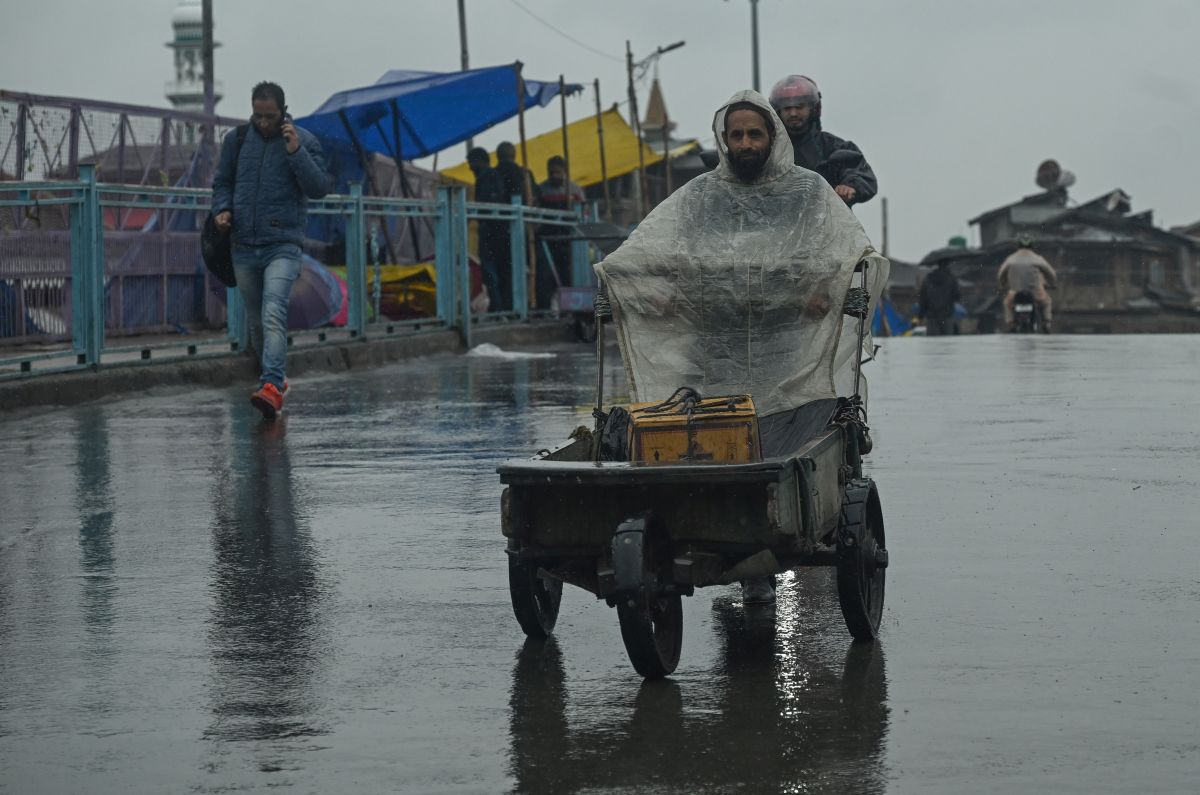
Intermittent monsoon showers continued across Jammu and Kashmir on Sunday, bringing a sharp drop in daytime temperatures after weeks of sweltering heat, while authorities warned of lingering risks of flash floods and landslides following cloudbursts that damaged homes, roads and tourist infrastructure in the Himalayan region.
The rainfall, which affected much of the Kashmir Valley and parts of the Jammu division over the past 24 hours, provided relief from unusually hot and humid conditions but also highlighted the vulnerability of ecologically sensitive mountain landscapes to extreme weather events.
According to the Meteorological Department, Srinagar recorded a maximum temperature of 22.7 degrees Celsius, nearly eight degrees lower than the previous day and around seven degrees below the seasonal average.
Other parts of the Valley also witnessed significantly cooler conditions, with Pahalgam recording 18.5 degrees Celsius, Gulmarg 16.6 degrees Celsius, Qazigund 23 degrees Celsius and Kokernag 22.5 degrees Celsius.
In the Jammu division, maximum temperatures ranged between 23.8 degrees Celsius in Bhaderwah and 31.5 degrees Celsius in Jammu city.
Rainfall was reported from several districts across south, central and north Kashmir, including the tourist destinations of Gulmarg, Sonamarg and Pahalgam, while showers also lashed both the Baltal and Pahalgam routes of the annual Amarnath pilgrimage.
Pilgrim movement continued without major disruption despite the inclement weather, officials said.
Pahalgam recorded the highest rainfall in Kashmir during the period, receiving 42.6 millimetres after a cloudburst struck the upper reaches of the Overa Wildlife Sanctuary on Saturday evening.
The cloudburst triggered a flash flood in the Overa Nallah, sending torrents of water, mud, rocks and debris into downstream settlements.
Hotels, tourist huts and residential buildings along the stream were inundated, while vehicles were swept away and sections of the Bijbehara-Langanbal Apple Valley Road and a local bridge sustained damage.
Emergency teams comprising police, the State Disaster Response Force, civil administration officials and local residents evacuated stranded tourists as floodwaters rapidly entered accommodation facilities.
“We were inside the hotel when water suddenly entered our rooms. The hotel staff rescued us,” said a tourist from Nagpur who was staying near the stream.
Authorities said no casualties were reported.
The incident has renewed debate over unregulated construction in and around the Overa Wildlife Sanctuary, one of Kashmir’s most environmentally sensitive regions.
The sanctuary forms part of the Dachigam-Tral-Khiram-Overa-Aru wildlife corridor, an important habitat for the endangered Hangul deer as well as Himalayan brown bears, musk deer and several other species.
Environmental experts and officials said commercial construction along natural drainage channels had reduced the floodplain available to the Overa Nallah during periods of intense rainfall.
“The constructions along the banks have narrowed the natural course of the stream,” a senior official said. “During cloudbursts, water has little room to disperse naturally, increasing both the speed and destructive force of flash floods.”
Officials acknowledged continuing uncertainty over regulatory oversight in parts of the area.
While the Pahalgam Development Authority said several villages affected by the flooding had been removed from its jurisdiction, other officials maintained that they remain within the approved regional master plan and fall inside an Eco-Sensitive Zone where commercial development is tightly regulated.
Wildlife authorities said no fresh commercial construction had been permitted since restrictions were strengthened last year, although many existing structures predated the current regulatory framework.
Independent weather forecaster and environmental campaigner Faizan Keng said the latest disaster underscored the need for scientific land-use planning.
“Streams that appear harmless for most of the year become natural flood channels during cloudbursts,” he said. “Encroachment along these waterways significantly increases disaster risks.”
Peoples Democratic Party leader Iltija Mufti also criticised what she described as unchecked construction in environmentally fragile areas, saying commercial development had placed additional pressure on Kashmir’s vulnerable ecosystems.
Deputy Director of Tourism Rashid Raina, who hails from Pahalgam, summed up the disaster in a widely shared social media post.
“The nallah didn’t enter the commercial area. The commercial area entered the nallah. Nature eventually reclaims its space,” he wrote.
Elsewhere in south Kashmir, another cloudburst struck Chattergul in Anantnag district, causing the Aaripath stream to overflow and damaging homes, orchards and agricultural land.
In central Kashmir’s Ganderbal district, flash floods washed away part of a road in the Lashpathri area of Sonamarg, temporarily disrupting access to a cluster of tourist huts.
Residents appealed to authorities to deploy heavy machinery to remove debris and restore connectivity.
Further south, a government assessment found that flash floods which hit Thathri town in Doda district earlier this week damaged at least 42 houses and 41 commercial establishments.
The survey, prepared by the Revenue Department, found extensive losses across grocery stores, garment outlets, bakeries, hardware shops, furniture stores, mobile phone retailers and other businesses, with officials warning that the number of affected properties could increase as assessments continue in previously inaccessible areas.
Residents have appealed to the government for immediate compensation, reconstruction assistance and long-term flood mitigation measures, including improved drainage systems, stream channelisation and stricter regulation of construction near watercourses.
The Meteorological Department said weather conditions were expected to remain largely dry and hot between July 13 and July 18, although isolated parts of the Jammu division could continue to receive brief spells of rain accompanied by intense showers.
A fresh spell of light to moderate rainfall is forecast between July 19 and July 21.
Meteorologists cautioned that isolated heavy downpours could once again trigger flash floods, landslides and mudslides, particularly in the Chenab Valley and the Pir Panjal range, and advised residents, tourists and pilgrims to avoid streams, mountain gullies and landslide-prone slopes during periods of heavy rainfall.