

Kashmir Impulse Desk
Srinagar, June 21
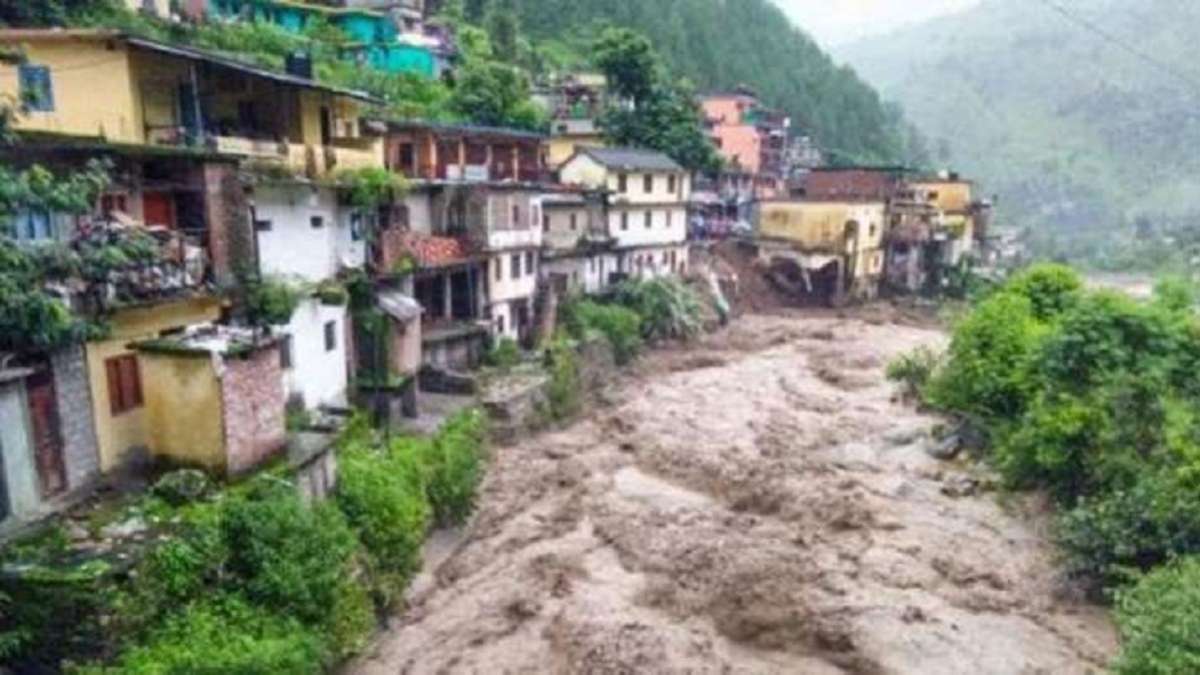
A cloudburst accompanied by intense rainfall triggered flash flooding in parts of north Kashmir’s Baramulla district on Sunday, sending muddy torrents through agricultural land and raising concerns among residents as water levels in local streams rose sharply.
The incident occurred in the Kandi area of Baramulla, where heavy rainfall caused a sudden surge in discharge from Nallah Ningli, one of the region’s major water channels. Residents living along the banks of the stream reported scenes of panic as muddy water mixed with debris spread into orchards and low-lying areas.
Although no casualties were reported, villagers remained on alert amid fears that continued rainfall could damage homes, roads and agricultural land.
Officials said local administration and emergency response teams were monitoring vulnerable areas and assessing the extent of damage.
The latest incident comes amid a growing pattern of extreme weather events across Jammu and Kashmir, where multiple cloudbursts and flash floods have been reported over the past several weeks.
Authorities said Sunday’s cloudburst followed a series of similar incidents that have affected both Kashmir and Jammu divisions, highlighting increasing concerns among scientists and policymakers about the impact of climate variability in the Himalayan region.
Last week, a cloudburst struck Sirhama village in south Kashmir’s Anantnag district, inundating paddy fields and apple orchards with water, mud and silt. Residents worked through the night to clear blocked channels and prevent further flooding.
Local legislator Bashir Ahmad Shah visited the affected area and said officials from the agriculture and horticulture departments would assess losses suffered by farmers.
The Sirhama incident came only a day after two separate cloudbursts hit north Kashmir.
In Kupwara district’s Lolab valley, flash floods triggered by a cloudburst in Darpora village damaged paddy fields and irrigation canals while disrupting movement on local roads. Hours later, another cloudburst struck Tartei Kilo village in Gurez’s Tulail Valley, damaging roads, a bridge and several residential structures.
Earlier this month, cloudbursts were reported from multiple villages in Shangus area of Anantnag district, forcing residents to move to safer locations after floodwaters entered agricultural fields and orchards.
The events mirror similar weather-related incidents reported earlier in the month from Jammu division, where cloudbursts in Reasi, Doda, Kishtwar and Poonch districts triggered landslides, flash floods and damage to infrastructure.
Meteorologists say the increasing frequency of such incidents reflects broader climatic changes affecting mountain ecosystems.
Hydrogeologist Riyaz Ahmad Mir said rising temperatures have increased the atmosphere’s capacity to retain moisture, creating conditions favourable for intense rainfall over short periods.
“When large amounts of moisture are released suddenly over mountainous terrain, water rapidly moves downhill, increasing the risk of flash floods and landslides,” he said.
Environmental degradation has compounded the problem, according to experts.
Mir said deforestation and changes in land use patterns have reduced the ability of slopes to absorb rainfall, increasing runoff and making settlements more vulnerable to flooding.
Mukhtar Ahmad, Director of the Meteorological Department in Srinagar, said warmer atmospheric conditions can significantly intensify rainfall events.
“With every one-degree Celsius increase in temperature, the atmosphere can hold approximately seven percent more moisture,” he said. “That can translate into heavier rainfall during weather disturbances.”
Climatologist Sonam Lotus said cloudbursts in Jammu and Kashmir are frequently associated with interactions between western disturbances and moisture-bearing winds during the pre-monsoon and monsoon periods.
“When these systems interact, they can generate very intense rainfall over a small geographical area within a short span of time,” he said.
For more than six weeks, Kashmir has experienced repeated episodes of thunderstorms, hailstorms, lightning and brief spells of heavy rain, particularly during evening hours.
While most of the activity has remained localised, authorities have repeatedly advised people to avoid open fields, water bodies and vulnerable slopes during severe weather conditions.
The latest cloudburst in Baramulla has renewed concerns about disaster preparedness in ecologically fragile mountain regions, where changing weather patterns are increasingly testing infrastructure and community resilience.