
As rising fuel prices ripple through transport, trade, and household budgets, Tabish Khan captures how global oil shocks are quietly reshaping everyday survival in Kashmir.
Long before the official announcement began circulating across television tickers and finance apps, taxi drivers in Srinagar already seemed to know something was coming.
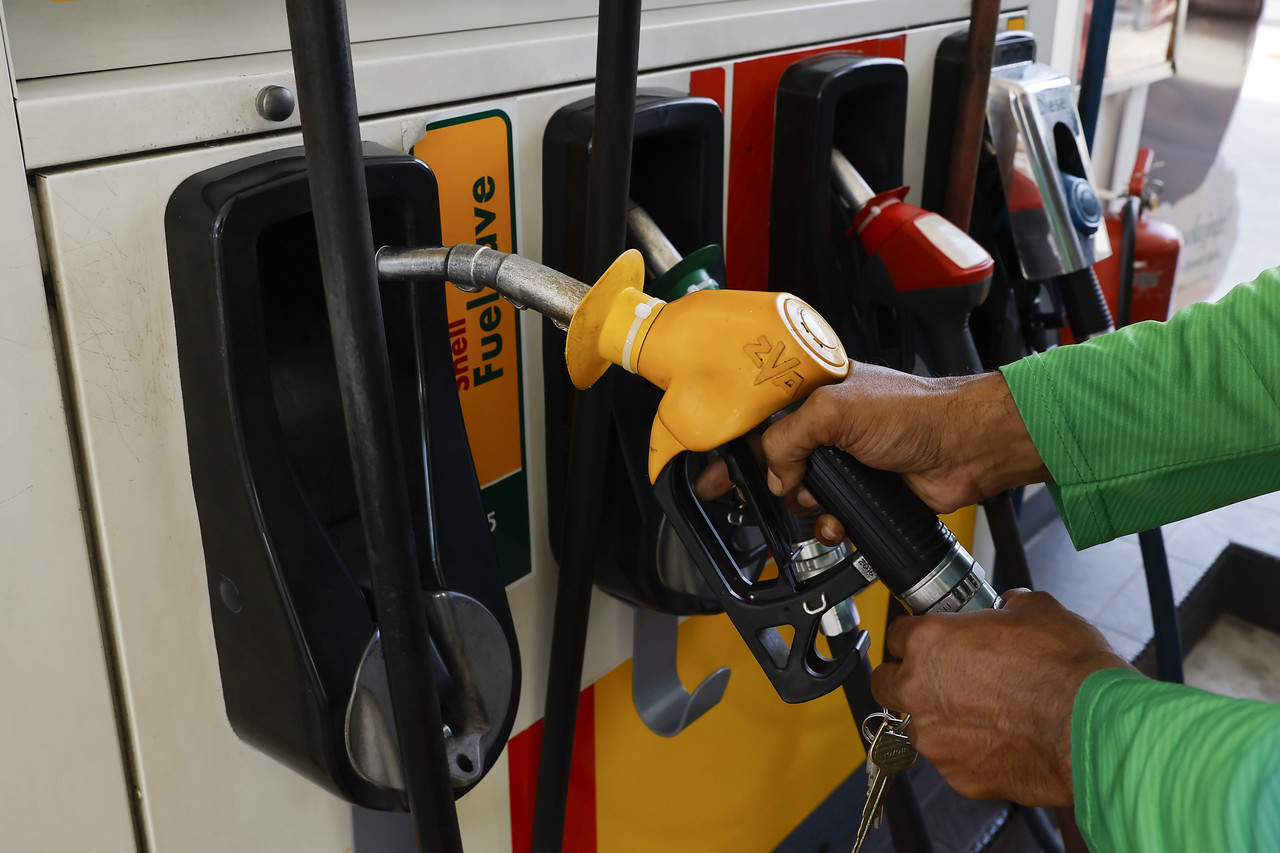
At a crowded petrol station near Rajbagh, motorists waited with unusual impatience, engines idling in restless lines. Men leaned out of windows asking attendants whether prices would rise after midnight. Some demanded full tanks. Others filled plastic cans “just in case.” Rumours travel quickly in Kashmir, especially rumours tied to survival.
By afternoon, the government confirmed it: petrol and diesel prices would increase by three rupees per litre, the first major hike in more than four years.
In New Delhi, the increase was explained through the language of economics – global crude oil prices, supply disruptions, refining losses, geopolitical instability in West Asia. But in Kashmir, where distance itself carries a price, fuel is never merely about fuel. It is about movement. It is about apples reaching mandis before rotting. About trucks crossing the Jawahar Tunnel. About office workers commuting through Srinagar traffic. About bakeries turning on ovens before dawn. About generators humming during power cuts in winter. About whether families postpone travel, weddings, deliveries, ambitions. And increasingly, it is about anxiety.
The hike arrives at a moment when Kashmir’s economy already feels suspended between exhaustion and adaptation. Officially, inflation remains moderate. Officially, economic indicators show resilience. Officially, tourism numbers continue to break records. But beneath the optimism lies a quieter reality familiar to nearly every Kashmiri household: life has become relentlessly expensive. Fuel merely exposes it more visibly.
At a transport stand in Srinagar’s Parimpora area, truck operators spent Friday afternoon recalculating freight costs on scraps of paper and phone calculators. Diesel prices matter profoundly in Kashmir because almost everything consumed in the Valley arrives through mountainous roads dependent on trucks. Vegetables from Punjab. Construction material from Jammu. Medicine, electronics, packaged food, fuel cylinders – entire supply chains climb toward Kashmir through fragile highways vulnerable to landslides, snowfall, and political disruptions.
When diesel rises, the Valley feels it twice.
“We are already surviving on narrow margins,” said Javed Ahmad, a truck owner from south Kashmir waiting beside his vehicle loaded with apples headed toward Delhi. “Now transport costs will rise again. Eventually everything becomes expensive for ordinary people.”
In Kashmir, inflation often arrives indirectly. First fuel rises. Then freight costs climb. Then fruit becomes slightly costlier, school transport fees increase, grocery prices inch upward, bakery ovens become more expensive to operate, and suddenly families discover that monthly budgeting has turned into mathematics of compromise.
The government describes increase as “calibrated,” an attempt to partially relieve losses faced by state-run oil companies without causing a major inflationary shock. Those losses are undeniably severe. Indian oil retailers have reportedly been losing enormous sums as global crude prices surged following conflict in West Asia, where attacks involving Iran, Israel, and the United States disrupted one of the world’s most critical oil corridors.
At the peak of tensions, crude prices soared above 120 US dollars per barrel.
The Strait of Hormuz – a narrow waterway most Kashmiris will never see – suddenly began influencing how much an auto-rickshaw driver in Srinagar pays at the pump.
This is the strange intimacy of globalisation: wars in distant deserts echo inside Himalayan kitchens.
For much of the past four years, India avoided major fuel price hikes despite global volatility. Retail prices remained politically frozen during elections and periods of public sensitivity. Oil companies absorbed losses while governments reduced excise duties to cushion consumers.
But eventually arithmetic catches up with politics.
Earlier this week, Petroleum Minister Hardeep Singh Puri acknowledged that state-run oil companies were collectively losing around one thousand crore rupees per day. Industry estimates suggested losses of over forty rupees per litre on diesel before Friday’s revision.
Such numbers are abstract until translated into ordinary life.
At a bakery in downtown Srinagar, owner Adnan Sofi said transportation and fuel-linked costs have already transformed the economics of running small businesses. Flour delivery costs have increased repeatedly over the past two years. Electricity remains unreliable in many areas, forcing some businesses to depend on generators. LPG cylinder prices have also climbed.
“You cannot increase prices endlessly because customers are already struggling,” he said while removing trays of bread from an oven glowing orange in predawn darkness. “So businesses absorb pressure until they can’t anymore.”
Across Kashmir, small businesses operate in precisely this condition: perpetual compression.
The Valley’s economy possesses a peculiar fragility because it depends heavily on sectors vulnerable to uncertainty – tourism, horticulture, handicrafts, transport, and retail trade. Most businesses are small-scale. Savings are limited. Employment remains unstable. Fuel hikes therefore ripple faster through Kashmir than through more industrialised economies with broader buffers.
For middle-class families, the burden appears less dramatic but more psychologically exhausting.
In Srinagar’s uptown neighbourhoods, where aspirations increasingly resemble those of metropolitan India, fuel prices shape daily routines in subtle ways. Parents reconsider long drives. Young professionals calculate commuting costs more carefully. Ride-sharing increases. Weekend travel declines. Household budgets stretch thinner beneath school fees, rising food prices, rent, healthcare costs, and stagnant salaries.
The emotional texture of inflation is rarely captured in official statistics.
Economists measure percentages. Families measure sacrifices.
At a fuel station in Hyderpora, a university student filling a scooter spoke about cancelling plans for coaching classes farther from home because transportation had become unaffordable. Nearby, a cab driver complained that customers resist fare increases even as operational costs surge.
“People think drivers are greedy,” he said. “But fuel, repairs, everything has become expensive. How do we survive?”
Kashmir’s dependence on private transport has grown dramatically over the past decade. Urban expansion, weak public transportation, and rising aspirations have filled roads with cars and motorcycles. Srinagar traffic increasingly resembles the congestion of larger Indian cities, except here movement occurs within a geographically constrained valley already struggling with infrastructure pressure.
Fuel therefore occupies a strange symbolic place in Kashmiri life. It represents mobility, but also vulnerability.
Prime Minister Narendra Modi recently urged Indians to reduce fuel consumption, use public transport, and adopt work-from-home practices where possible. Such appeals may resonate in metropolitan centres equipped with corporate flexibility and expanding transit systems. In Kashmir, however, economic life still depends heavily on physical movement through difficult terrain.
Distance remains expensive here.
And yet, beneath public frustration, there is also resignation. Kashmiris are intimately familiar with forces beyond their control shaping everyday existence – weather, conflict, political decisions, blocked highways, internet shutdowns, uncertain markets. Global oil prices merely become another layer of unpredictability folded into ordinary survival.
What makes the current moment especially unsettling is not simply the fuel hike itself, but what it signals about the future.
Worldwide, energy markets are entering an era of instability shaped by geopolitics, climate transitions, shipping disruptions, and competition over resources. India imports most of its crude oil. Kashmir, distant from ports and industrial corridors, experiences the downstream consequences intensely.
Already, economists warn that rising fuel prices could push inflation higher in coming months through freight and logistics costs. Wholesale inflation has accelerated sharply. Retail inflation, though comparatively moderate, continues creeping upward.
For Kashmir’s young generation – already navigating unemployment, expensive education, shrinking opportunities, and rising living costs – the sense of economic precarity deepens.
In tea shops across Srinagar on Friday evening, conversations drifted predictably toward prices. Older men recalled earlier decades when fuel was cheap and roads emptier. Younger Kashmiris spoke about salaries that no longer match modern life. Somewhere in the background, televisions continued discussing global crude markets and strategic reserves as though economics were merely numbers moving across screens.
But economics is never only numbers.
It is the schoolteacher deciding whether to use her scooter or take a shared cab. It is the truck driver calculating whether another journey is worth the risk. It is the baker increasing bread prices by two rupees and apologising to customers. It is the family postponing travel because petrol has become too expensive.
And in Kashmir, where geography magnifies every crisis, even a three-rupee increase can feel larger than arithmetic suggests.
Because sometimes the true cost of fuel is not measured at the pump.
It is measured in how far people can still afford to move forward.
About the Author
Tabish Khan is a multi-media journalist whose work moves fluidly across text, video, and the fast-evolving grammar of social media. With postgraduate degree in Convergent Journalism, her storytelling often bridges traditional field journalism with platform-driven formats – short-form video, visual explainers, and audience-first storytelling.