





Zojila Tunnel achieves final breakthrough; all-weather Kashmir-Ladakh connectivity comes closer
Kashmir Impulse Desk
Drass, June 9
The government on Tuesday achieved a major engineering milestone in the construction of the strategically important Zojila Tunnel after engineers completed the final breakthrough excavation, bringing the decades-long vision of all-weather connectivity between Kashmir and Ladakh significantly closer to reality.
The breakthrough was achieved after a controlled blast pierced the remaining 2.5 metres of rock separating the two ends of the tunnel beneath the Himalayan massif, officials said.
The event marked a critical stage in one of India’s most ambitious infrastructure projects and one of the highest-altitude road tunnels under construction in the world.
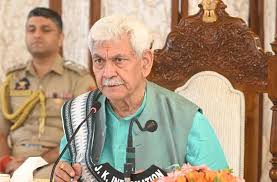
Union Minister for Road Transport and Highways Nitin Gadkari remotely triggered the final blast near the eastern portal at Minimarg in Ladakh, formally declaring the breakthrough. Jammu and Kashmir Lieutenant Governor Manoj Sinha, Chief Minister Omar Abdullah and senior officials of the National Highways and Infrastructure Development Corporation Limited (NHIDCL) attended the ceremony.
The breakthrough was achieved approximately six months ahead of schedule, project officials said, underscoring the rapid pace of construction despite challenging geological conditions and extreme weather in the Himalayas.
Once completed, the 13.153-km tunnel will provide year-round connectivity between the Kashmir Valley and Ladakh, ending the seasonal isolation caused by heavy snowfall on the Zojila Pass, one of India’s most treacherous mountain routes.
“This breakthrough marks a defining moment in India’s infrastructure development journey and brings us closer to ensuring seamless all-weather connectivity between Jammu and Kashmir and Ladakh,” Gadkari said.
The Zojila Tunnel forms part of a 31-km project stretching from Sonmarg in Kashmir to Minimarg in Ladakh, including approach roads and bridges.
Constructed at an altitude of around 11,578 feet above sea level, the tunnel is designed as a horseshoe-shaped, single-tube, two-lane road tunnel measuring 9.5 metres wide and 7.57 metres high.
The project is being executed by Megha Engineering and Infrastructure Ltd (MEIL), which employed the New Austrian Tunnelling Method (NATM), an internationally recognised technique used to excavate tunnels through difficult and unstable rock formations.
Engineers had to navigate complex Himalayan geology, including fractured rock zones, water ingress and severe winter conditions that frequently halt construction activities in the region.
According to NHIDCL officials, approximately 85 percent of the overall project has been completed.
Following the breakthrough, civil construction work is expected to continue for another seven to eight months before installation of electrical, ventilation, safety and communication systems begins.
Officials said the tunnel is expected to be opened to traffic by February 2028.
The tunnel’s completion is expected to dramatically reduce travel time across the Zojila axis. Journeys that currently take between one and one-and-a-half hours over the mountain pass will be shortened to roughly 15 minutes through the tunnel, while eliminating weather-related disruptions.
For residents of Ladakh, the project promises uninterrupted access to essential supplies, healthcare services, education and economic opportunities throughout the year. The Zojila Pass, located on the Srinagar-Leh highway, typically remains vulnerable to closure during winter months because of heavy snowfall and avalanche risks.
The tunnel also carries major strategic significance for India’s military.
The Srinagar-Leh highway serves as the primary surface route for transporting troops, fuel, equipment and supplies to Ladakh, a region bordering both Pakistan and China. Improved all-weather connectivity is expected to enhance military logistics and operational readiness along India’s northern frontiers.
Defence analysts have long regarded the tunnel as a critical asset for sustaining rapid troop mobilisation and maintaining supply chains to forward areas, particularly after heightened security concerns along the Line of Actual Control with China and the Line of Control with Pakistan in recent years.
The project was first conceived decades ago but faced repeated delays due to technical, financial and environmental challenges. Construction gained momentum after the federal government accorded it priority status as part of a broader push to strengthen infrastructure in border regions.
Ladakh Lieutenant Governor Vinai Kumar Saxena described the breakthrough as a historic achievement and a transformative development for the Union Territory.
Calling the tunnel a dream project of Prime Minister Narendra Modi, Saxena said it would revolutionise connectivity, strengthen access to border regions and accelerate economic development.
“The historic breakthrough of Zoji La Tunnel will prove to be a game-changer in the development journey of Ladakh,” Saxena said in a post on social media platform X.
He said the project would boost tourism, create new livelihood opportunities and support sustainable development efforts across the high-altitude region.
Beyond its strategic role, the tunnel is expected to generate significant economic benefits by facilitating trade, reducing transportation costs and increasing tourist arrivals in Ladakh, which has emerged as one of India’s most popular mountain destinations.
For residents on both sides of the Zojila Pass, Tuesday’s breakthrough represented more than an engineering accomplishment. It marked a symbolic step toward ending decades of seasonal isolation imposed by one of the Himalayas’ most formidable mountain barriers and bringing permanent, all-weather connectivity to one of India’s most remote regions.