




Diplomats scramble to contain conflict
Kashmir Impulse Desk
Dubai, June 8
Israel and Iran exchanged missile and air strikes on Monday in their first direct confrontation since an April ceasefire, raising fears of a renewed regional conflict as diplomats raced to prevent a wider war.
The escalation came despite efforts by regional powers and the United States to preserve the fragile truce that ended weeks of fighting earlier this year.
Iran’s military joint command later announced it was suspending offensive operations but warned that any further Israeli action or support for attacks against Iran would trigger a stronger response.
The renewed hostilities threaten to unravel months of diplomatic efforts to stabilise the Middle East after a conflict that disrupted global energy markets, fuelled inflation and heightened security concerns across the region.
US President Donald Trump urged both sides to halt military action.
“Israel and Iran must immediately stop shooting,” Trump wrote on social media, while saying negotiations aimed at securing a more durable peace agreement remained underway.
Regional officials said Egypt, Saudi Arabia, Turkey, Pakistan and Qatar had intensified diplomatic contacts with Washington and Tehran, urging restraint and seeking to prevent further escalation.
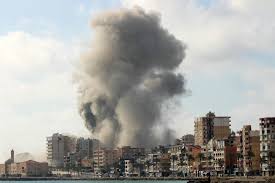
Iran launched multiple waves of attacks on Israel on Monday, while Israel carried out strikes on targets in central and western Iran.
Iranian media reported explosions in Tehran, Isfahan, Karaj and Tabriz. Authorities temporarily closed the airspace around Tehran’s Imam Khomeini International Airport following the strikes.
Iranian news agencies reported that an Israeli attack targeted a petrochemical facility in the southern city of Mahshahr. The Israeli military later said it had struck facilities linked to ballistic missile production as well as mobile missile launchers.
Israel said its operation was a response to Iranian missile attacks, while Tehran said it was retaliating for Israeli strikes on Beirut’s southern suburbs carried out a day earlier.
Iran’s Revolutionary Guards said they targeted two military bases in Israel.
Air raid sirens sounded across parts of Israel and neighbouring Jordan as air defence systems attempted to intercept incoming missiles.
Iran accused the United States of enabling Israel’s actions.
“No one believes that the Israeli regime would take any action without coordination with the United States,” Iranian Foreign Ministry spokesman Esmail Baghaei told reporters in Tehran.
The White House did not immediately comment on the allegation.
The latest violence has highlighted growing tensions between Trump and Israeli Prime Minister Benjamin Netanyahu, whose governments closely coordinated military operations during the conflict.
While Netanyahu has signalled support for continued military pressure on Iran and its regional allies, Trump has increasingly emphasised diplomacy and a negotiated settlement.
In an interview with Fox News, Trump said an agreement could be reached within days and urged both sides to return to negotiations.
“You’ve shot your missiles, that’s enough. Get back to the table and make a deal,” he said.
Meanwhile, Yemen’s Iran-aligned Houthi movement claimed responsibility for an attack on Israel and warned that Israel-linked vessels would again be targeted in the Red Sea, raising concerns about disruptions to one of the world’s busiest maritime trade routes.
The Houthis’ previous campaign against commercial shipping during the Gaza conflict forced many shipping companies to reroute vessels and increased transportation costs globally.
Residents in both Iran and Israel expressed concern that the latest exchange could signal a return to prolonged conflict.
In Israel, schools were closed nationwide, though many businesses remained open. In Tehran, residents said they were preparing for the possibility of further military escalation.
Separately, India issued a fresh advisory urging its citizens to avoid travel to Iran and advising those currently in the country to leave using available means of transport.
The Indian Embassy in Tehran said the advisory had been issued in light of the latest developments in the region.
According to official figures, around 9,000 Indian nationals were in Iran when the conflict began in February. Nearly 1,800 have since returned to India.