



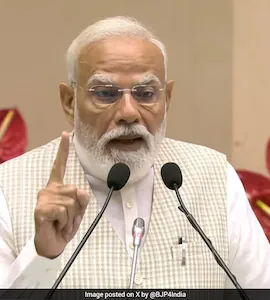
In a televised address, PM Modi said the government would continue pursuing measures to empower women despite the setback, and apologised for not securing enough support for the legislation.
Kashmir Impulse Desk
New Delhi, April 18
Prime Minister Narendra Modi on Saturday sharply criticised opposition parties after a constitutional amendment bill on women’s reservation failed to pass in parliament, accusing them of blocking efforts to expand political representation for women.
In a televised address, PM Modi said the government would continue pursuing measures to empower women despite the setback, and apologised for not securing enough support for the legislation.
“We may not have got the required two-thirds majority, but we have the full blessings of the women of the country,” he said, a day after the bill was defeated in the lower house.
The proposed amendment sought to increase the number of seats in parliament and state assemblies and implement 33 percent reservation for women from 2029, following a delimitation exercise.
PM Modi accused parties including the Congress, the Dravida Munnetra Kazhagam (DMK), the Trinamool Congress (TMC) and the Samajwadi Party of opposing the bill for political reasons.
“The dream of women has been crushed despite our efforts,” he said, adding that the government would work to remove obstacles to women’s empowerment.
According to parliamentary figures, 298 lawmakers voted in favour of the bill and 230 against, falling short of the two-thirds majority required for passage.
PM Modi described the opposition as “anti-reform”, alleging it had historically resisted key policy changes. He also said concerns raised about the impact of delimitation on states had been addressed by the government.
The PM said women voters would judge the parties that opposed the bill, while reiterating that his administration would continue to push for greater participation of women in governance.
The legislation, pending in various forms for decades, aimed to expand the current strength of the lower house and state assemblies to accommodate reserved seats for women.









Leave a Comment
Your email address will not be published. Required fields are marked with *