
Kashmir Impulse Desk
Srinagar, June 21
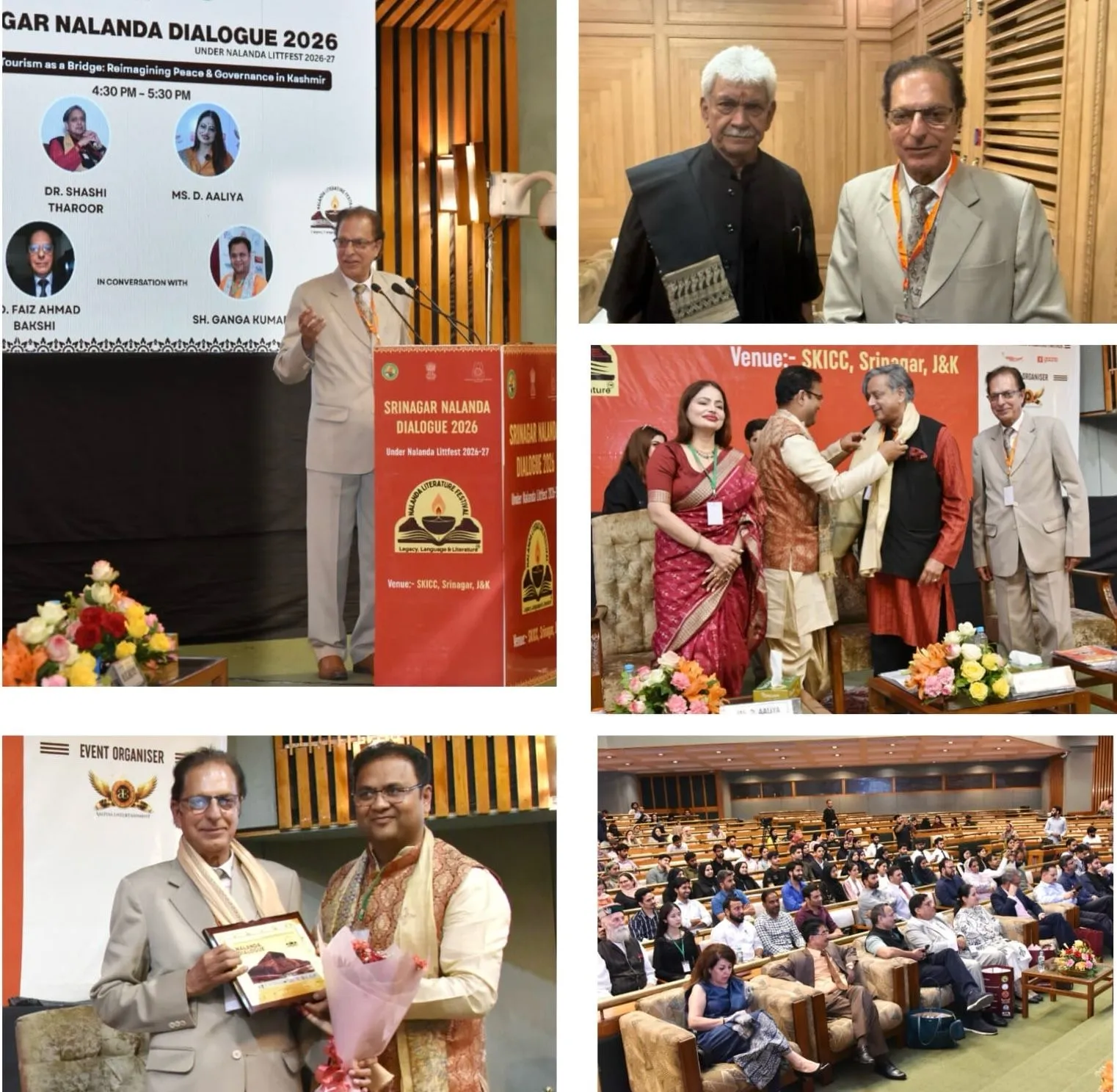
Tourism has the potential to serve as a powerful instrument for peace-building, job creation and sustainable development in Kashmir, the Kashmir Chamber of Commerce and Industry (KCCI) said during the Srinagar-Nalanda Dialogue, arguing that the sector’s revival offers an opportunity to reshape the region’s economic future.
Speaking during a panel discussion on ‘Tourism as a Bridge: Reimagining Peace and Governance in Kashmir,’ KCCI Secretary General Faiz Ahmad Bakshi said tourism should be viewed not merely as an economic activity but as a broader social ecosystem capable of fostering cultural exchange, community development and social stability.
His remarks came as policymakers, academics, tourism experts and civil society representatives gathered in Srinagar to discuss governance, culture and development.
Bakshi highlighted the transformation of Kashmir’s tourism sector over the past several decades.
He noted that the region attracted approximately 7.81 lakh tourists, including nearly 87,000 foreign visitors, in 1988 before years of conflict severely disrupted visitor arrivals and economic activity.
According to Bakshi, the sector has witnessed a remarkable recovery, with tourist arrivals reaching nearly 30 lakh in 2024, reflecting renewed confidence in Kashmir as a destination.
The resurgence has contributed significantly to local businesses, hospitality enterprises, transport operators, artisans and service providers.
Bakshi said tourism infrastructure has expanded considerably in recent years, with Jammu and Kashmir now hosting more than 4,600 accommodation units offering nearly 80,000 beds.
He pointed to the rapid growth of homestays as a particularly important development, arguing that the model allows local communities to participate directly in tourism and benefit from visitor spending.
“Tourism is one of the few sectors capable of generating employment across multiple levels of society,” he said.
The KCCI leader expressed concern over youth unemployment and called for policies that promote rural tourism, eco-tourism, heritage circuits and craft-based tourism.
Official data indicate unemployment among young people remains a major challenge in Jammu and Kashmir.
Bakshi argued that tourism-led development could help address that challenge while simultaneously promoting environmental conservation and cultural preservation.
He also highlighted Srinagar’s inclusion in UNESCO’s Creative Cities Network in 2021 and its recognition as a World Crafts City in 2024, describing both developments as international acknowledgements of Kashmir’s rich cultural heritage.
Referring to the fossil repository at Guryul Ravine in Khonmoh, which contains one of the world’s most significant records of the Permian-Triassic extinction event, he said the region possesses numerous assets capable of attracting international attention and specialised tourism.
Bakshi said peace and stability remain essential prerequisites for fully realising Kashmir’s tourism potential.
Invoking the teachings of Kashmiri spiritual figures Lal Ded and Sheikh-ul-Alam, he called for a development model rooted in sustainability, cultural identity and inclusiveness.
He argued that Srinagar could emerge as a model city where heritage preservation and modern development coexist, creating economic opportunities while protecting the region’s unique character.